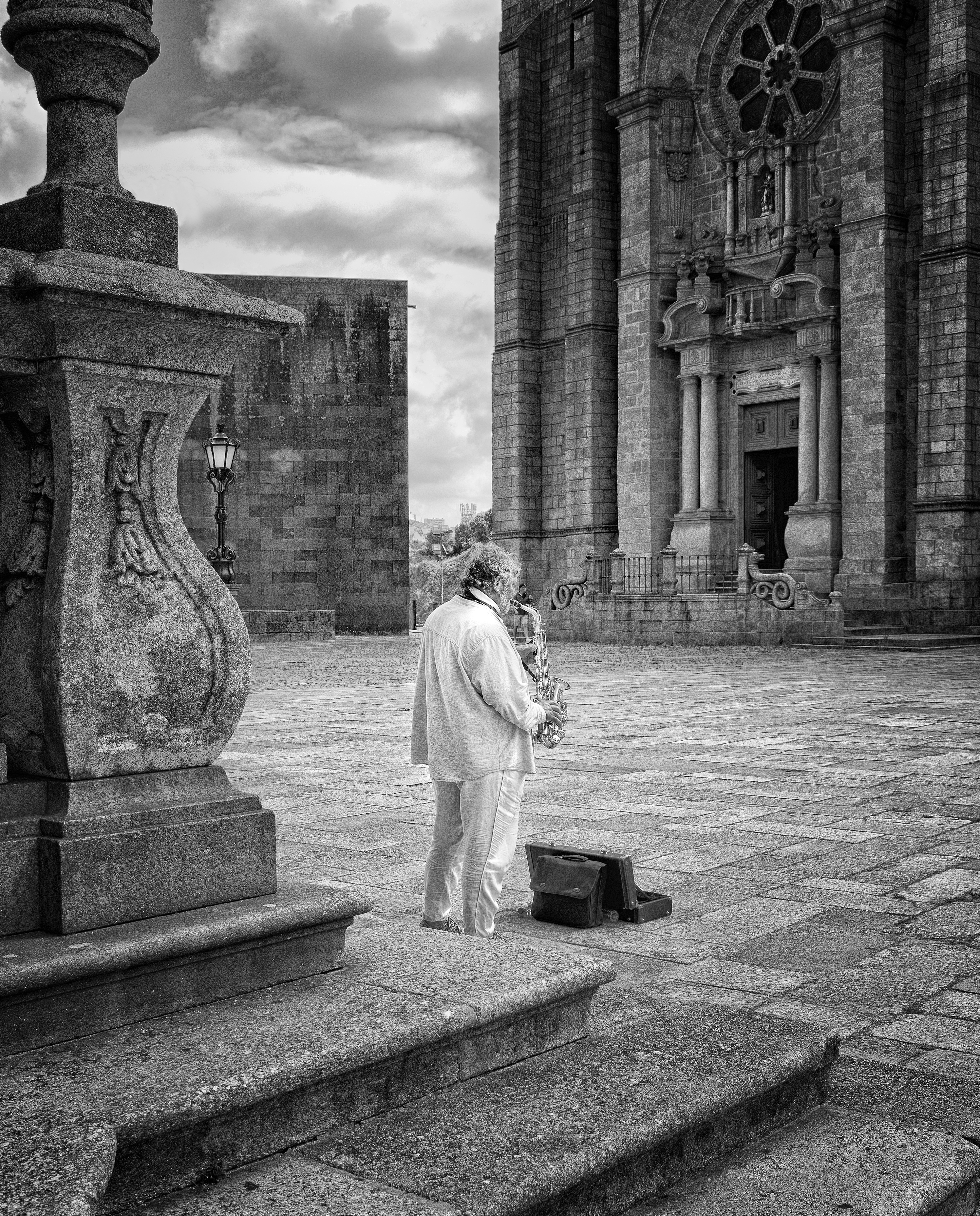
Two Men Talking in Spanish” by Susan Kolon

Please note: Poetry is compressed to fit smart phone screens. If you are reading this poem on a phone screen, please turn your screen sideways to make sure that you are seeing correct line breaks for the poem.

On Wednesdays, she sits at the bar
at the pancake cafe. It’s 9:46 a.m.,
the slice of slow between commuter
breakfast and WFH lunch. Straight ahead,

two servers talk, rolling forks
into paper napkins. What do they talk
about? Her urban regret of never learning
Spanish. Faces not flavored with any emotion

or energy from what she can see,
their hands circle time with the leisure
of untroubled effort. The TV hangs above them,
muted. Like the golden rich of polenta

pancakes set before her, a gleaming, silent
barter. She joins the men, united
in a bubbled moment of her own labor.
Careful not to disturb.

Susan Kolon works in health education and writes from Chicago. ‘I hear a song and I can parrot the lyrics in moments. Writing poems takes me infinitely longer.’ She received an M.S. from Northwestern University and a B.A. from Michigan State University, where she was first published as a creative writing student. Her work has appeared with Corporeal Lit Mag, Dulcet Literary Magazine, Gnashing Teeth Publishing and Orange Juice, a poetry journal.

“I Prefer Montreal” by Cynthia Gallaher

Please note: Poetry is compressed to fit smart phone screens. If you are reading this poem on a phone screen, please turn your screen sideways to make sure that you are seeing correct line breaks for the poem.

I prefer Place Jacques-Cartier, where I can loll and pretend I’m Hemingway.
I prefer Parc du Mont-Royal, because the grounds were designed by the same Frederick Law Olmsted who landscaped Washington and Jackson Parks in my hometown Chicago.
I prefer Rue du St. Catherine, because the street remains lively with people day and night, as if the Internet and TV didn’t exist.
I prefer winding staircases lacing floor to floor on the outside the Montreal flats, leaving more room inside for those Catholic Canadiens with once-upon-a-time large families.
I prefer the island of Montreal, because where could you find such an urban paradise than on an island?
I prefer the St. Lawrence Seaway, the hefty, watery wonder that leads the world to Montreal’s door.
I prefer the Canadiens tolerance of my poor high-school French, entranced when I ask “Quel heure est-il? to answer “Un peu” to their “Parlez-vous francais?”
I prefer the easy road trip from eco-rustic Burlington, Vermont, to the sophisticated, continental world of Montreal.
I prefer how Chicago was once part of Quebec.
I prefer how Quebec farms look as familiar as Illinois’ but with a French twist.
I prefer to see Cirque du Soleil one day though I have listened to several of its show CDs.
I prefer to hear about Montreal’s 40-degree-below-zero winter days while surrounded by its summer flower beds and breezy fountains.
I prefer Old Montreal, a place that more North Americans who can’t afford to go to Europe can visit and get a similar vibe.
I preferred to be on Candid Camera and ended up on Just for Laughs in Montreal, which was so much more fun.
I prefer the microbrews and sorbets of Montreal.
I prefer how Montreal embraces its Native American art.
I prefer the Parisian satellite radio pumped into the Montreal hotel lobbies.
I prefer the Montreal accent, an Anglicized, flatter version that rings more familiar to my ear, with its New Yorker twist.
I prefer Montreal.

CynthiaLGallaher

Cynthia Gallaher, a Chicago-based poet, is author of four poetry collections, including Epicurean Ecstasy: More Poems About Food, Drink, Herbs and Spices, and three chapbooks, including Drenched. Her award-winning nonfiction/memoir/creativity guide is Frugal Poets’ Guide to Life: How to Live a Poetic Life, Even If You Aren’t a Poet.One of her poems will be sent on NASA’s flight to the south pole of the moon later this decade.

“Moms’ Night Out” by Raya Yarbrough

A study in social discomfort and expensive toast, with explanatory footnotes, to be read at the end

Tonight I went to “Moms’ Night Out” at a pseudo-posh bar in Santa Monica. This was an extra-curricular event through my daughter’s preschool, organized by Sam, a mother who is far more involved and organized than I am. I’m not an un-involved mom, but when I have time to myself, away from the task of keeping another human alive, my first thought is towards my work or a hobby, like running screaming out into the night.2 I went to prove to the other moms, and to myself, that I can be a person.

In the Lyft, I ruminated on my discomfort about social events. I just don’t know HOW to people. What do people talk about?3 On stage, life makes sense. I know where and when things are supposed to happen. I guess my point is, after getting past “Hello fellow human female. I see you have spawned as well. Yes, we all drink more now,” what do I talk to a bunch of effectively random women about? But still, I wanted to give it a chance.

My Lyft pulled up to the curb. I got out. I went into the bar.

Inside the bar, it was dim, but not sinister-dim, like sex-den dim. You know. A heavy, dark, toile curtain hung close to the entrance, obscuring half my view. I took two steps toward the toile, then panned left to right: a table with two women I did not recognize, two women and a man at the bar, also foreign to me, some empty couches and low accent tables, and then there was Sam, the classroom rep and event organizer. I see Sam every week when she volunteers to set up lunch for the teachers, and/or to do other devoted tasks. Sam has three children and does all this. Did I mention she’s also skinny and beautiful? I am automatically a disheveled, out-of-shape, one-kid-having wuss in her presence. Not that she projects that—she’s actually lovely—this is all in my head. Loudly. In my head.

Sam hadn’t seen me yet; she was checking her phone. Seemed confused. She was the only one on the couch. I turned on my mental “extrovert app,” and the mask appeared.

“Hi Sam!”

“Oh hiiiiii!”

She had a half-empty glass of sparkling wine. I sat down on a dark blue, velveteen, tufted couchlet. I didn’t see anyone else I recognized.

Fucking hell. I was the first one there.

Continue reading “Moms’ Night Out” by Raya Yarbrough

“The Devastated” by Jennifer Bannan

Once, when we were visiting the Everglades camp, my second husband Brian sent us into fearful conniptions by stumbling off drunk to lie down and look at the stars. We didn’t know where he was and he wasn’t answering our calls.

This isn’t good, my dad said. People get walking in the wrong direction, he said, loading his gun, and they never come back. Somehow, I knew Brian wasn’t far, but Dad shot twelve rounds into the air nonetheless.

I wonder if it irked Dad that it wasn’t the gun that finally woke Brian, but the continued bellows of me and my sister. He emerged from the sawgrass, tripping over cypress stumps. He begged our forgiveness, trying to explain how the Milky Way had lured him. It was so beautiful.

Though he’s been to the Everglades twice before, those trips started with visits to my parents in Central Florida. Brian hasn’t seen Miami yet. He has only heard my stories. And now he’s dying of pancreatic cancer, in his late forties. We’re traveling the world – Thailand, Laos, Tulum, Cuba – and one of our stops will be the place that shaped me.

We drive, sunshine and air conditioning providing that particular mix I’ve never felt like it feels in Miami. There’s the house on Tenth terrace where I grew up. There’s the Denny’s where I worked – the mini mall now much fancier than it was back then, more landscaping, slick specialty shops.

We’re driving West on Tamiami Trail. I tell him what he probably knows, that an hour on this road would bring us to Monroe Station, where my dad kept his swamp buggy parked. The buggy and the camp were sold to an amiable guy who has shown he’s willing to host our visits out there. My parents sold it without even telling me and my sister. Because we live far away with our families. Because we’re girls. I believe a son would have been afforded right of first refusal. When I said as much to my mom, told her to put Dad on the phone, she panicked, she urged reason, We didn’t want to burden you. How would you fix a swamp buggy, how would you fix anything out there? I’ve known the Everglades since my earliest memories, loved it enough to name my youngest, and Brian’s only child, Cypress. They could have told us, could have given us the smallest say.

I turn off the Trail, driving the circuit. I show Brian the simple stucco box that was my first boyfriend’s home. Memories of salsa parties on the back patio, of the grandmother always sweeping the rug. Here: the Westchester mall where we kids would go for bistec and papas fritas.

Brian, stretching his lips weird because the chemo has left his mouth dry, doesn’t say much. I feel selfish spending time on these memories when time is precious. But then, he’s someone who loves big, and he loves me, so what better way to be in the world right now? Place is a part of us, and so this place will also be a part of our son Cypress, growing with him in mysterious ways. It’s important to see.

Next: Pat’s house, where friends blew a hole in the wall with a military-grade firearm. There’s my elementary school. The sidewalk where, as I biked, a teenager grabbed my ass and then showed me his handgun.

“They kept the boot to your neck,” he says of the violence, of the particular way it was directed at girls.

I’m reminded of another time, when he said, “We’re the devastated generation,” about all the toxins and consumerism and depletion of nature that had been normalized for us. And he said that before he knew about the cancer.

It’s true, the female experience of violence is unique, like the gun that forces declarations of love. We’re supposed to say how we like the boot to the neck, how it suits us.

But also, everything I loved. What the boot couldn’t take from me. The banyans of Coral Way. The beach at night like a black and white movie. The teacher assigning me The Autobiography of Benvenuto Cellini, allowing me to see myself in a grand, artistic way. The deep, pure yearning, emboldened by the crisp blue sky.

And, oh Brian, of the devastated generation. Your dying is proof enough that the boot hurts everyone, that the boot is on everyone’s neck. Every generation and all of us in it. All of us, again and again, bearing the devastation. Repeating the very cycle we’d hoped to disrupt.

Jennifer Bannan’s (jenniferbannan.com) second short story collection, Tamiami Trail, is forthcoming from Carnegie Mellon University Press Fall 2025. She has had stories in the Autumn House Press anthology, Keeping the Wolves at Bay, the Kenyon Review online, ACM, Passages North, Chicago Quarterly Review and more.
“Moon Over Salt Lake City” by Jennifer Blackledge

Please note: Poetry is compressed to fit smart phone screens. If you are reading this poem on a phone screen, please turn your screen sideways to make sure that you are seeing correct line breaks for the poem.

over the temple encrusted in
an exoskeleton of scaffolding and cranes,
over the lake bed’s lunar flats
where I mistook pickled, half-buried ducks
for driftwood and dry grass,
over my glass hotel where I scrub
white brine dust off my black suede shoes.

I walked and walked across an endless
sand and salt plain, between the lot of
parked cars and the salt-broth water,
tiny scattered people moving as
slow and distant from each other
as stars in a constellation.

I still hadn’t reached water by the time
the sun dipped to the first mountain but
I turned around anyway, anxious
to outwalk the absolute dark.
Tidal forces pull me into the car and
back toward the city,
moon over its motherboard of lights,
mountains like teeth behind it.

Weak sun, bold moon,
salt as purifier, salt as punisher.
My shoes wear a ring of white,
my hair a dry rime of silver down the middle.
The moon rises over glittering towers and salt crystals
as a low sun slides into unswimmable water.
I might be driftwood. I whisper like dry grass.
All week people have been distant as stars
and shifting like sand.
I haven’t seen the same face twice.

image1

Jennifer Blackledge works in the automotive industry and lives just south of Detroit. She has an MFA from Brown University and her work has appeared or is forthcoming in JAMA, I-70 Review, Scientific American, The Lake, Verdad, Kestrel, Twelve Mile Review, SWWIM and elsewhere. Read more at http://www.jenniferblackledge.com.

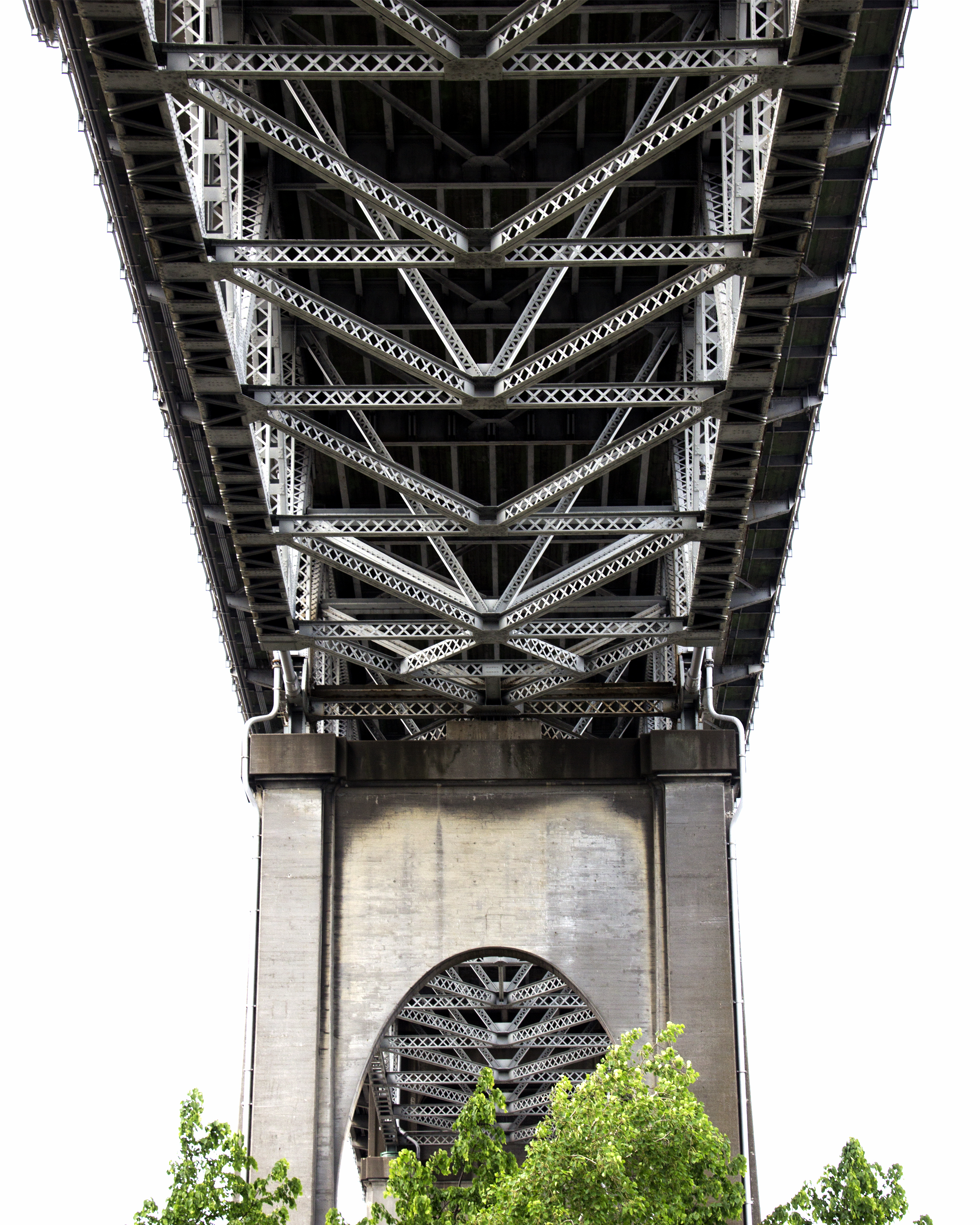
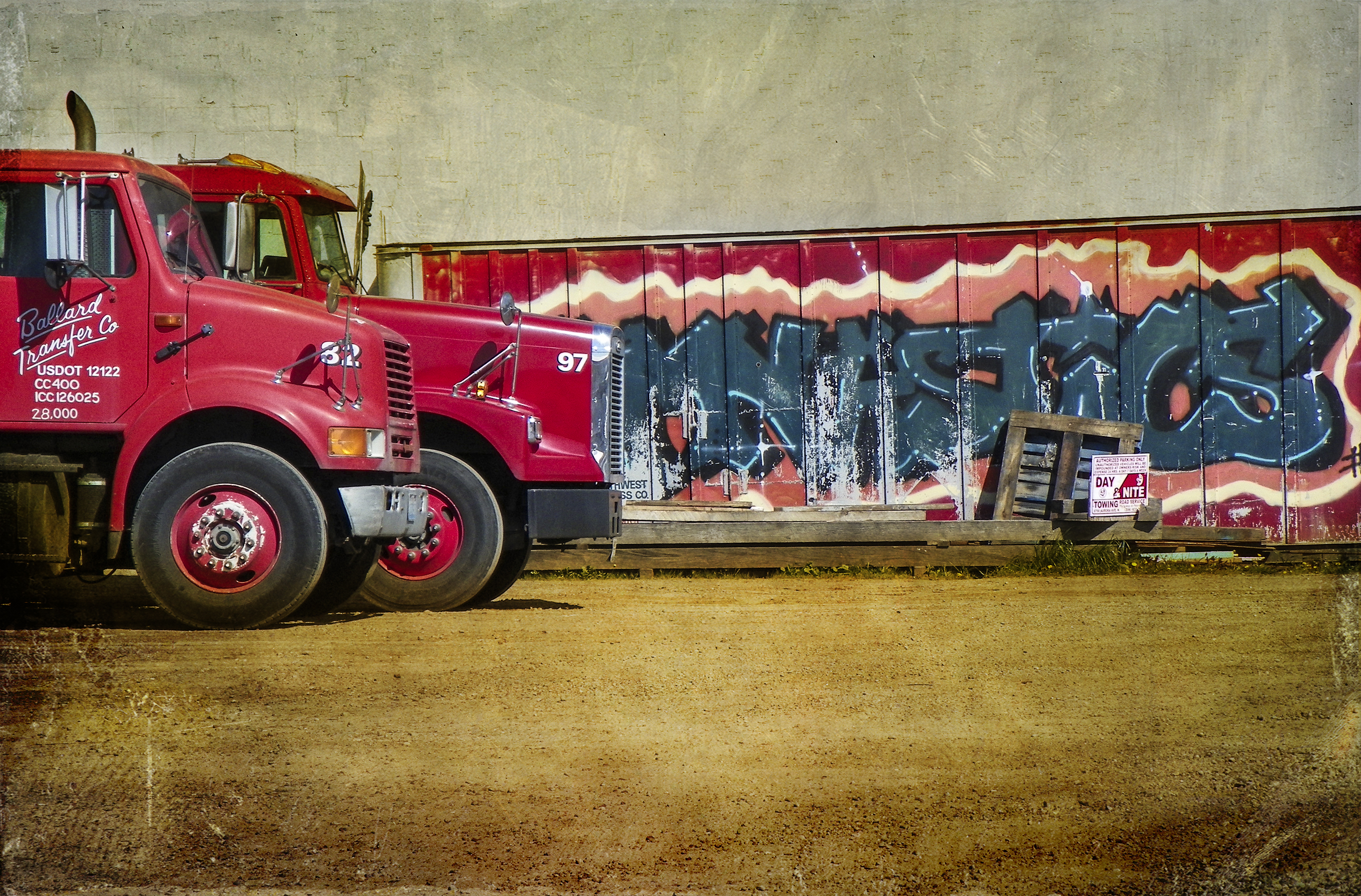
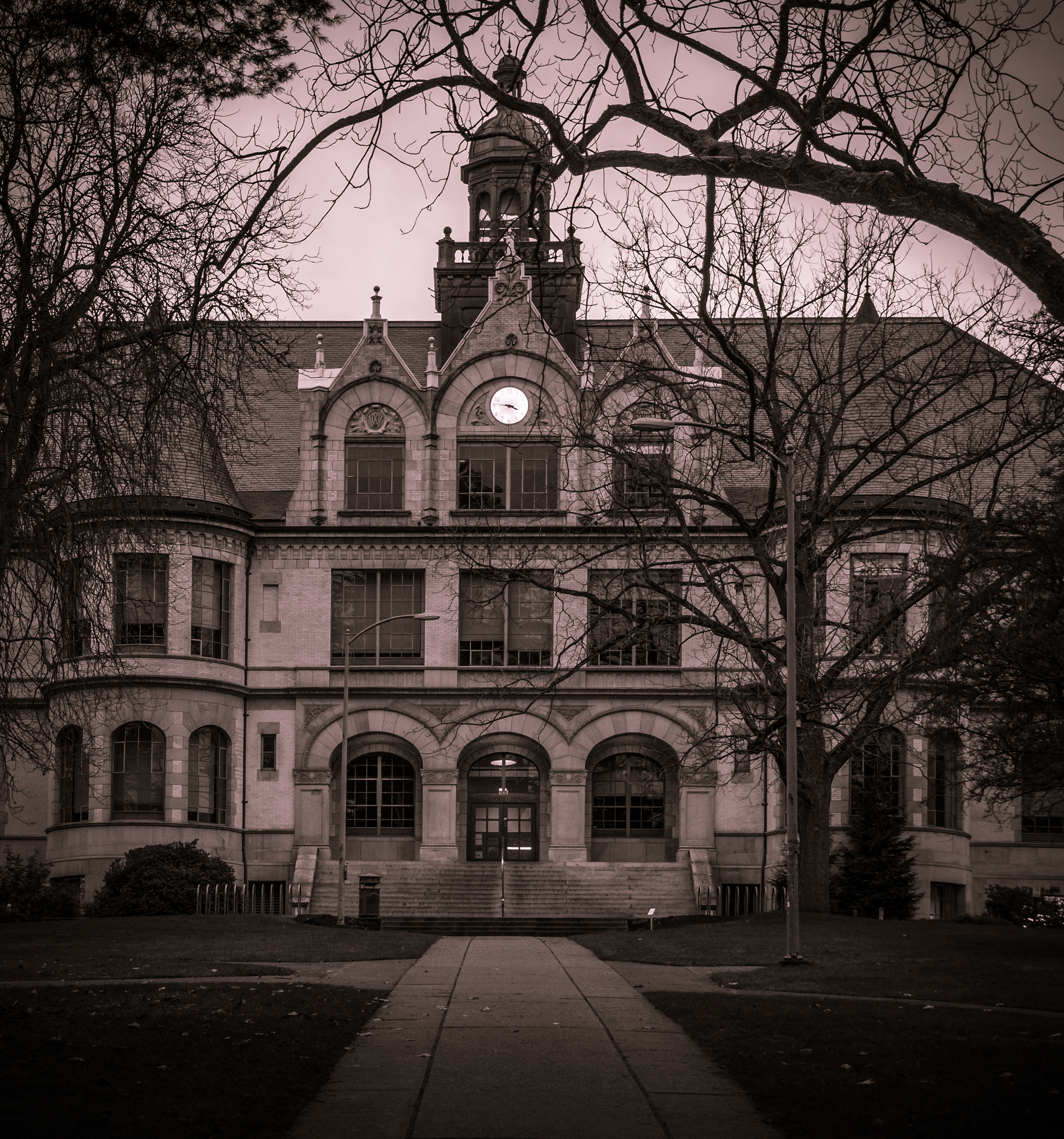
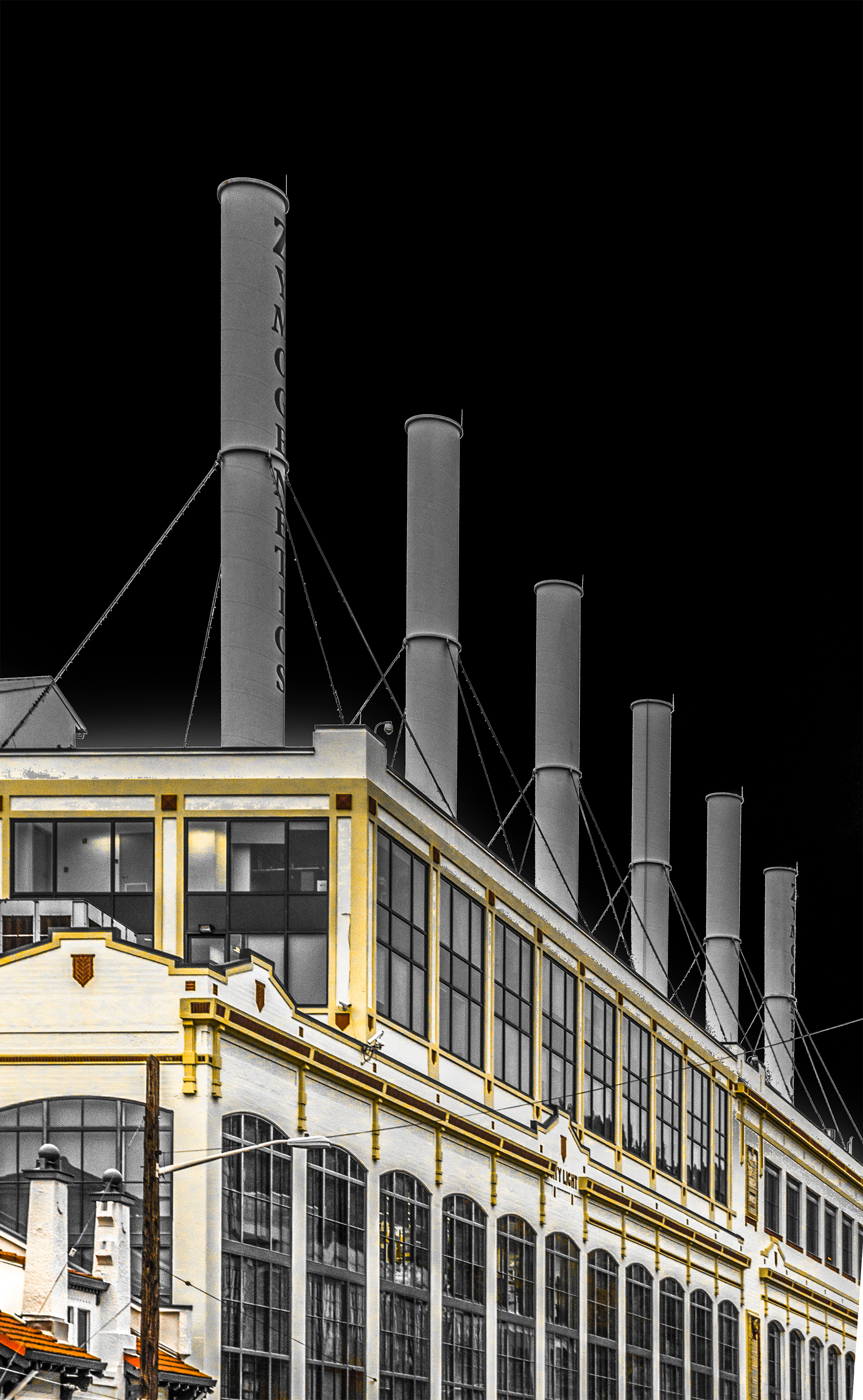
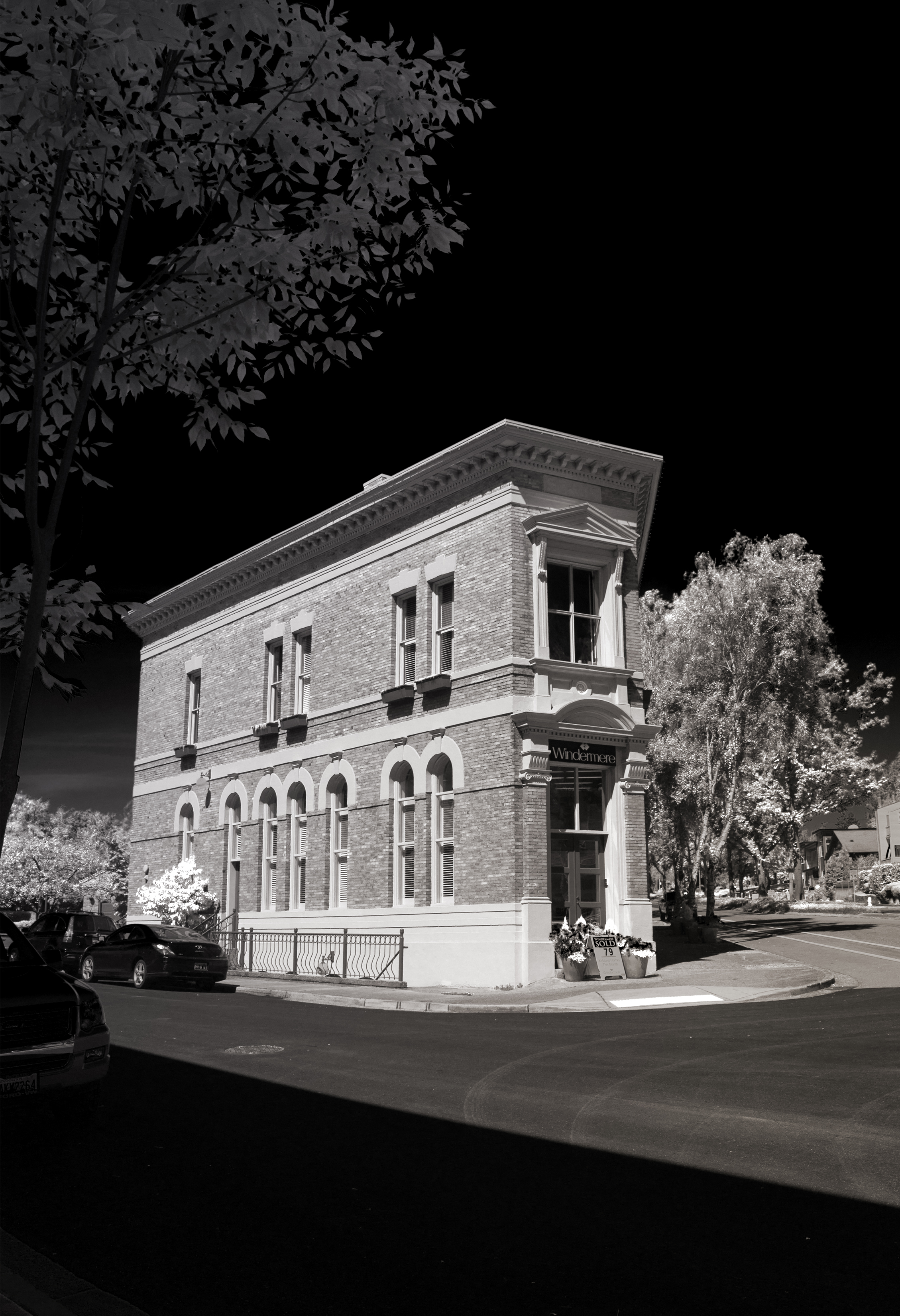
City Photography by Roger Leege

Roger Leege is a photo-artist who draws on his past as a lawn boy, meat cutter, trucker, EMT, carpenter, bass player, painter, embalmer’s assistant, weed-eater, printmaker, union agitator, journalist, videographer, educator, computer scientist, and deep blue Florida man, to tell his tales.

He keeps much more of his art at rogerleege.com.

“Walking in Chinatown” by Sarah A. Etlinger

Please note: Poetry is compressed to fit smart phone screens. If you are reading this poem on a phone screen, please turn your screen sideways to make sure that you are seeing correct line breaks for the poem.

While walking in Chinatown, Allie says
If I had married my college boyfriend, I’d be a single mom on welfare.
We are drinking bubble tea, its sunset colors and glistening dark pearls
pressed against the cup like faces come to the window.
Jason picks up a knob of ginseng, holds it to his nose.
We palm lumps of sugared ginger,
the transparent moons of lychee candies glow against our skin.
Across the street a plant spills itself onto a cement stoop.
Above a doorway, like a brass god, a man chokes sound from his guitar, indifferent to us.
Three hours until dark. The El arrives and we enter, one by one, into our own lives.

Sarah

Sarah A. Etlinger is an English professor who lives in Milwaukee, WI.. A Pushcart and Best of the Net nominee, she is the author of 4 books; most recently, A Bright Wound (Cornerstone Press 2024). Recent work appears in Spoon River Poetry Review, Pithead Chapel, Rattle, and many others.

“Chiang Mai” by Neal Donahue

Please note: Poetry is compressed to fit smart phone screens. If you are reading this poem on a phone screen, please turn your screen sideways to make sure that you are seeing correct line breaks for the poem.

The Muslim call to prayer
awakens us at quarter to six
in the morning, the pulsing
voice otherworldly and insistent.

We find ourselves in Chiang Mai,
a market city, prosperous and
alive, a religious mecca with
golden temples and Buddhist monks.

The air is cool and fresh,
a welcome change from Bangkok,
and we are uplifted by flowers and
the majesty of surrounding mountains.

As we make our way upward
on the winding mountain road,
the city falls away below, a busy hub
in the shadow of Suthep Doi.

At the temple, we ring the bells,
their throbbing tones rising up
toward heaven, the benevolent
spirits welcoming our prayers.

Neal

Neal Donahue majored in English at the University of Oklahoma, then served 5 years as a submarine officer. After his stint in the Navy, he taught elementary school in Massachusetts and Vermont, incorporating poetry into his curriculum. Neal has had a number of poems published in small journals.

Photography by David A. Goodrum

David A. Goodrum, photographer/writer lives in Oregon. His photos have graced the covers of Cirque Journal, Willows Wept Review, Blue Mesa Review, Ilanot Review, Red Rock Review, The Moving Force Journal, Snapdragon Journal, Vita Poetica and appeared in many others.

See additional work (photography and poetry) at http://www.davidgoodrum.com