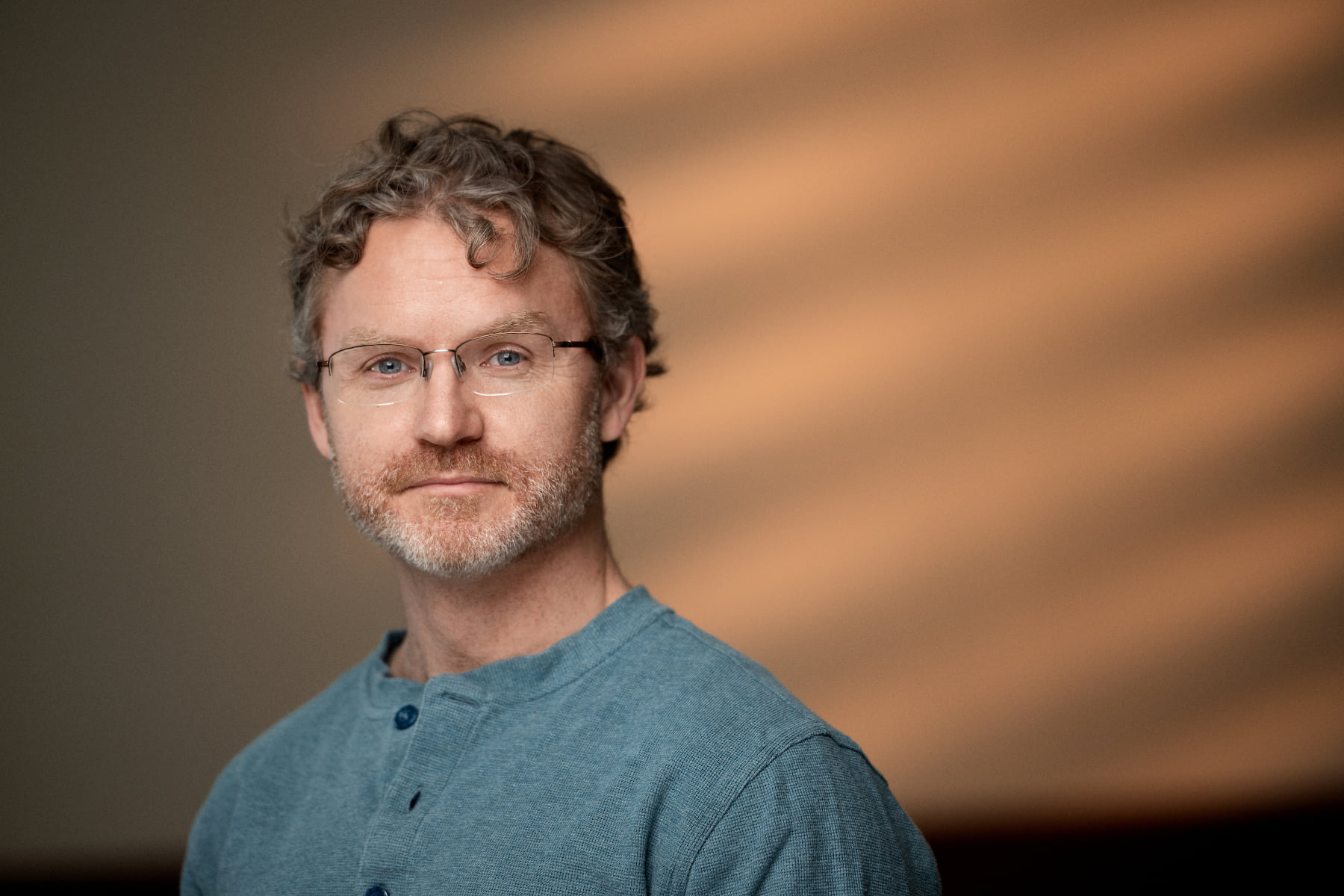
Three Roman Poems by Carlo Rey Lacsamana

Please note: Poetry is compressed to fit smart phone screens. If you are reading this poem on a phone screen, please turn your screen sideways to make sure that you are seeing correct line breaks for the poem.

I
Morning is laid out like a tablecloth
over the gardens of Villa Borghese
the whole of existence sparkles like the trumpet
moaning in full blast at the piazza overlooking Piazza
del Popolo
how the winter clothes bite the warm crust of sunlight like bread
how the ears drink the never-ending songs of fountains like wine
-songs of return songs of leaving-
and as I step into the shadows of trees
I remember what brought us here
to feast on this mystery like sheep that feed on grass
stuff our mouths with marvel and green air fill
our bellies with gratitude and poems
we stay close to each other listen to the wind
play with our hair our good intent for the world
reunites with our sorrow in the freshly cut grass
to love what is left to love in this loveless world
we lean back our heads in the light with eyes closed
as though we carry the answers

II

Temporarily on display
at the Galleria Borghese
is Rubens’ Risen Christ from 1615

to rise like the Christ in Rubens’ painting
waking up from death with a face washed by forgetfulness
not of indifference but of surrender
a face that says “it could not have been otherwise”
the dignity of the wounded
his body looks healthy and fresh
as though it has forgotten the wounds and the injury
it has suffered
even the stab hole on his lower right chest does not speak of pain
but like a tiny mouth that wants to sing
his feet longing to touch the warm earth again to walk all over again
pass through fatigue and thirst and hunger all over again
the angel lifting the shroud from his head with a surprised look
to see in Christ’s eyes the love of life as great as the suffering endured
dying indeed is the beginning for this is what Resurrection is
we are summoned to live again to love again to be hurt again
to die again

III

As old as Rome is my love for you
as chaotic as the tourists in Fontana di Trevi
is my desire for you
the way Bernini grasped chisel and hammer
I grasp you in my heat to shape this desire
to make a body of this wanting give it head arms and legs
miraculous as marble
maybe along Trastevere our glance will meet
when everyone is on his way to work when every fucking tourist
returns to his hotel when the sun grants refuge to the cold
and brokenhearted or in some corner in Piazza Spagna
where people show off their clothes or in some bar at
Piazza Navona where the fountains say your name all the time
over a cup of coffee our glance will meet
because your eyes are the city
that I feel enclosed engulfed enveloped like a gladiator
in the Colosseum but I do not fight there are no cheers
no rewards no condemnation
I am only a poet whose weapon is a flock of sparrows in his throat
whose appetite for loneliness runs further that the Tiber River
whose longing is as steadfast as your seven hills
I would rather be punished if punishment means
to be devoured by your touch
who can I make friends with here but the wind passing by like myself
sighing through neighborhoods razing the palaces and squares
with its cold breath of nostalgia
she keeps me company like a mother leading me by the hand
taking my heart to all the places where metaphors
lead to another existence where every line of a poem leads eventually
to you
yes, the wind whipping against my face exposes my heart
the heart which has too many secrets intrigues dark passages
like the Vatican but its walls crumble when it hears your footsteps
when the fragrance of your hair invades my body with tremors
and my voice is silenced like the paintings I survey for hours
at the museum searching for your face sometimes I dream of entering
the paintings of me becoming Christ crucified and you embracing me
like the Madonna weeping or me becoming Saint Sebastian
tied to a pole and you the arrows entering me without mercy
I loving the pain or I want you to be the nude like those of Rubens’
so loved by the painter you can tell by the folds and softness of their flesh
outside of these art galleries the moon wells up brighter and wiser
the lampposts flicker the river flares up the burning waters
carrying your reflection the rumble of cars over the road
the dying civilization words pile up in me like the dreams of immigrants
along the roadsides
the ghost of Anna Magnani appears in Piazza del Popolo dancing like
a madwoman
I dance with your shadow while the Neros of this world
set the temple on fire
maybe civilization is a bad idea who can tell
all these noise and madness tearing us apart
what about this dancing beneath the winter stars
the smoke-signs above the railways there is another road
we can turn into and the secret you impart in my ear
there is still a reason to live

Carlo Rey Lacsamana is a Filipino writer, poet, and artist born and raised in Manila, Philippines. Since 2005, he has been living and working in the Tuscan town of Lucca, Italy. He regularly contributes to journals in the Philippines, writing politics, culture, and art. His works have appeared in Esquire Magazine, The Citron Review, Mediterranean Poetry (Stockholm), Amsterdam Quarterly, Lumpen Journal (London), The Berlin Literary Review, Literary Shanghai and in other numerous magazines. His short story Toulouse has been recorded as a podcast story in the narrative podcast Pillow Talking (Australia). Follow him on Instagram@carlo_rey_lacsamana

“The Same Songs” by Frank Modica

Please note: Poetry is compressed to fit smart phone screens. If you are reading this poem on a phone screen, please turn your screen sideways to make sure that you are seeing correct line breaks for the poem.

A Crosby, Stills, Nash and Young
song blares from my car speakers
while I drive to my mother’s
west suburban bungalow
after a short trip to Aldi’s.
The lyrics about lost
loves ring out
unexpected, streaky
tears on my cold,
wrinkled cheekbones.
“Life is so unfair,”
I shout at the radio,
“Too many wasted days and nights.”
I don’t stop to consider
whether this same
soundtrack disturbs
the quiet daydreams
of other restless drivers
who drive around Chicago
trying to forget the loves
they lost in all
the same places.

Frank C. Modica is a cancer survivor and retired teacher who taught over 34 years. Frank’s first chapbook, “What We Harvest,” nominated for an Eric Hoffer book award, was published in 2021 by Kelsay Books. His second chapbook, “Old Friends,” was published in 2022 by Cyberwit Press.

Three Poems by Jeffery Allen Tobin

Please note: Poetry is compressed to fit smart phone screens. If you are reading this poem on a phone screen, please turn your screen sideways to make sure that you are seeing correct line breaks for the poem.

Life Through a Transom

From the transom above my grandparents’ door,
the city stretched like a secret,
half-glimpsed, half-dreamed,
a mosaic of rooftops and smokestacks,
where stories rose and vanished
in the smog-filled air.
I watched it from a distance,
my childhood framed in glass,
the world a silent play
performed on dusty streets.

Every afternoon, I climbed the stairs,
stood on tiptoe to peer through the pane,
my eyes tracing the lines of buildings
that seemed to touch the sky,
each window a portal to lives
I could never enter,
each alley a whisper
of adventures just out of reach.

The city sang a muffled symphony,
horns and shouts a muted hum
beneath my grandparents’ gentle voices,
their stories blending with the distant din,
an undercurrent of life
I could never quite hold.
I saw children playing in the park,
their laughter a faint ripple
across my glass-bound view,
their games a choreography
of innocence and escape.

I imagined myself among them,
running through the maze of streets,
feeling the pulse of the city beneath my feet,
but always, I remained
behind the transom, a spectator
to a world that moved on without me,
each day a reflection
of what I could not touch.

The city was both near and far,
a heartbeat away and a lifetime apart,
its secrets tantalizingly close,
yet always slipping through my grasp.
I grew older, my visits less frequent,
the view through the transom unchanged,
yet somehow different,
a reminder of dreams
that faded with time.

Now, I see the city in my mind,
a distant memory etched in glass,
its streets a labyrinth of longing,
its lights a constellation of loss.
The transom remains, a silent witness
to my yearning, my small rebellion
against the confines of home.
I wonder if the city remembers
the boy who watched from above,
if it holds his dreams in its concrete heart,
or if they are scattered, like leaves in the wind,
carried away by the currents of time,
lost in the endless rhythm of life.

King of the Trestle

He reigned over the trestle,
a monarch of forgotten dreams,
his kingdom stretching beneath the steel arches
where trains thundered above,
their rumble a lullaby
to the man who made the rails his throne.

Every morning, I walked to school,
passing his domain with a mixture
of curiosity and fear,
wondering about the stories etched
in the lines of his weathered face,
each wrinkle a sign
to battles fought and lost.

His eyes, clear and piercing,
held a depth that spoke of places
far beyond the bridge,
yet he chose this spot,
this concrete refuge
from a world that turned its back.
I never knew his name,
but to me, he was royalty,
a king without a crown,
whose court was the pigeons
that fluttered and cooed
like restless courtiers.

Some days, I’d see him muttering
to the ghosts of his past,
his hands gesturing to the air
as if shaping the memories
that kept him company
when the nights grew long
and the cold seeped in.

I wondered what brought him here,
what dreams derailed on the tracks
that led him to this place.
Did he once have a family,
a home filled with laughter?
Or was the trestle always his destiny,
a final stop on the journey
through a life less kind?

I never spoke to him,
fearful of crossing the invisible line
between our worlds,
but his presence left an imprint
on my young mind,
a lesson in the fragility
of human existence,
the thin veil that separates
those who have from those who don’t.

Years passed, and I left the neighborhood,
the trestle a distant memory,
its king a shadow in my thoughts.
I often wonder if he’s still there,
if the trains still sing him to sleep,
if the pigeons still gather
to hear his silent proclamations.

Sometimes, in the quiet of the night,
I imagine him sitting on his makeshift throne,
looking out over his kingdom
with a dignity that defies his plight,
a king of the trestle,
lost in the symphony of the rails,
his legacy etched in the rhythm
of wheels on steel,
a life lived on the edge,
a story untold yet profoundly known.

Milk Bottles

Grandmother’s stories poured like milk
from bottles left on doorsteps,
each tale a glass of yesterday,
frosted with the mist of memory.
I listened, enthralled by the clink
of the delivery man’s cart,
the early morning ritual
of fresh starts on silent streets.

She spoke of mornings when the city
still slumbered, when fog clung
to the corners of buildings
and the world felt softer,
as if wrapped in wool.
The bottles stood like sentinels,
gleaming in the first light,
promising nourishment
in their fragile embrace.

I imagined the sound,
the gentle thud of glass against wood,
a symphony of routine and care,
each bottle a message
from a simpler time,
a time when life was measured
by the rhythm of deliveries,
the certainty of small gestures.

Uncle Jim’s voice added a different hue,
recollections tinged with the scent of coal
and the hum of streetcars,
each memory a brushstroke
on the canvas of our family lore.
He spoke of neighbors chatting
over fences, of the milkman’s smile,
a fleeting moment of connection
in a city that never stood still.

I longed for that world,
the tangible comfort of glass and cream,
the predictable cadence of daily life,
unbroken by the chaos
that seemed to seep
into every crack of the present.
The stories were my refuge,
a window to a past
where people knew each other’s names
and the milk always arrived on time.

The tales have since faded,
their edges blurred by the march of years,
but the image of those bottles remained,
a symbol of something I could never grasp,
a time I could never touch.
I find myself yearning for that simplicity,
for the solidity of glass
and the certainty it contained,
even as I navigate a world
where everything feels transient,
where nothing seems to last.

Now, I hold these stories
like those old milk bottles,
delicate and clear,
filled with a substance
that nourishes my soul,
yet always just out of reach.
I wonder if the past ever truly leaves us,
if we are all custodians of memories
delivered from house to house,
each story a bottle waiting
to be opened, to be savored,
to remind us of the ties
that bind us to a time
when life seemed simpler,
and the milkman’s visit
was the highlight of the day.

Jeffery Allen Tobin is a political scientist and researcher based in South Florida. His poetry, short stories, and essays have been published in many journals, magazines, and websites. He has been writing for more than 30 years.

“Fickle City” by Bonnie Perkel

Please note: Poetry is compressed to fit smart phone screens. If you are reading this poem on a phone screen, please turn your screen sideways to make sure that you are seeing correct line breaks for the poem.

Sky-high stilettos echoed on the sparkling Mica sidewalks
of 70s New York, under dim yellow streetlamps
by CBGBs and the Russian baths. Oblivious to rats
scampering nearby, each beckoning corner led to a promise
of the newly possible.

This city of dreams and sorrows held me in its smoggy dome,
as the twin towers lit the starless night and seemed forever
the north star. Reaching the pinnacle, I twirled on the rooftop
dance floor of Windows on the World, adrift under a singular sky
that held me like a cocoon, vowing that I was special. I would soar.

The guru, the venture capitalist, and the Kabbalist communed
as the 80s burst forth from the sheer curtains of fire-escaped
brick. Yoga cohabited with a cocaine-infused bar scene, technology
reached in with a steely grip, and an old infrastructure crumbled.

I clung to a tattered shawl of illusion – exposed, transformed,
even beautiful now. Defined and undefined, molded
and undone, wandering through an inferno of exploding steam,
lost loves, irredeemable vertigo. Another future called –
and it was time to go.

Still, the soul of that nascent woman haunts those fickle streets,
heels keeping step with the cacophony of horns.
Loves and losses wrapped in the jangle of wild auburn hair.
Forever wandering – in the newly possible.

After many years working in Manhattan corporate life, Bonnie Perkel changed course but kept writing. She has an M.Ed. and spent several years working at Duke University Press in North Carolina before settling in the Boston area. Over the years she has been an educator/administrator, academic advisor, and editor, and she has published in anthologies and academic/trade publications.

“My Lost City” by Diana Raab

(After “Oh My Lost City” by Pablo Neruda)

New York, the place of my birth,
still hear Streisand’s words of glory—
the city that never sleeps,
even for me as a teen
who slept under stars
with sexy boyfriends and cars.

Each Sunday visited
Rockefeller Center
where dad taught ice skating
they called him Mr. Mark—
unable to pronounce his long last name—
Marquise—invented after immigration
from some French ancestors
which is maybe why I love croissants, espresso,

chestnuts and steamy nuts from street vendors.
I left before I could drive,
but now want to revisit my roots, especially
with dad gone and the city changed faces
more times than I can count.

Queens was my place, Cunningham Park
where hippies puffed joints and concerts
permeated lively words with numbered streets
and houses in rows like soldiers, only colors
setting them apart, one hundred and seventy-third street—
oh the pink shingles dad pained when I was born
to match his pink impala—
the kid mother never wanted, but dad cherished.

She planted a cherry blossom tree
in keeping with theme,
her green thumb also holding the reins of her
favorite four-legged equine partner,
always more important than me.
She’s still there, waiting to die
but never dying to live
I only wish her well— planted
in the city I used to call my own.

Diana Raab, MFA, PhD, is a poet, memoirist, workshop leader, thought-leader and award-winning author of 14 books and editor of three anthologies. Her work has been widely published and anthologized. Her poems have been nominated for the Pushcart Prize and The Best of the Net. She frequently speaks and writes on writing for healing and transformation. 

Her 14th and newest book is Hummingbird: Messages from My Ancestors, A memoir with reflection and writing prompts (2024). 

Raab writes for Psychology Today, The Good Men Project, Sixty and Me, Thrive Global, and is a guest writer for many others. Visit: https:/www.dianaraab.com. 

Two Poems by Matt Thomas

The Art Thief

She chased me down, caught me at an intersection, ran behind the car and recorded my plate on a white shopping bag which I thought was maybe from Baked & Wired, or a card shop, card shops I thought, also use those sturdy white bags, but the image of her gray head bent over the squashed bag, paling Eisenhower Building in the background, Potomac sky, 102 in August, etc.; what is called an indelible image, fled with from the scene after she strode around the car to rap the window convinced I had wronged her and I mumbled a denial unconvinced I had not, failing our interaction the same way that I failed my SATs, turning questions of fact into philosophy and so sped away when the light turned green while she shrunk in the rearview blocking E Street looking for the damage she was certain she’d accrued, thinking I’d escaped, which I had, but not with the thing she suspected me of stealing.

Metro Dancer

Requiring an audience to be alone,
flat metal strap like a barrette
between old school sun faded orange foam
headphones, cassette player humming,
an arm stretched like a cable
to the pole with a cupped hand sliding
up, down, bending knees in time
jeans hemmed by the carpet
worn black as if multitude others
had also abandoned convention
for slick chrome, every rider vibrating
above the groaning clattering,
speeding to uncertain landing pretending
to read or sleep maintaining proper frowns eyeing
the dancer, dreaming lost recalling
hand over hand that bottled fizz of youth
scratching from tinny headphones rebuking
the speeding commute, the functions and titles
shuttling up, down, a pump jack drawing
the question from where it has settled
into seams and every rider watching
also reaching, yearning, asking
where am I going, and why?

Matt Thomas is a smallholder farmer, engineer, and poet. His recent work can be read in Pinhole Poetry, Susurrus Magazine, and elsewhere. Disappearing by the Math, a full-length collection, was published by Silver Boy in 2024. He lives with his family in the Blue Ridge Mountains of Virginia.

Two Men Talking in Spanish” by Susan Kolon

Please note: Poetry is compressed to fit smart phone screens. If you are reading this poem on a phone screen, please turn your screen sideways to make sure that you are seeing correct line breaks for the poem.

On Wednesdays, she sits at the bar
at the pancake cafe. It’s 9:46 a.m.,
the slice of slow between commuter
breakfast and WFH lunch. Straight ahead,

two servers talk, rolling forks
into paper napkins. What do they talk
about? Her urban regret of never learning
Spanish. Faces not flavored with any emotion

or energy from what she can see,
their hands circle time with the leisure
of untroubled effort. The TV hangs above them,
muted. Like the golden rich of polenta

pancakes set before her, a gleaming, silent
barter. She joins the men, united
in a bubbled moment of her own labor.
Careful not to disturb.

Susan Kolon works in health education and writes from Chicago. ‘I hear a song and I can parrot the lyrics in moments. Writing poems takes me infinitely longer.’ She received an M.S. from Northwestern University and a B.A. from Michigan State University, where she was first published as a creative writing student. Her work has appeared with Corporeal Lit Mag, Dulcet Literary Magazine, Gnashing Teeth Publishing and Orange Juice, a poetry journal.

“I Prefer Montreal” by Cynthia Gallaher

Please note: Poetry is compressed to fit smart phone screens. If you are reading this poem on a phone screen, please turn your screen sideways to make sure that you are seeing correct line breaks for the poem.

I prefer Place Jacques-Cartier, where I can loll and pretend I’m Hemingway.
I prefer Parc du Mont-Royal, because the grounds were designed by the same Frederick Law Olmsted who landscaped Washington and Jackson Parks in my hometown Chicago.
I prefer Rue du St. Catherine, because the street remains lively with people day and night, as if the Internet and TV didn’t exist.
I prefer winding staircases lacing floor to floor on the outside the Montreal flats, leaving more room inside for those Catholic Canadiens with once-upon-a-time large families.
I prefer the island of Montreal, because where could you find such an urban paradise than on an island?
I prefer the St. Lawrence Seaway, the hefty, watery wonder that leads the world to Montreal’s door.
I prefer the Canadiens tolerance of my poor high-school French, entranced when I ask “Quel heure est-il? to answer “Un peu” to their “Parlez-vous francais?”
I prefer the easy road trip from eco-rustic Burlington, Vermont, to the sophisticated, continental world of Montreal.
I prefer how Chicago was once part of Quebec.
I prefer how Quebec farms look as familiar as Illinois’ but with a French twist.
I prefer to see Cirque du Soleil one day though I have listened to several of its show CDs.
I prefer to hear about Montreal’s 40-degree-below-zero winter days while surrounded by its summer flower beds and breezy fountains.
I prefer Old Montreal, a place that more North Americans who can’t afford to go to Europe can visit and get a similar vibe.
I preferred to be on Candid Camera and ended up on Just for Laughs in Montreal, which was so much more fun.
I prefer the microbrews and sorbets of Montreal.
I prefer how Montreal embraces its Native American art.
I prefer the Parisian satellite radio pumped into the Montreal hotel lobbies.
I prefer the Montreal accent, an Anglicized, flatter version that rings more familiar to my ear, with its New Yorker twist.
I prefer Montreal.

CynthiaLGallaher

Cynthia Gallaher, a Chicago-based poet, is author of four poetry collections, including Epicurean Ecstasy: More Poems About Food, Drink, Herbs and Spices, and three chapbooks, including Drenched. Her award-winning nonfiction/memoir/creativity guide is Frugal Poets’ Guide to Life: How to Live a Poetic Life, Even If You Aren’t a Poet.One of her poems will be sent on NASA’s flight to the south pole of the moon later this decade.

“Moms’ Night Out” by Raya Yarbrough

A study in social discomfort and expensive toast, with explanatory footnotes, to be read at the end

Tonight I went to “Moms’ Night Out” at a pseudo-posh bar in Santa Monica. This was an extra-curricular event through my daughter’s preschool, organized by Sam, a mother who is far more involved and organized than I am. I’m not an un-involved mom, but when I have time to myself, away from the task of keeping another human alive, my first thought is towards my work or a hobby, like running screaming out into the night.2 I went to prove to the other moms, and to myself, that I can be a person.

In the Lyft, I ruminated on my discomfort about social events. I just don’t know HOW to people. What do people talk about?3 On stage, life makes sense. I know where and when things are supposed to happen. I guess my point is, after getting past “Hello fellow human female. I see you have spawned as well. Yes, we all drink more now,” what do I talk to a bunch of effectively random women about? But still, I wanted to give it a chance.

My Lyft pulled up to the curb. I got out. I went into the bar.

Inside the bar, it was dim, but not sinister-dim, like sex-den dim. You know. A heavy, dark, toile curtain hung close to the entrance, obscuring half my view. I took two steps toward the toile, then panned left to right: a table with two women I did not recognize, two women and a man at the bar, also foreign to me, some empty couches and low accent tables, and then there was Sam, the classroom rep and event organizer. I see Sam every week when she volunteers to set up lunch for the teachers, and/or to do other devoted tasks. Sam has three children and does all this. Did I mention she’s also skinny and beautiful? I am automatically a disheveled, out-of-shape, one-kid-having wuss in her presence. Not that she projects that—she’s actually lovely—this is all in my head. Loudly. In my head.

Sam hadn’t seen me yet; she was checking her phone. Seemed confused. She was the only one on the couch. I turned on my mental “extrovert app,” and the mask appeared.

“Hi Sam!”

“Oh hiiiiii!”

She had a half-empty glass of sparkling wine. I sat down on a dark blue, velveteen, tufted couchlet. I didn’t see anyone else I recognized.

Fucking hell. I was the first one there.

We both made sounds at each other, reflecting the situation. We recounted the facts, as if we were reminiscing about the events of five minutes ago. Almost nostalgic for a distant past, ten minutes ago, back when it was Schrodinger’s Party in our minds, both alive and dead.4

The waiter came by to ask if we’d like to look at the menu. We said yes. We required new activity and stimulation.

Sam said the food at this bar was actually very good, and she put in an order for sliders. I went for the avocado toast. The waiter was patient while we decided how many orders of each we should get. I also ordered an Old Fashioned.

We did mom talk, while the waiter took our orders to the kitchen. Nap strategies, bedtime routines, what do they eat, finding “me time,” and teaching small humans where to poop. My Old Fashioned arrived. I stopped midway to my sip, catching sight of the artisanal-looking orange rind, which set off an overall tangerine effect in the glass. It looked like Dayquil.

Then, Sam asked the introvert’s nuclear question. “How are you?”

It sends me into existential paralysis. How are you physically? Emotionally? How are you finding this incarnation on this plane of existence?10

I told her about my recording project, my album. That’s a thing.

“Mmmm,” she said, and raised her eyebrows, like the information tasted good. There was full eye contact, without a side-glance, and I know that means a human is engaged. Good so far. I told her my husband had been out of town and would be most of the month.

“Mmmmm,” again, but this time with furrowed brow, indicating recognition of the potential hardship of the situation. That’s an empathic facial response. Even if faked, she took the trouble to make it.

I paused, searching for another “thing.” I got distracted because her eyebrows were impeccable. I started wondering about her skin-care regimen. Side-glance. Shit, I’d waited too long to say a thing, and now my presence had become burdensome. She checked her phone. Oh God, I’m an alien. An alien she’s having to babysit, alone, in a bar.

Our conversation was in syndication now, pure re-runs. She had already told me when her kids went to sleep, but I asked again, as if I needed clarification about the specific meaning of 6:30pm. She asked what I was recording. I told her, “my album.” She repeated her face. She apologized about the confusion and tapped on her phone. We alternated head swivels towards the entrance whenever somebody new came in. We repeated the conversation where we told each other what time it was, and how we thought people would’ve been here 30 minutes ago. We confirmed for each other that it was now five minutes later than the last time we checked.

Then silence.

Sam ordered a margarita.

Sam’s margarita arrived, salted.

The table was an embarrassment of sharp-cut, Himalayan salt-crystalled, conically wrapped French fries. In baskets. We ate the sliders and avocado toast. So there we were: two jilted, awkward, skinny-pants-wearing moms-in-a-bar, drinking and scarfing fries, because what the fuck at this point.

If we had chosen, intentionally, to hang out alone together, it wouldn’t have been as awkward. It was only because we had expected a night of perfunctory chit chat, with many people, that we ended up unprepared for genuine social interaction.

Sam looked with concern towards the kitchen. This is when I found out that she’d told the establishment to expect 20 people, and to reserve seating and staff appropriately. This was the social-let-down motherload—when the people you invited aren’t there, and the people you paid to be there are pissed off and glaring.

8:30pm rolled around, and Sam asked how long I had planned to stay. It was clear that truly, nobody else was showing up. I made words about the babysitter. I suggested we have plans with our husbands sometime, maybe a playdate, something intentional.

“Yeah totally!”

“Yeah we totally should!”11

Because the rules are that you must reverse an unintentionally awkward evening with an intentionally awkward one.

So that was Moms’ Night Out—which seemed like a very specific and reductive title, now that the night had passed in the way it did.

So, did I learn anything about how to be a person? Did I prove to myself that I’m a person?13 I learned that sometimes the discomfort goes deeper than me. And sometimes the most prepared, together, responsible folks can still get tapped by the wand of the awkward fairy.14

Footnotes:

2 For the record, “running screaming into the night” is not my hobby. My hobbies are: free-floating anxiety and delusions of grandeur. And watercolor.

3 Aside from Steely Dan, Dark Matter, good/bad use of crash cymbal, Dark Energy, sex, the dishes, more sex, why my software isn’t working, The Singularity, politics, “are changes in emotion metric modulations?”, weird sex, Black people stuff, “where are my earbuds?” Jewish people stuff, Fminor6/9, guys wearing eyeliner, “what are those tiny red spiders called?”, and Star Trek.

I may have digressed.

4 “Schrödinger’s cat” is a thought experiment devised by Austrian physicist Erwin Schrödinger in 1935. The scenario presents a cat that may be simultaneously both alive and dead, a state known as a quantum superposition. As the story goes,5 there is a cat in a box in the room next to you.6 You do not know how long the cat has been in the box, if the box is ventilated, if the cat has been fed, if the cat has been listening to Joe’s Garage7 or the Best of Celine Dion.8 Any of these variables could render the cat living or dead. Some more than others.9 Until you enter the room and open the box, in your mind, the cat is both alive and dead. Like the party. Before I got there. Get it?

5 Basically.

6 With soundproofing.

7 A three-part rock opera recorded by American musician Frank Zappa in 1979.

8 Please refer to 9

9 Please refer to 8

10 Fine. Needs salt.

11 Scientists estimate that people who suggest “making plans” in Los Angeles have, statistically, a 10 percent chance of actually seeing those plans become reality. Experts theorize that this behavior is due to several common circumstances, such as:

1) Some shit I’ve got to do.
2) “My girlfriend/boyfriend/spouse is sick/a dick/a bitch/in town/out of town/imaginary”
3) Plans with more professionally important people.
4) “Oh, shit I forgot!”
5) Something to do with kids.
6) Having to drive from West side to East side and vice versa, but usually the prior.
7) Having to drive between the hours of 2pm-7pm.
Recent studies have shown that Los Angeles people making good on “we should hang out” is less likely than the 405 receiving a hovercraft lane, or a frozen daiquiri blizzard naturally occurring over the Grand Canyon. Though there are differing opinions on how to deal with this social epidemic, 95 percent of experts12 agree that the situation is totally bullshit.
12) The other 5 percent of experts were not available for comment because they “Had a thing, but totally want to get together soon.”
13) No.
14) Different from the Absinthe Fairy, which is a story for another time.

Raya Yarbrough is a writer and singer-songwriter best known for singing the opening song of the TV series Outlander. Her creative nonfiction has been published in Frazzled and MUTHA Magazine. Raya is finishing a humorous memoir about being a parent in a multiracial family while also being a working artist.

“The Devastated” by Jennifer Bannan

Once, when we were visiting the Everglades camp, my second husband Brian sent us into fearful conniptions by stumbling off drunk to lie down and look at the stars. We didn’t know where he was and he wasn’t answering our calls.

This isn’t good, my dad said. People get walking in the wrong direction, he said, loading his gun, and they never come back. Somehow, I knew Brian wasn’t far, but Dad shot twelve rounds into the air nonetheless.

I wonder if it irked Dad that it wasn’t the gun that finally woke Brian, but the continued bellows of me and my sister. He emerged from the sawgrass, tripping over cypress stumps. He begged our forgiveness, trying to explain how the Milky Way had lured him. It was so beautiful.

Though he’s been to the Everglades twice before, those trips started with visits to my parents in Central Florida. Brian hasn’t seen Miami yet. He has only heard my stories. And now he’s dying of pancreatic cancer, in his late forties. We’re traveling the world – Thailand, Laos, Tulum, Cuba – and one of our stops will be the place that shaped me.

We drive, sunshine and air conditioning providing that particular mix I’ve never felt like it feels in Miami. There’s the house on Tenth terrace where I grew up. There’s the Denny’s where I worked – the mini mall now much fancier than it was back then, more landscaping, slick specialty shops.

We’re driving West on Tamiami Trail. I tell him what he probably knows, that an hour on this road would bring us to Monroe Station, where my dad kept his swamp buggy parked. The buggy and the camp were sold to an amiable guy who has shown he’s willing to host our visits out there. My parents sold it without even telling me and my sister. Because we live far away with our families. Because we’re girls. I believe a son would have been afforded right of first refusal. When I said as much to my mom, told her to put Dad on the phone, she panicked, she urged reason, We didn’t want to burden you. How would you fix a swamp buggy, how would you fix anything out there? I’ve known the Everglades since my earliest memories, loved it enough to name my youngest, and Brian’s only child, Cypress. They could have told us, could have given us the smallest say.

I turn off the Trail, driving the circuit. I show Brian the simple stucco box that was my first boyfriend’s home. Memories of salsa parties on the back patio, of the grandmother always sweeping the rug. Here: the Westchester mall where we kids would go for bistec and papas fritas.

Brian, stretching his lips weird because the chemo has left his mouth dry, doesn’t say much. I feel selfish spending time on these memories when time is precious. But then, he’s someone who loves big, and he loves me, so what better way to be in the world right now? Place is a part of us, and so this place will also be a part of our son Cypress, growing with him in mysterious ways. It’s important to see.

Next: Pat’s house, where friends blew a hole in the wall with a military-grade firearm. There’s my elementary school. The sidewalk where, as I biked, a teenager grabbed my ass and then showed me his handgun.

“They kept the boot to your neck,” he says of the violence, of the particular way it was directed at girls.

I’m reminded of another time, when he said, “We’re the devastated generation,” about all the toxins and consumerism and depletion of nature that had been normalized for us. And he said that before he knew about the cancer.

It’s true, the female experience of violence is unique, like the gun that forces declarations of love. We’re supposed to say how we like the boot to the neck, how it suits us.

But also, everything I loved. What the boot couldn’t take from me. The banyans of Coral Way. The beach at night like a black and white movie. The teacher assigning me The Autobiography of Benvenuto Cellini, allowing me to see myself in a grand, artistic way. The deep, pure yearning, emboldened by the crisp blue sky.

And, oh Brian, of the devastated generation. Your dying is proof enough that the boot hurts everyone, that the boot is on everyone’s neck. Every generation and all of us in it. All of us, again and again, bearing the devastation. Repeating the very cycle we’d hoped to disrupt.

Jennifer Bannan’s (jenniferbannan.com) second short story collection, Tamiami Trail, is forthcoming from Carnegie Mellon University Press Fall 2025. She has had stories in the Autumn House Press anthology, Keeping the Wolves at Bay, the Kenyon Review online, ACM, Passages North, Chicago Quarterly Review and more.