Three Poems by Eóin Flannery

City of the future

The branches of the trees are a squall of applause,
choiring out ragged notes on the park fence.

From the bench, shedding its paint in burnt petals,
I notice a trunk like a chipped dark vase, unpolished,

leaning off-balance, steadying itself with a thin elbow
on the iron perimeter gate that keeps the children
from the traffic.

Twisted with age, its face is curved with wisdom,
and I half expect it to curl
a twig in my direction.

Milky light breaks the cover of the upper branches,
daubing the lawns with a cage of brightness and shadow,

warming my skin with unsteady jets of heat,
heat that disperses unevenly out from the lawned
park,

heat that reaches beyond the traffic blockages, carried on
the same currents as the purest pollutants

speckling the arteries of circular motion,
the city’s cluttered corridors through which
we will walk.

The unstirred air is padded out with warmth,
worn as baggage, time’s stained clouds.

Unshadow – Wurzburg

A yellow tram folds itself around
the corner,
slippage and spark
are cobbled together at high pitch.

My shadow drains through the streets,
it seizes and strains,
brown eyes look
from behind the chains of rain
mingling
on the weathering shopfronts.

Steps lead to the bridge astride
an overwhelm of Spring river,
from where a sound that clouds out
the footfall of the passing and the past.
Where its white and grey mess
trespasses on disquiet.

High above the city,
your hand presses
on castellated walls.
Knuckles of stone, worn with story.
But there are gaps,
imagined looks and bursts of smile.

And there is that heartbeat
that recoils
from expressing too much, too late.

I try to unshadow it,
through the looks of others.

Aussteigen – Stuttgart

The doors of the train
snap shut like two bare
hands clapping against
a bitter cold, sending a shiver
through the bodies of those
that cluster on its plastic
seats.

Mice thread their way through
the brackets of steel below
on the tracks as

we race the escalators to
the bottom,
hit the platform –
too late,
but take
consolation in the
underground heat that
pads out
the tunnels.

We wait.

According to the colour-coded
map, we need the S3 to
Stadtmitte,
where we change to the S6,
it will take us all the way to
Weil der Stadt –
a mythic place,
the end of the line.

On the undercard of city life,
we wait for the gathering
vibrations of the next train,
the prickling tickle of its
tongue
beneath our feet –
the shared feeling that
something is coming.

download

Eóin Flannery is a writer based in Limerick, Ireland, where he is Associate Professor of English Literature at Mary Immaculate College. He has published 12 books of cultural criticism. His poetry has appeared in ‘The Galway Review’ and ‘Vita and the Woolf’, it is forthcoming in the ‘Hog River Press’ and in ‘Inkfish Magazine’. He is working on a collection of poems entitled, ‘Unshadow’.

Please note: Poetry is compressed to fit smart phone screens. If you are reading this poem on a phone screen, please turn your screen sideways to make sure that you are seeing correct line breaks for this poem.


“Popstar” by Margaret D. Stetz

my skin folds like a fan
my face an overripe tomato
reddens puckers
while my spine creaks on its hinges
my fingers curl and crimp
my clothes are vintage
jackets oversized with pads
like kittens sleeping on my shoulders
songs I hum aloud today
were once too cool for words
now sound too stupid
but please do not reveal
my secret—
I am really still fourteen-years-old
onstage in school performing
sure my future
is starbound…
as I wait now on
subway platforms
the loudening rumble inside tunnels
turns into applause
my selves from seven decades
surrounding and supporting
like girl-group backups
help me to survive
the pounding waves of urban life
come up for air
and in the darkness
even see
my name in lights

Margaret D Stetz 2024

Margaret D. Stetz is the Mae and Robert Carter Professor of Women’s Studies at The University of Delaware.

Please note: Poetry is compressed to fit smart phone screens. If you are reading this poem on a phone screen, please turn your screen sideways to make sure that you are seeing correct line breaks for this poem.
Two Poems by Scott Davidson

Snow on the Cars

The couple setting off in dress shoes have no idea
what walking home means. Snow like this changes
perceptions of competence. Clueless and therefore

undeterred by muck and chaos, by the memory of sitting
in the lobby of their father’s building weeping as their
feet began to thaw. Later, on the balcony, cars along curbs

form lines that make them look abandoned. Snow has
hardened in harmless sheets conforming to hoods and
sideview mirrors. Winter back home transformed us

to heroes. All over town, cars that drove in cold from
the hills appeared on streets like battered scouts. Cars
with windows fogged all around, heat from who knows

how many bodies. Here, snow is sudden and never
prepared for. The woman in heels and the man in loafers
will understand how wrong they’ve been. Those of us

leaning on fences back home, peering down creek valleys,
take it on faith there’s wisdom in surviving where those
valleys lead. I was only a quarter mile from my house,

standing in snow and stubble of weeds. In my layers of
clothes, my cinched down hood, it was clear in the suddenly
anxious distance, we are all of us lucky to be alive.

Streetlights

Blue or not, the last man through the door
never noticed the color of the walls or the height
of the man running in front of him. In those ways he
knew he was a disappointment. Later, in the coffee shop,
stumped by what to do when he leaves, he waits for some-
one to enter and change the direction of his life. Walking
home he feels unburdened – night air, streetlight hum,
hiss of traffic like a river. As he crosses Broadway, looks
back for cars, anything could be about to happen.

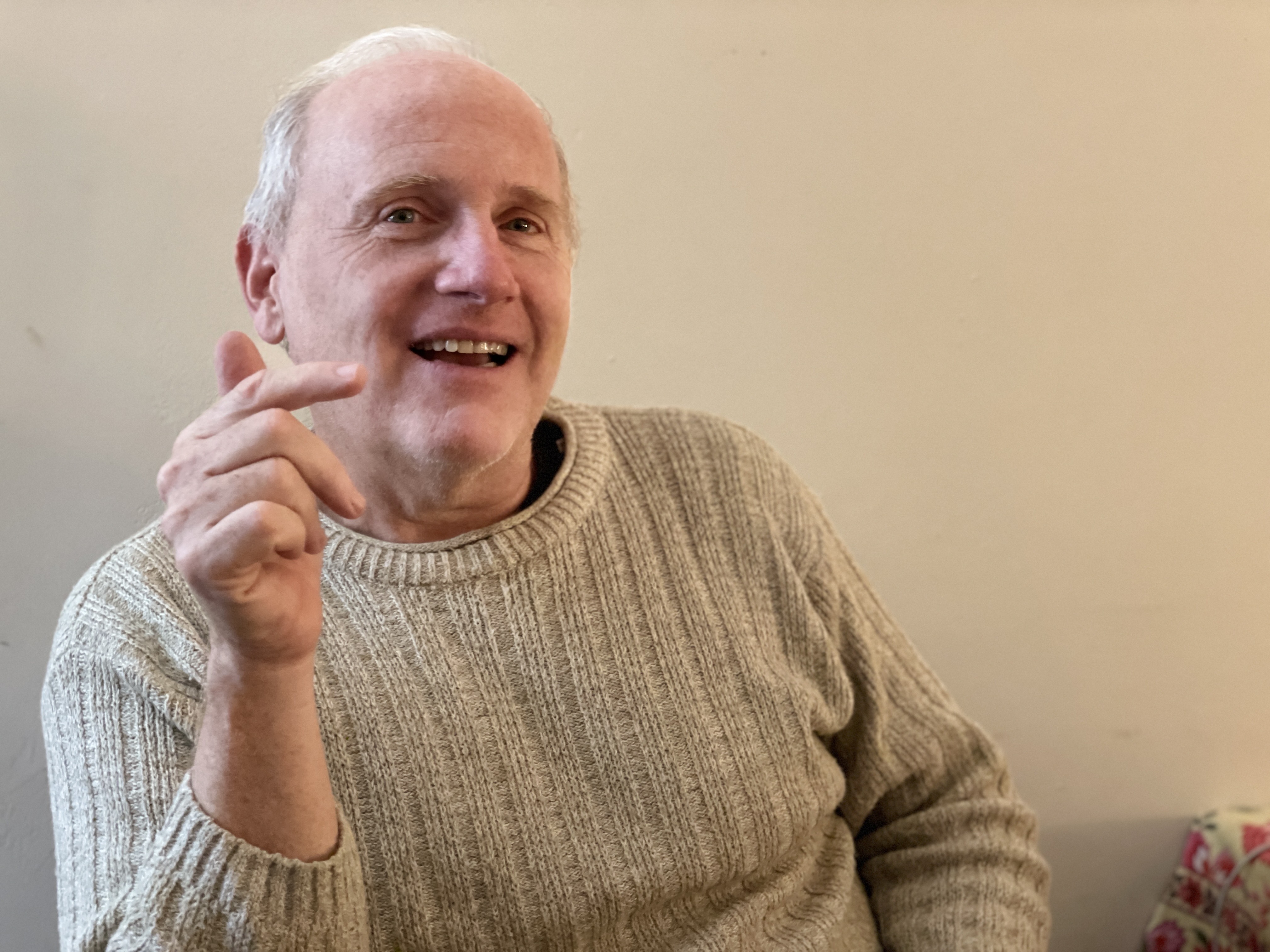
Scott Davidson • Author Photo

Scott Davidson grew up in Montana, worked as a Poet in the Schools and lives with his wife in Missoula. His poems have appeared in Southwest Review, Bright Bones: Contemporary Montana Writing, and the Permanent Press anthology Crossing the River: Poets of the Western United States.

Please note: Poetry is compressed to fit smart phone screens. If you are reading this poem on a phone screen, please turn your screen sideways to make sure that you are seeing correct line breaks for this poem.
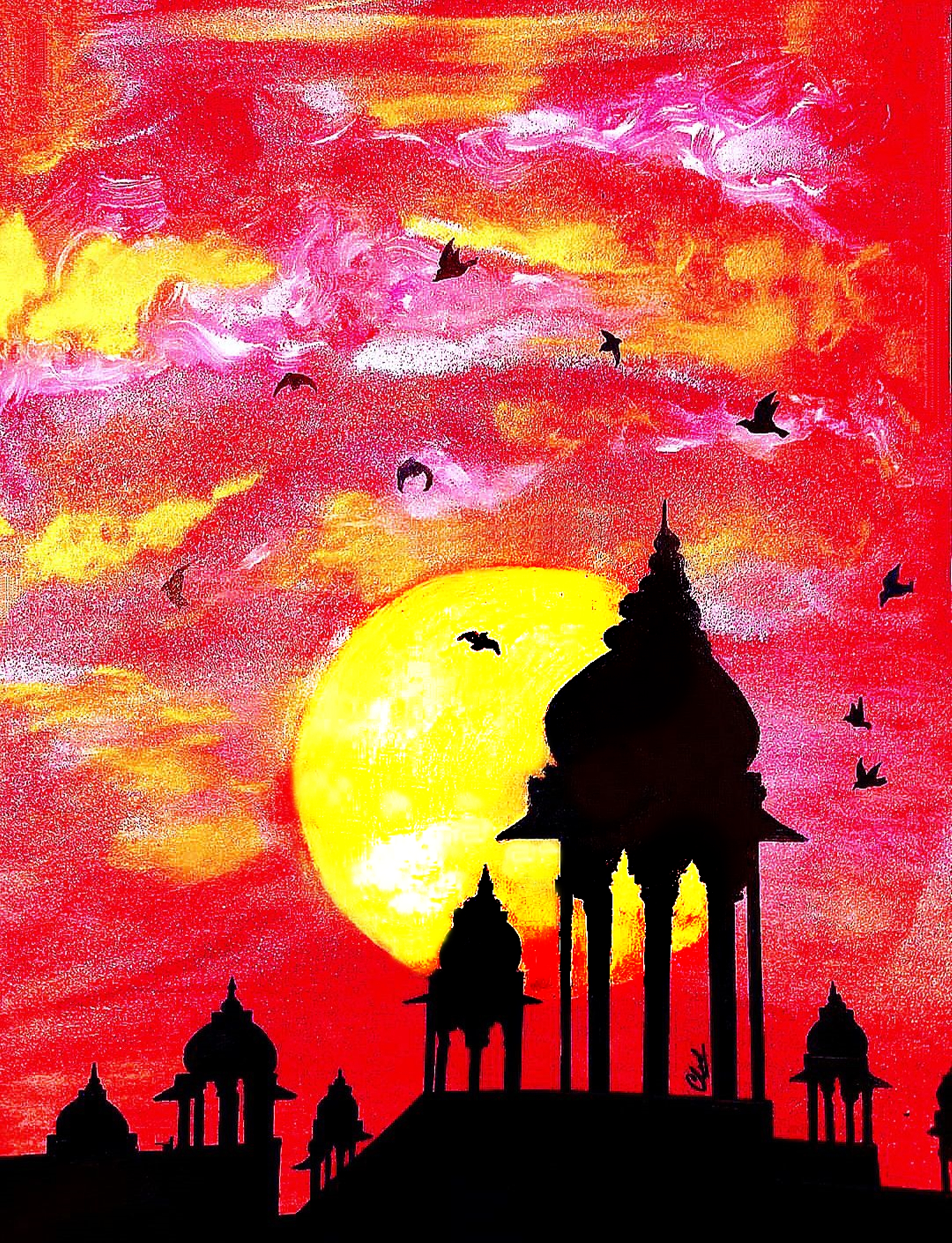
“Hagia Sophia” by Camellia Paul

Camellia Paul has a Masters in Comparative Literature from Jadavpur University, India. She works as a Senior Instructional Designer in a multinational ed-tech company.

Her works of translation, fiction, poetry, and art regularly appear in magazines, online journals, and anthologies. Camellia loves owls, reading, listening to music, and exploring cultures.

“The Only Girl’s Awakening” by Dorothy Venditto

This summer night began like so many before. Supper was over, and my mother said it was time for all of us to move to the living room so she could finish washing the dishes. I wanted to stay behind to help clean the kitchen and to be with my mom, but I was just 5 years old and wouldn’t have been much help. So, I followed my five older brothers and father into the living room as expected. I can’t remember what we were watching that night but imagine it was one of my father’s favorite cop shows. The younger kids got a seat on the hardwood floors, the older boys fought over a space on the couch, and my father collapsed into his chair in a way that signaled he was not getting up again.

On my favorite nights in our apartment, which this one was not, I could gaze through the open window from my seat on the floor and see the setting moon competing for attention with the Empire State Building. I could not seriously consider which would win such a competition because I felt their magic equally. I’d often find myself listening to the conversations of people walking on Third Avenue as their words and laughter made it through the thick summer air to our second-floor apartment. Groups of men loudly talking about the game they just watched at the corner bar and women considering where to go while hailing taxis – these types of conversations kept me listening for what might come next. I saw myself wearing shimmering high heels and a long, dramatic black coat and wondered where I would go when I was old enough to hail taxis on my own. Listening in on real people’s lives and creating imaginary ones for myself always won over TV storylines.

Sometimes, bad weather obstructed my view and street conversations leaned more toward conflict than celebration. Still, there was comfort in the routine hum. Ambulances often raced by, rousing me from daydreaming. One brother would mention, probably for the hundredth time, that it’s an emergency block for Bellevue Hospital, so you have to put up with the noise. But my oldest brother, who didn’t much like the high pitch sounds, almost always got up to close the window and shut out the sirens.

Continue reading “The Only Girl’s Awakening” by Dorothy Venditto

“Secular Ascension” by James B. Nicola

No matter how long we live
No matter how alone we lie
We are all unborn
And all deceased
For the same amount of time
And the same distance from each other
Whatever that distance may be.
Call it eternity. Call it infinity.
But like an ocean and its islands
Eternity is interrupted
By us.

No matter how high up we reside
We are all the same distance from heaven.
A lifetime.
A universe.
But a universe interrupted.
By us.

*

I live forty-five floors above Hell’s Kitchen in the middle of Manhattan.
It is my favorite place on or above Earth.
The view takes my breath away. Every day.
If you visit me, the view will take your breath away.
In such apartment buildings, the elevator is everyone’s friend.
When you visit me, the elevator will be your friend.

When the world below and outside happens to be hell and storming
With squalid snow, hectic hail, incorrigible ice, or rambunctious rain,
I stay inside instead of jogging, walking, biking, or hiking.
I stay inside so as not to catch cold.
So as to stay healthy.
On such days, I walk up the stairwell a few times
For the cardiovascular exercise.
I ascend to stay healthy.

The stairwells in such apartment buildings have no windows and no view.
It is the climb that takes my breath away.
If you visit and walk with me, the climb will take your breath away.
Then I shall cook you a meal from scratch.
If you visit me, you may feel healthy.

*

I grew up near Mt. Wachusett, Thoreau’s favorite mountain, in Massachusetts.
It’s become a favorite climb, even after a storm, branches of pine and birch,
rocks and roots strewn everywhere, a landscape mid-revision.
It’s not one of the holy mountains of the world, like Croagh Patrick in Ireland
which I’ve scaled or Denali in Alaska where I’ve hiked.
But Thoreau walked to Wachusett from Walden Pond and scaled the slope, and
he was a holy man, in a secular sort of way.
I hike to the top, then stroll down, at least once a year. When I happen to be
In Massachusetts.
I even walked to Wachusett once from Walden.
Always I breathe in the view as well as the air’s green perfume.
What exhilaration!

At the top of the mountain, I feel
As if I am on, or even am,
An island in the air and, oddly,
Not so far from either home or
Heaven.
Back at the bottom, spent, I feel
Healthy.

*

I think and feel and care, never far from You.
You are my favorite hope, like a favorite mountain,
Even when I’m confused, even when I’m an island.
After a calamity, not knowing where to turn, I glance up and ask, “Now, what?”
At times from the top of a building.
At times from the top of a hill.
And at times I have heard You answer me.
I thought I heard You answer me.
I’ve heard and hear You answer because
You take my breath away.

Each breath I take
Each blink I make
Is an elevator door slid open,
A button pushed, a panel lit,
A pace down a corridor,
A step in a hike on
A rocky, root-strewn climb
Toward the summit of a desultory life.
Toward the summit, I suppose, that’s You.
There is no down.
But what exhilaration!

And one day,
One year,
After all my years and days are done,
I shall be no longer the interruption,
No longer the island remote.
I shall be forever
Home.

And this is the only exercise, the only true exercise, the only breath truly taken away.
This is the only ecstasy: the thrall of impending rapture.

jbNicolaimage_option1

James B. Nicola is the author of eight collections of poetry, the latest three being Fires of Heaven: Poems of Faith and Sense, Turns & Twists, and Natural Tendencies (just out). His nonfiction book Playing the Audience: The Practical Actor’s Guide to Live Performance won a Choice magazine award.

Please note: Poetry is compressed to fit smart phone screens. If you are reading this poem on a phone screen, please turn your screen sideways to make sure that you are seeing correct line breaks for this poem.
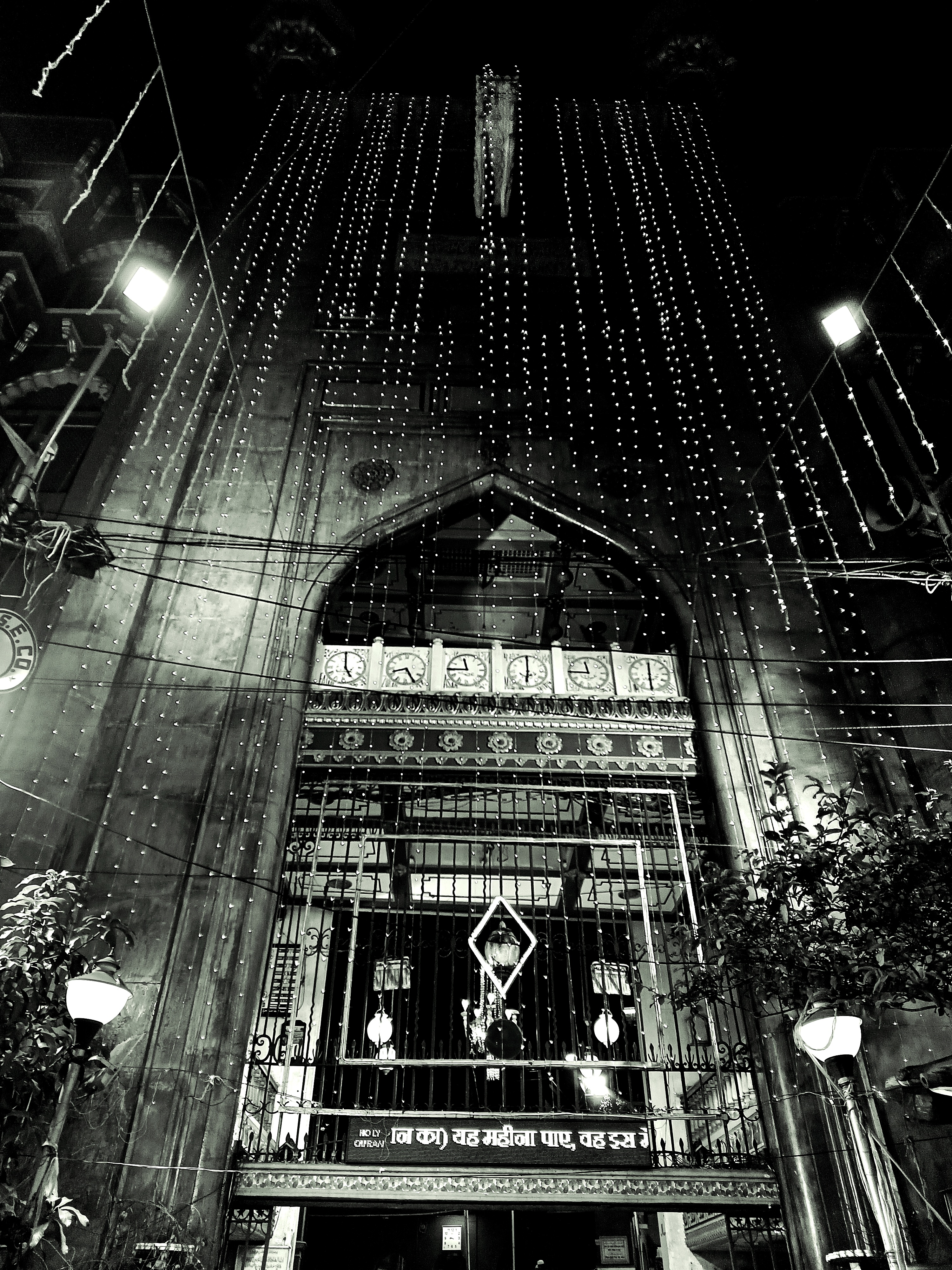
“Nakhoda Mosque” by Camellia Paul

Camellia Paul has a Masters in Comparative Literature from Jadavpur University, India. She works as a Senior Instructional Designer in a multinational ed-tech company.

Her works of translation, fiction, poetry, and art regularly appear in magazines, online journals, and anthologies. Camellia loves owls, reading, listening to music, and exploring cultures.

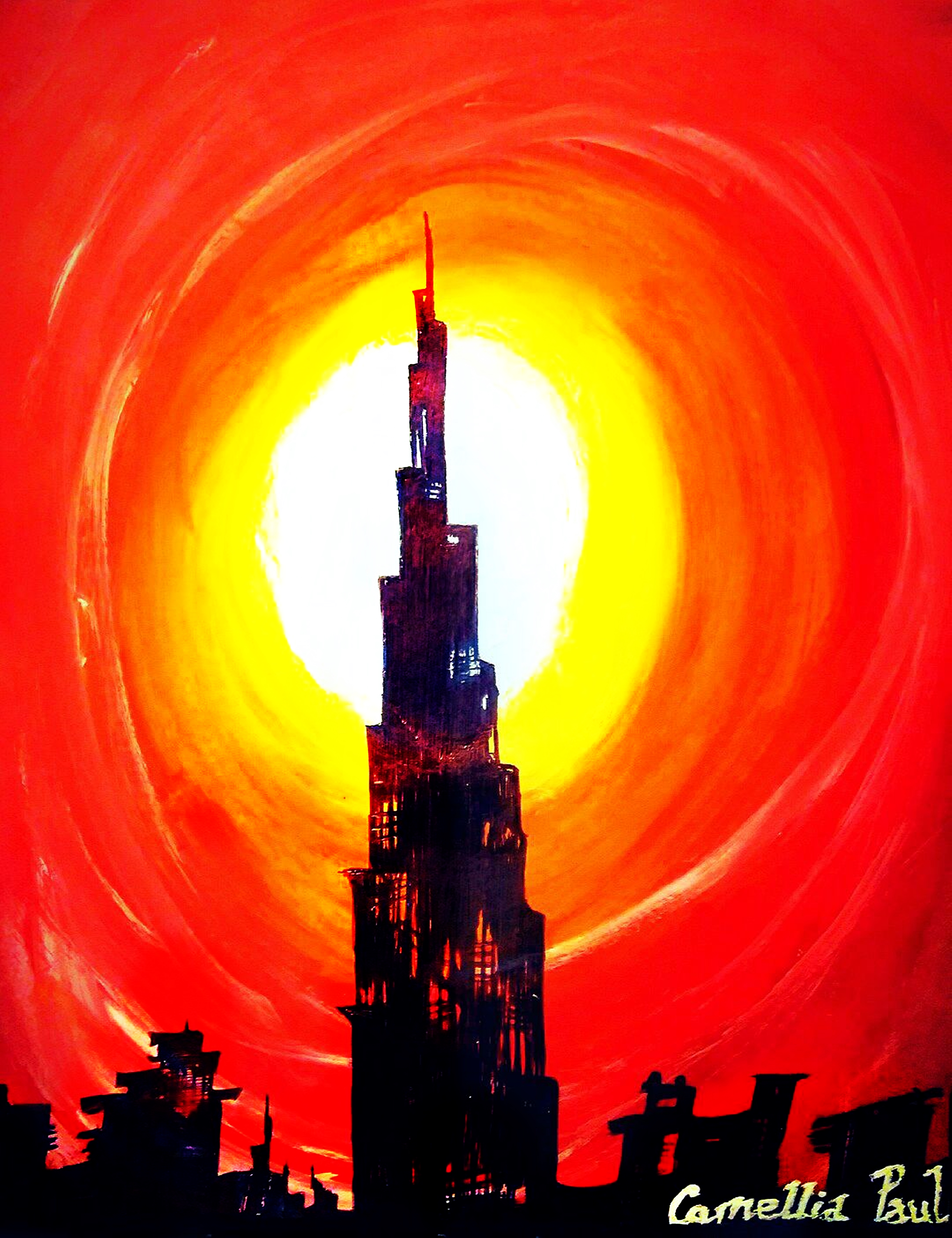
“Burj Khalifa” by Camellia Paul

Camellia Paul has a Masters in Comparative Literature from Jadavpur University, India. She works as a Senior Instructional Designer in a multinational ed-tech company.

Her works of translation, fiction, poetry, and art regularly appear in magazines, online journals, and anthologies. Camellia loves owls, reading, listening to music, and exploring cultures.

“Watercolor: Umbrella with Girl” by Jeff Burt

August rain,
her umbrella taut
as a puffed cheek,
a gust and she’s dragged
like a rag doll.
Soon, rain absent,
slack as an accordion,
she twirls it
like a baton
as if orchestrating weather.
In softened soil
at Gault Street Park,
she turns the umbrella
into a walking stick
poking holes
by the sidewalk
some will believe
have been made
by tunneling creatures.

Jeff+Burt+NP1

Jeff Burt lives in Santa Cruz County, California. He has digital chapbook available from Red Wolf Editions, Little Popple River and Other Poems, and a chapbook from Red Bird Chapbooks, A Filament Drawn so Thin.

Please note: Poetry is compressed to fit smart phone screens. If you are reading this poem on a phone screen, please turn your screen sideways to make sure that you are seeing correct line breaks for this poem.

“The Moon in Palermo” by Jane Rankin-Reid

In the early mornings, the sound of horse’s clip-clopping on the cobbled Billiemi marble of Palermo’s streets feels timeless. My experience of these echoic memories from across the ages is as strong as the sensory reflections certain aromas evoke. Later in the day, horses harnessed to ornate open carriages stand as their drivers idle, smoking and gossiping on Via Vittorio Emanuele, waiting for tourist fares. The odor of horses is ever present in Palermo’s ancient inner-city streets. It sometimes feels as if nothing has changed in the last one hundred years. Horses feel as if they’re part of the city’s sense of overlaying loss. Their contemporary presence lends an air of surreality to Palermo’s undercurrent of historic madness.

Last year while visiting on an extended sojourn, I often spent a part of my mornings lying beneath the Greek-Italian artist Jannis Kounellis’ Untitled series of nineteen old-fashioned wardrobes and cupboards. These unexpected objects are hung by steel wires from the ceiling on the first floor of the Palazzo Riso, home to Palermo’s Museum of Contemporary Art. Kounellis’ menacing flotilla of gravity defying objects loom overhead like a flock of heavy wooden birds. My experience of lying on the cool polished terrazzo floor beneath these airborne old cupboards, some with doors open dangling carelessly, is an intimate ‘suspension of disbelief’. This momentary flight of logic and rationality is an experience created by sheer daring, both mine and the artist’s. It is an artwork that invariably sent me out on my day’s journey exploring Palermo in a state of boundless wonderment. The installation opened my sensory pores to the potencies of the many myths and superstitions I frequently came across in the City of Happiness. It became one of my most favourite rituals, an inventive reverence of the flight of human creative imagination.

I kept running into the moon during those hot early July days. That morning, it was the fourth time we’d met in the last week. First, on Monday when it was being assembled on the pavement outside Giardino dei Giusta (Garden of the Righteous). There was something essentially convincing about its arced, white-painted slatted timber form rearing upwards in its rawest state. Workers crawled over its emerging shape with nails held between pursed lips, hammers dangling from worn leather tool belts. The next day though, it had not moved, the moon seemed to have become more secure in its identity. An indigo blue ‘sky’ of felt had been attached to its base. A day later, in a park closer to my home, the moon’s incarnation as a float for the upcoming Santa Rosalia festival parade was almost complete. White fluffy cotton ‘cloud’ pads were being stapled onto its nether regions. Santa Rosalia, dressed in pastel green robes, her long blonde hair rippling in pasty curls, had been erected to look as if she was astride it.

Continue reading “The Moon in Palermo” by Jane Rankin-Reid