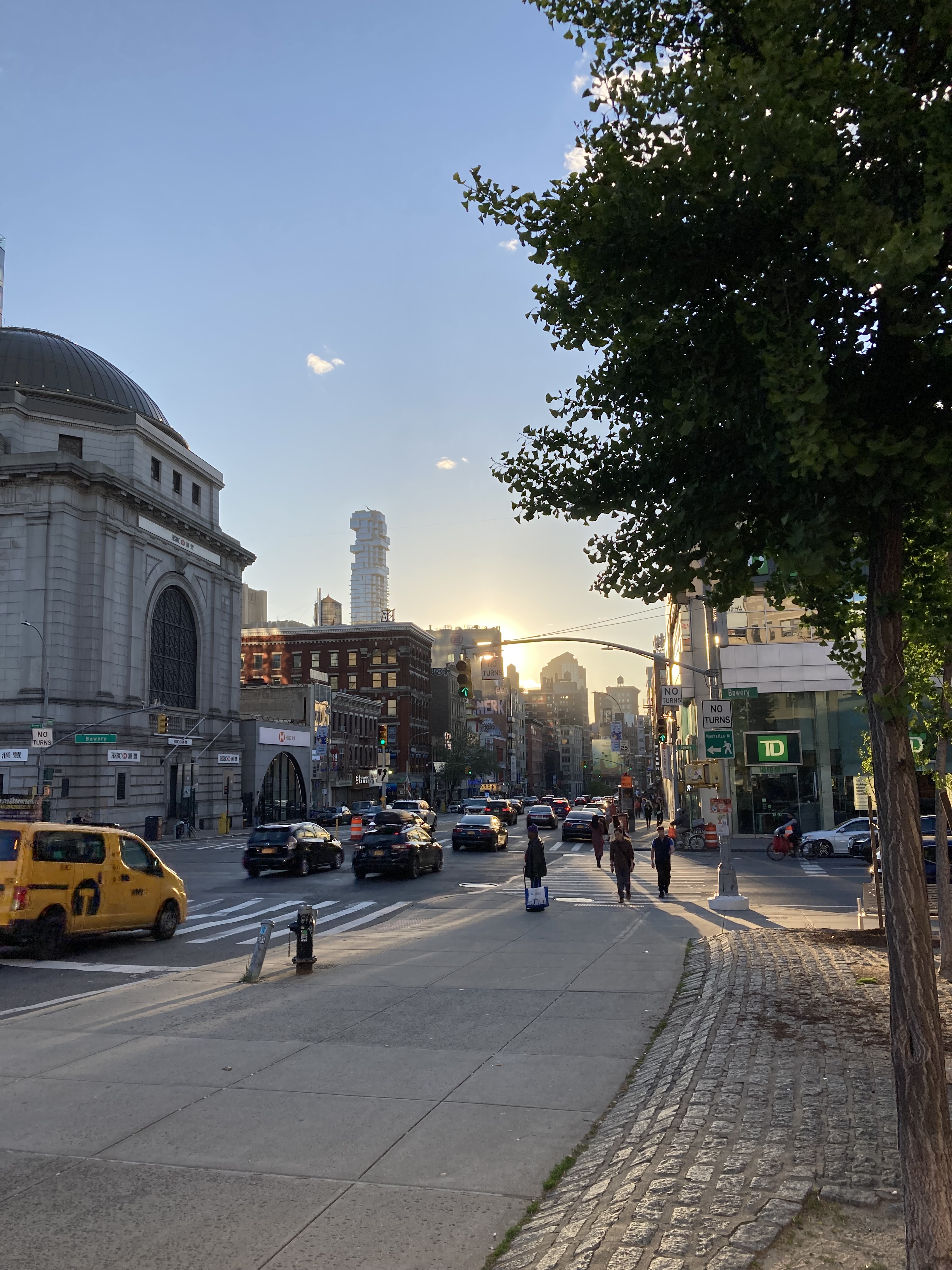
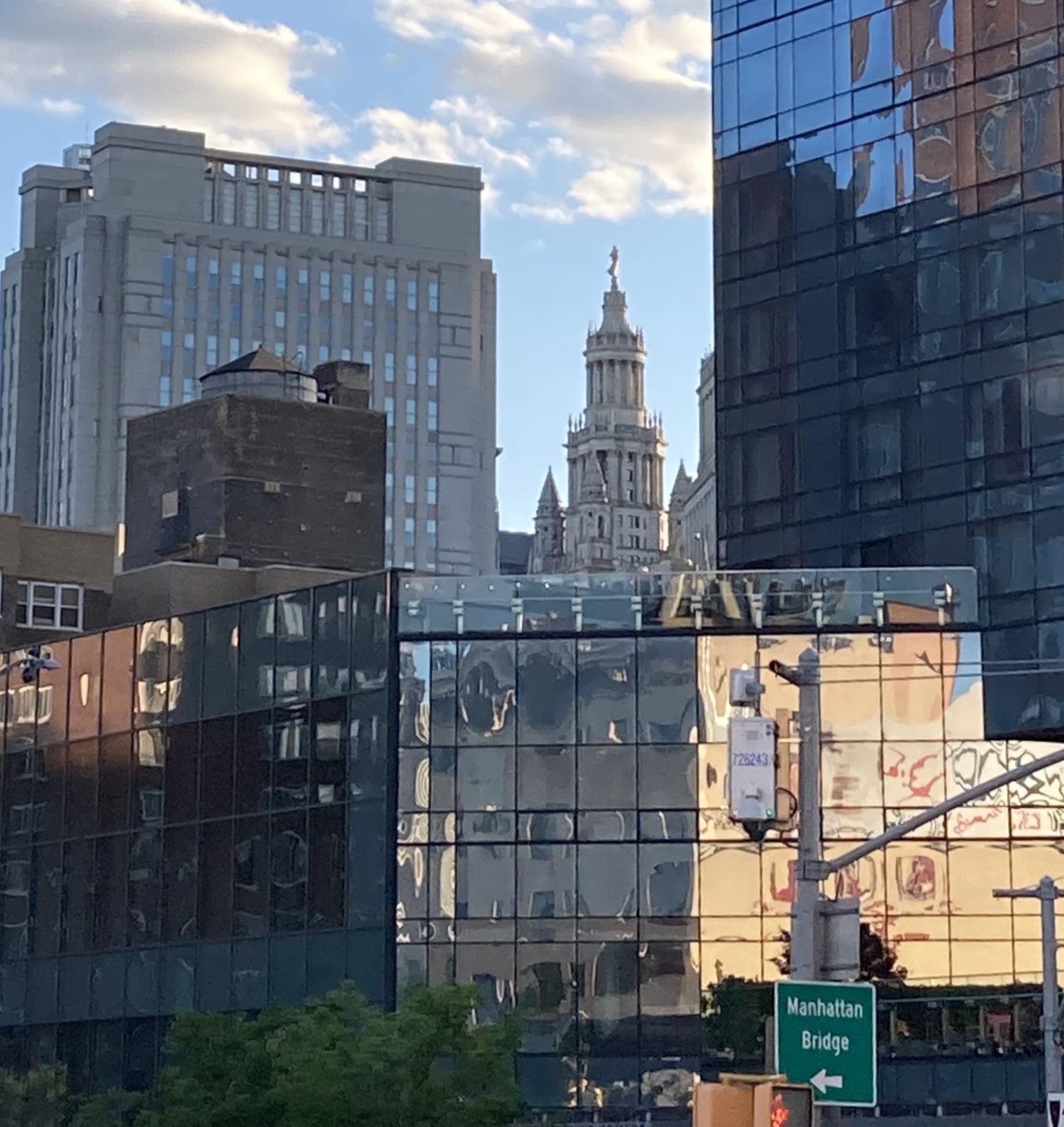
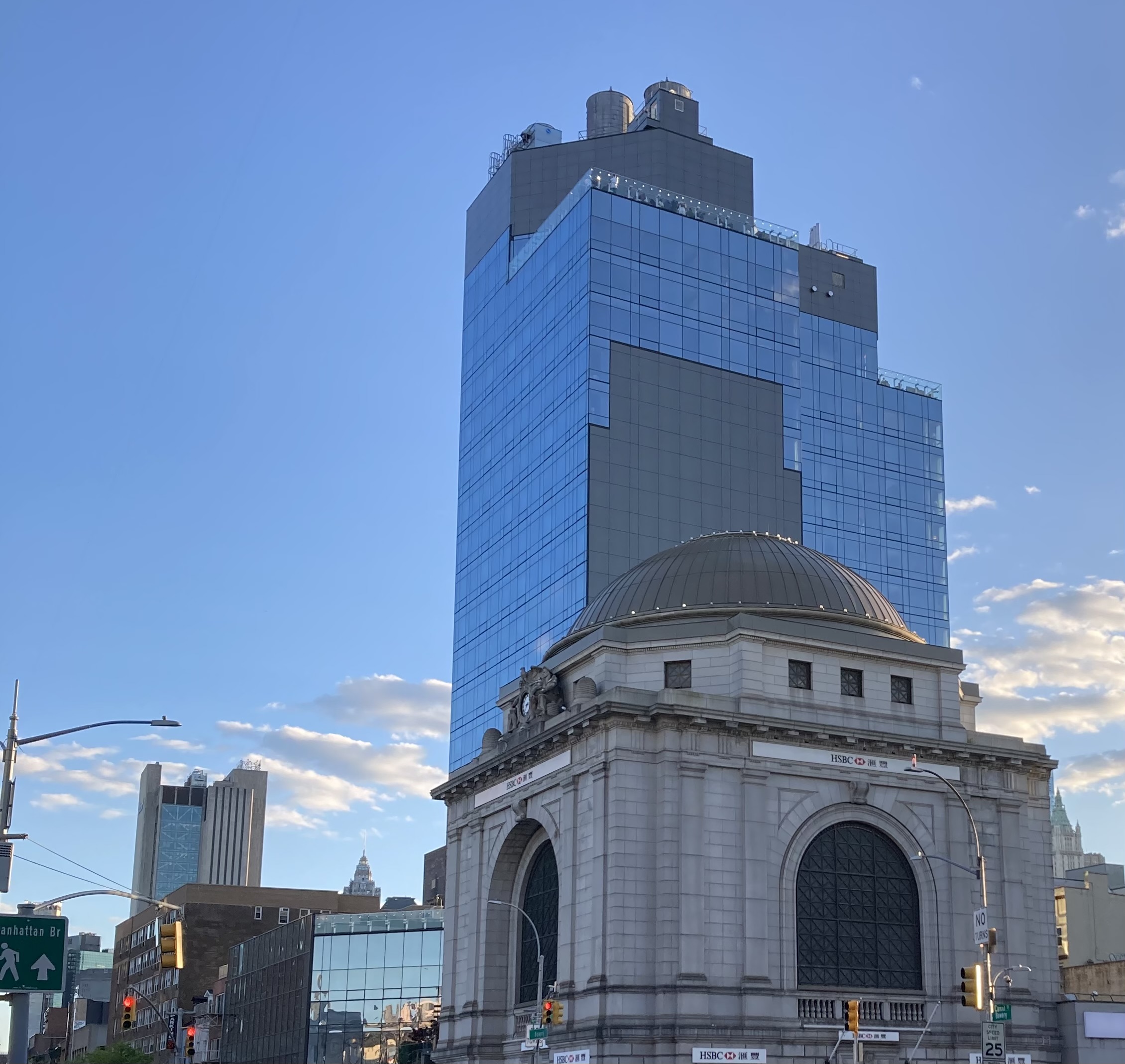
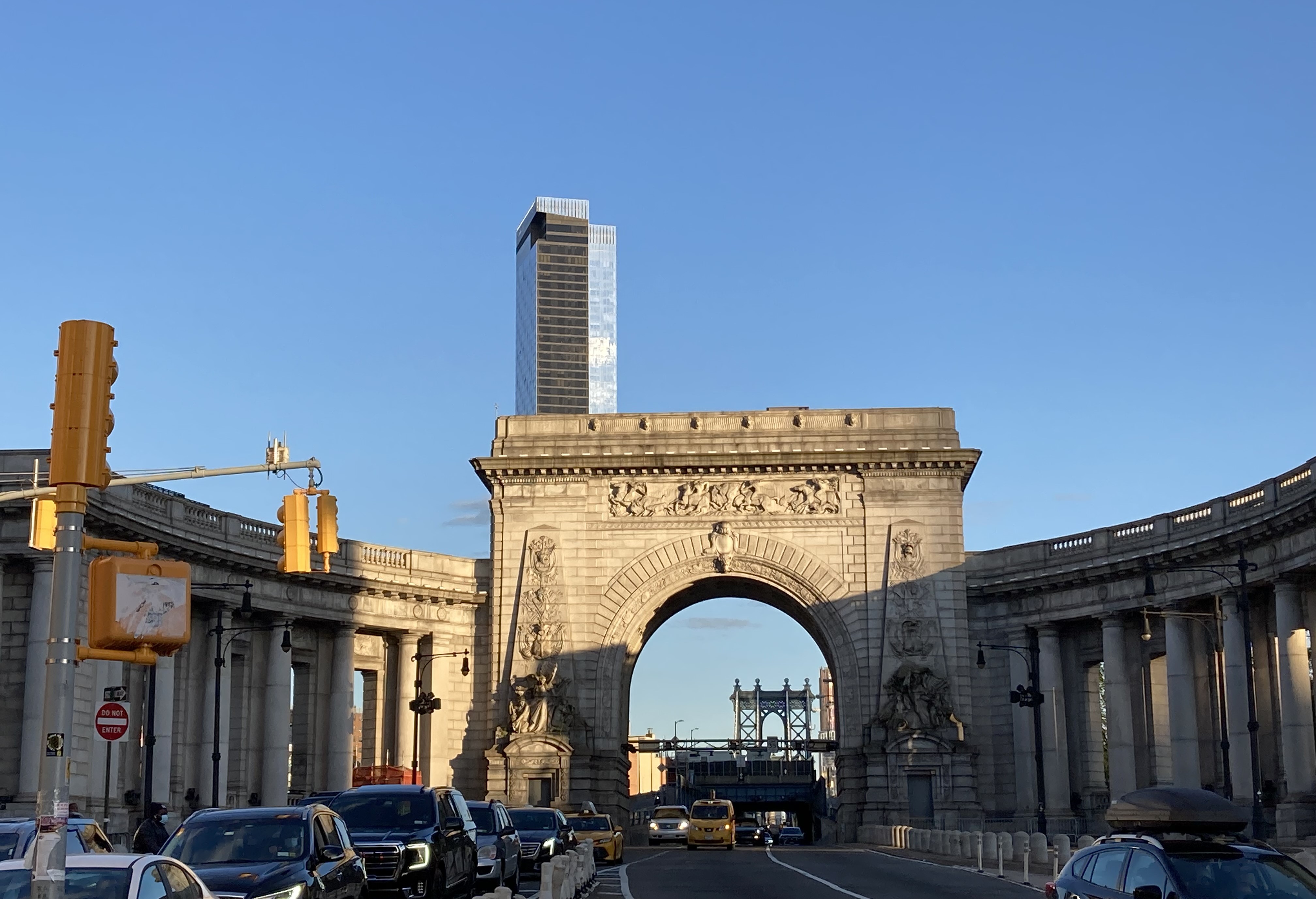
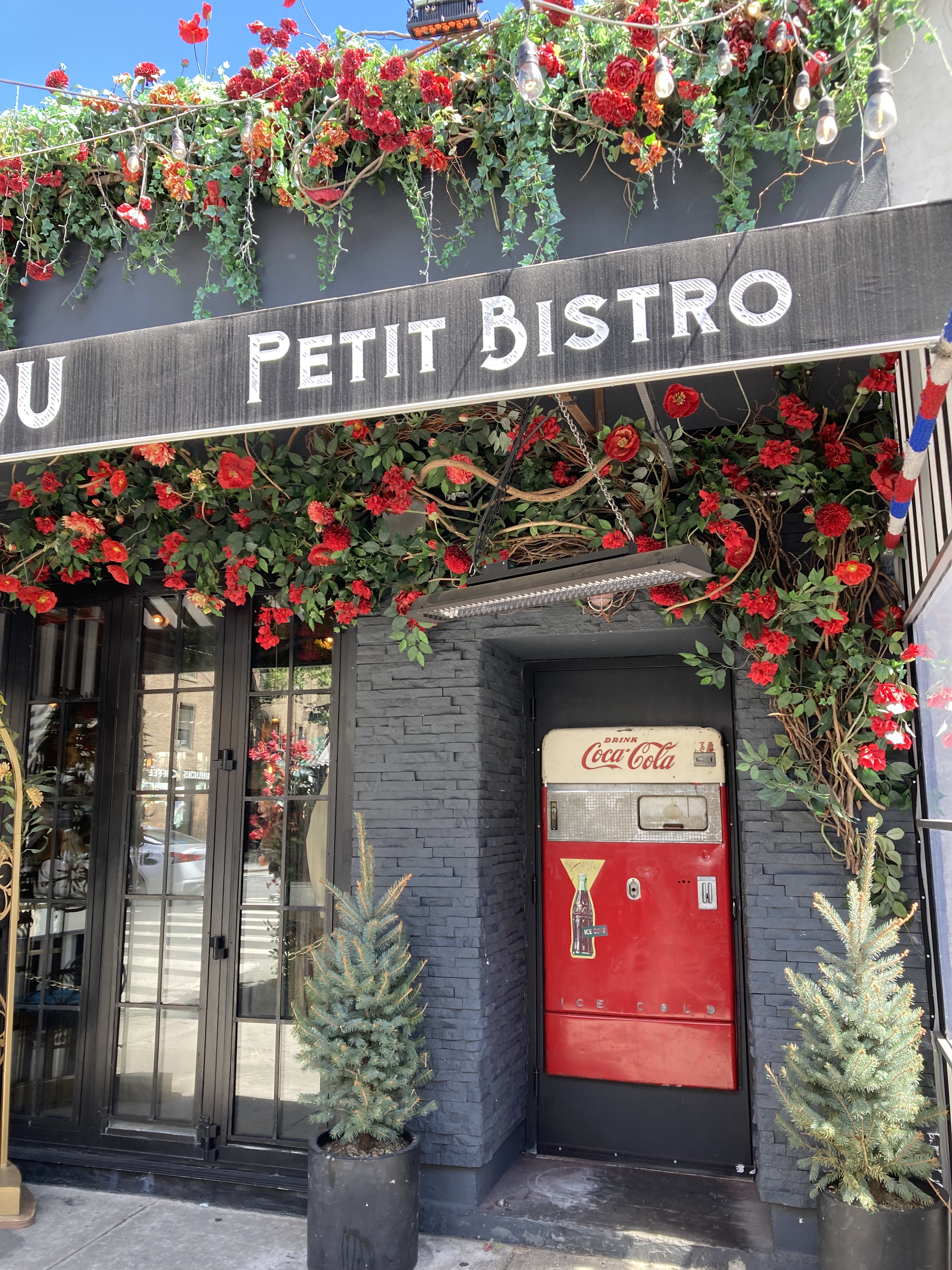
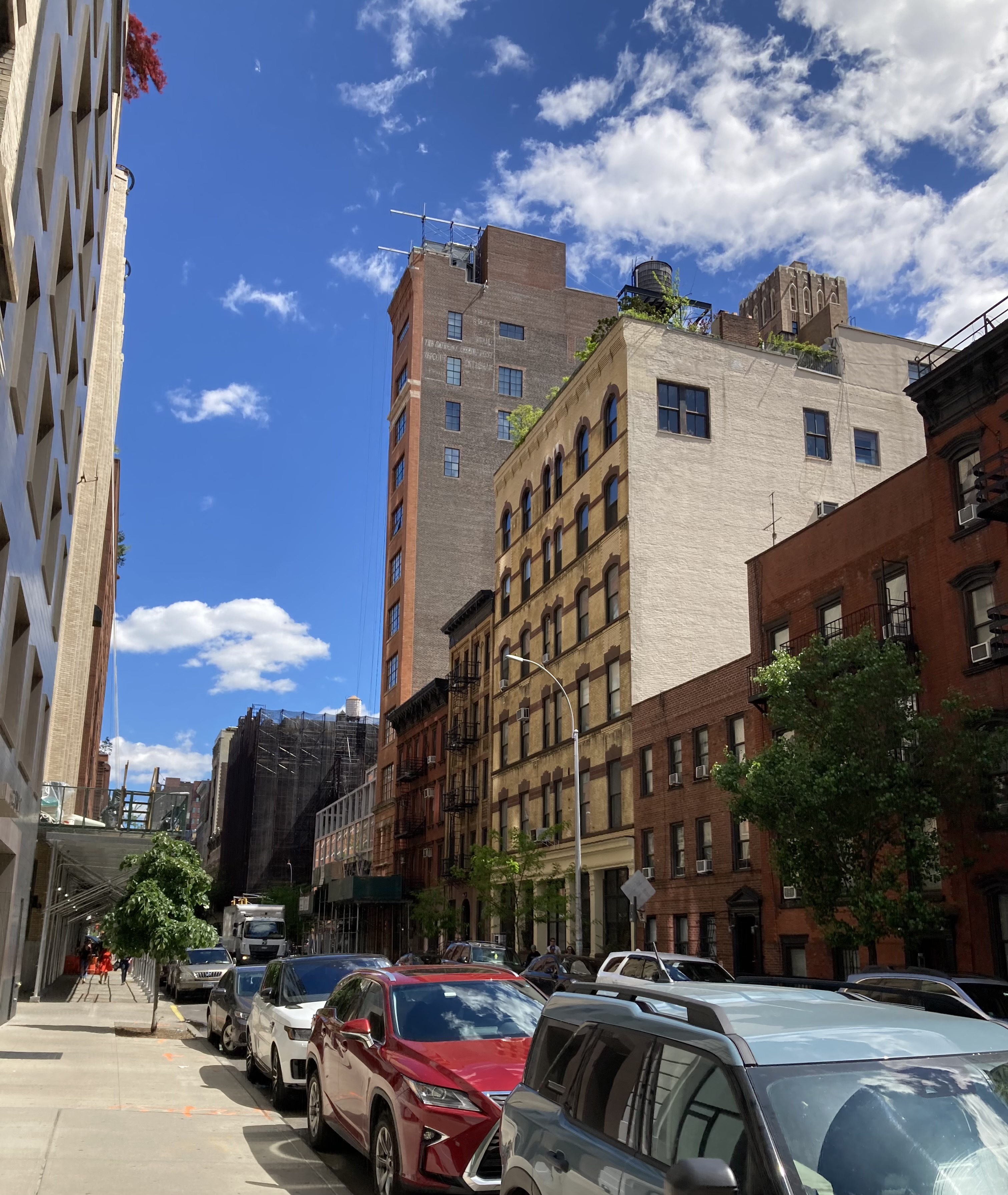
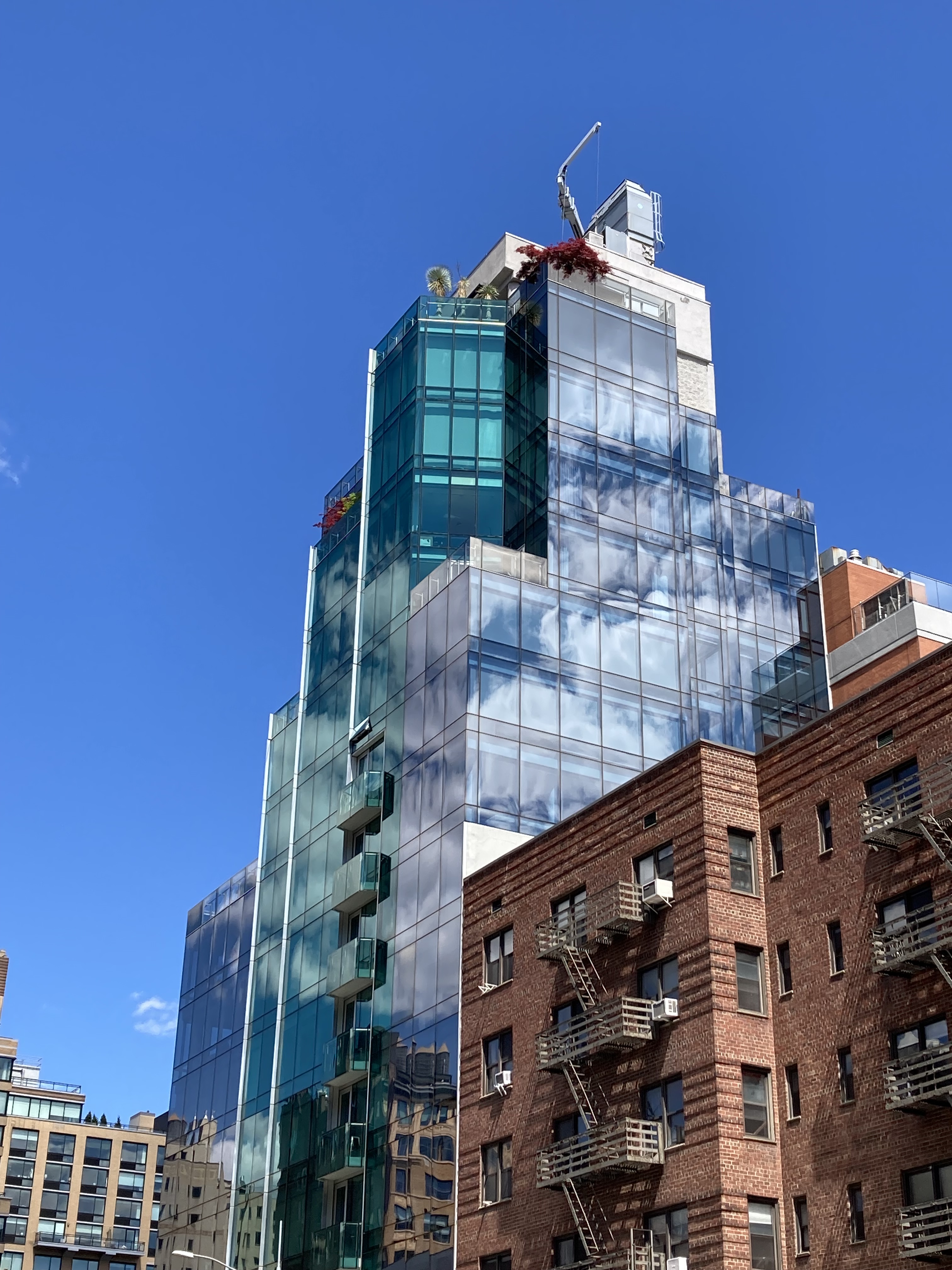
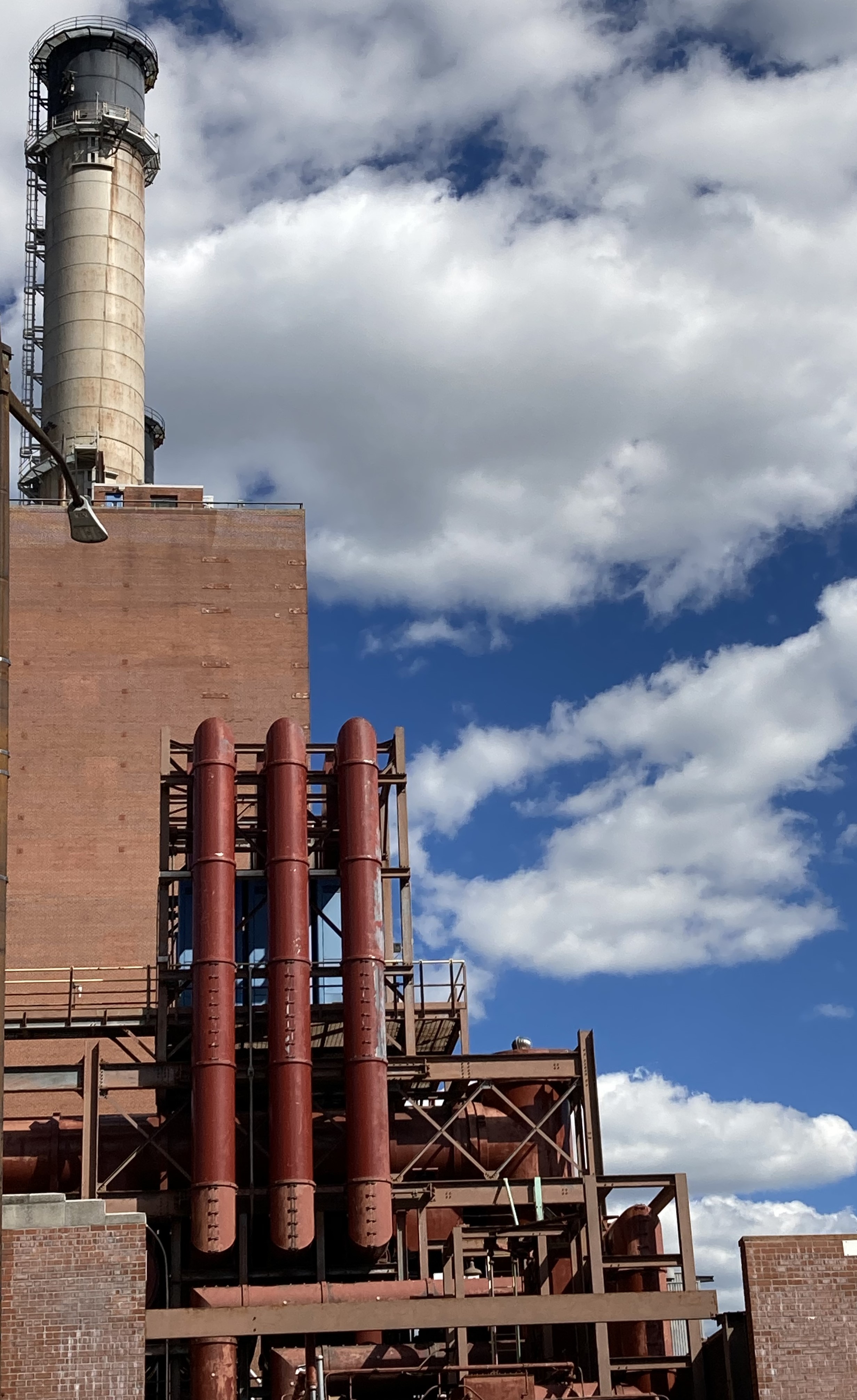
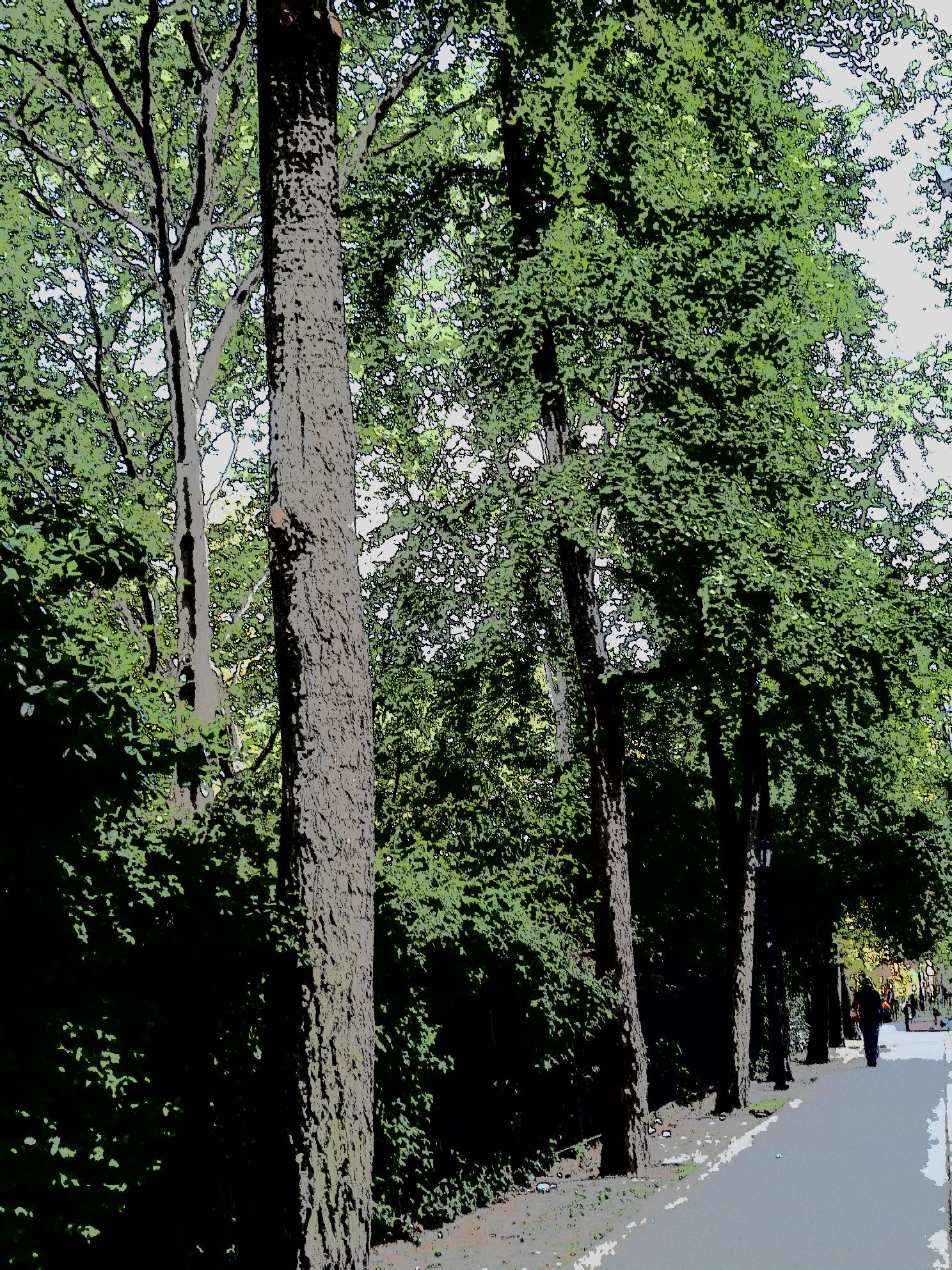
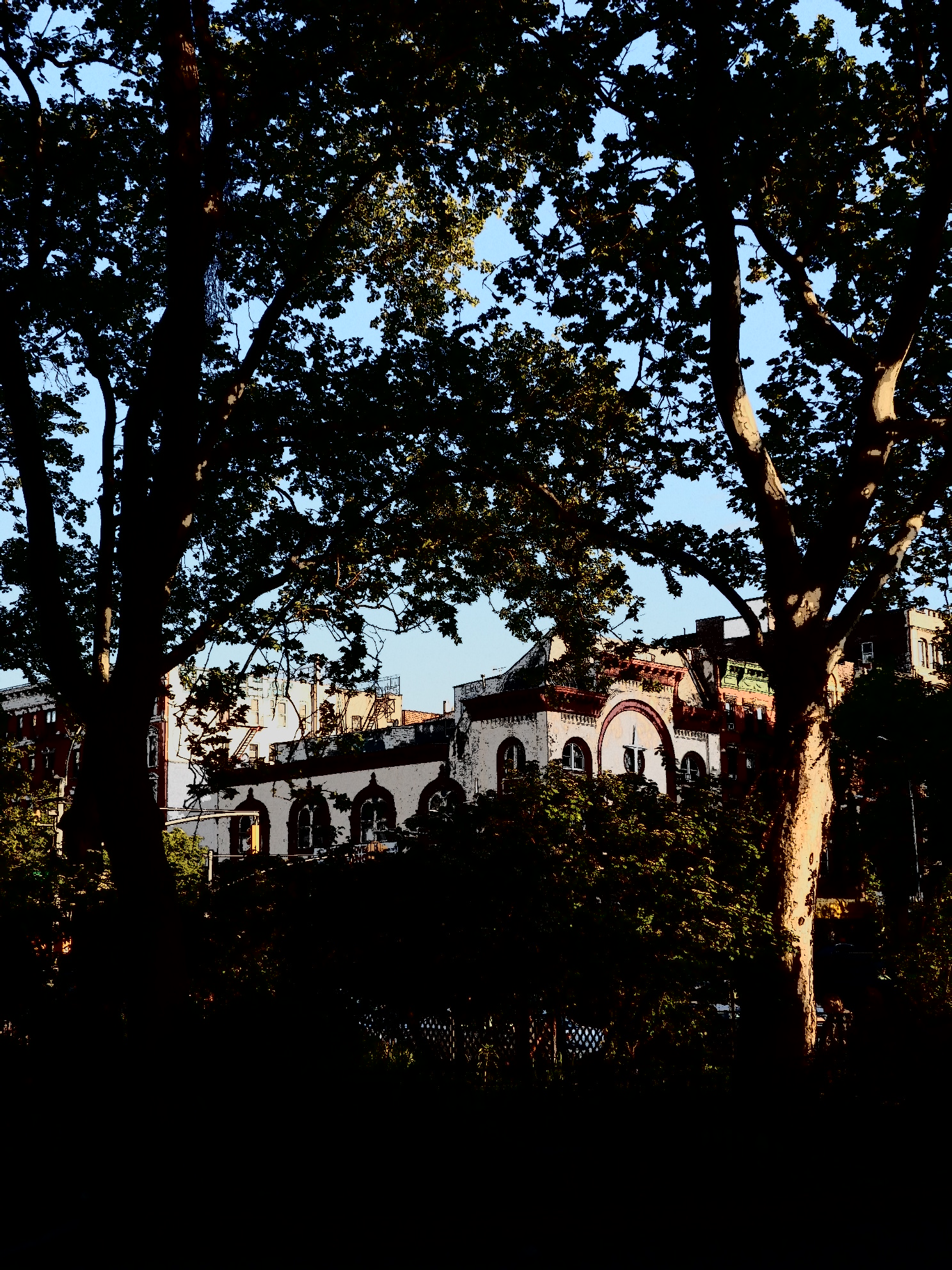
Editor’s Post “New York City, May, 2023”

Ayesha F. Hamid is a poet and creative nonfiction writer published in Blue Bonnet ReviewPhilly Flash InfernoSheepshead Review, and Rathalla Review. Her full-length memoir The Borderland Between Worlds is available through Auctus Publishers at Barnes and Nobles and Amazon.  Ayesha also has a full-length poetry collection called Waiting for Resurrection. She is a Poetry Editor at Ran Off With the Star Bassoon and an Assistant Poetry Editor for The Night Heron Barks. She is the Editor-in-Chief at The City Key.

Ayesha holds a Bachelor of Arts in French and A Bachelors of Science in Sociology from Chestnut Hill College, M.F.A. in Creative Writing and an M.A. in Publishing from Rosemont College. She also holds an M.A. in Sociology from Brooklyn College.  Aside from writing, Ayesha also loves film, travel, and photography. You can find Ayesha on twitter @ahamidwriter Ayesha is a lover of cities, big and small.

“A Quality of Silence” by David M. Rubin

Slumped on a ratty couch three feet from the fifty-five-inch screen, Kovlov sighed along with Ryu. His cell buzzed and he hit green to Elaine’s midflight yelling that he had better Venmo $1200 as she had to pay her rent. Kovlov grunted, tapped the red icon, and refocused on the movie where an elderly woman, a middle-aged man, a young woman, and two young children sat on individual tatami mats around a low wooden table. The elderly woman scooped rice slowly into bowls. The doorbell rang. Kovlov’s roommate Sal popped from the kitchen, crossed between him and the screen. He opened the door to a man in a suit who queried, “Eugene Kovlov?” and dropped a sizable envelope on the floor. “Consider yourself served.” The family held their bowls, gently shoveling at their portions. A teapot marked the foreground.

Sal closed the door and kicked the envelope toward the couch. “Kovlov, you’re wastin’ away. Maybe eat some Ramen or something.”

When the movie ended, he clicked off the TV, headed into his room and flopped onto the futon.

Moonlight guided a SEPTA train as it emerged from underground and clanked up onto the elevated tracks that ran alongside Route 95 above Northern Liberties, Fishtown, and Kensington row homes, soot blonde brick schools, and entropy riddled factories.

“Wakey up!”

One-eye took in the clock which was mostly hidden behind tipping piles of Japanese cinema books. Why the hell was Sal waking him up? A red neon 1. Maybe 1:00 PM? Could be 10, 11 or 12? Or maybe any hour at all and the one a minute’s digit. He’d hold still within the warm comforter, thwarting any consideration of least bad choices that would hurl him into the world. He might wait until the 1 changed to a 2, which meant waiting on average 30 seconds to 30 minutes, but his concentration broke and he slipped back into oblivion.

“Kovlov! Wake up and listen good. You owe me $1400.”

Continue reading “A Quality of Silence” by David M. Rubin

“The Rocks Beneath the Same River” by David M. Rubin

Steven Rothstein perseverated four sub-stories, base code for his translation.

I

Dad handed Stevie, 8, and his brother Mark, 5, two one-dollar bills, enough for the Sunday New York Times and either two packs of baseball cards with cardboard flat sticks of bubblegum or two comic books. They would walk an unimaginably long distance along West 5th Street past three high rise apartment buildings and turn left into the strip mall. They would pass six stores, walk in the Village Stationary, browse the comic book carousel for new Captain America, Invincible Iron Man, and Mighty Thor comics. They would pick up a perfectly arranged Sunday Times from among the many stacks on the floor, carefully check for the presence of each section from Arts & Leisure to Travel. They would go to the counter, if they had chosen no comic books grab two packs of waxy baseball card packs, and pay. They would walk back home without dilly-dallying. Intimidating but doable. They would then be free to watch Bugs Bunny and Abbot and Costello Meet Frankenstein.

Everything went according to plan. Long walk. Check for new comics. None. Pick up and inventory a paper. Grab baseball cards. Pay. Walk home. They made it back to West Brighton Avenue, where a monstrous clanking rollercoaster D-train crossed above, and Stevie shifted his grasp on the paper that must have weighed as much as Mark. The massive construct called a New York Sunday Times slipped free and pages from every section caught the unforgiving ocean wind and fluttered into the street and parking lot. He remembered glancing at happy-go-lucky Mark mid bubble, carefully gripping baseball cards in each hand; it would be hard to blame him for this fiasco.

Stevie sort of remembered crying on the elevator ride up to the apartment, a smack in the head, another smack for good measure, and being called a moron who can’t even do one little simple fucking thing like get a paper. He definitely remembered having to spit out his bubble gum and throw the baseball cards down the incinerator shoot, though he hid in his underpants waistband the rare Lerrin Lagrow that completed his 1975 Topps set. He was given money to get a new paper and bring back the fucking change.

Continue reading “The Rocks Beneath the Same River” by David M. Rubin

“Touched By” by Morgan Boyer

A transit car pole can tell you
many tales of times their steel
rod bodies were touched

By a community college kid
with Kleenex-filled jacket pockets
as she braves through flu season

By a beer-breathed Penguin’s fan
on the phone with his wife
relaying the 3rd quarter like a war story

By a 2nd generation Hispanic woman holding her plastic
bags by the flimsy handles that stretch ever so thinner

By an elderly man
scratching off lottery tickets
like bite sized scraps of a dry dandruff-ridden scalp

By a cardiac-eyed
Medicaid card carrier whose
lifeblood was replaced by metal
when the company switched to
an automated answering service

By a thirty-two-year old Penn State
grad heading to shovel french fries
into buckets just like his soot-faced
great-grandfather shoveled coal

By the administrative
assistant of a dentist who works
solely to afford anime
merchandise and streaming subscriptions

Touched by a soul that was now lost, not found

Morgan Boyer is the author of The Serotonin Cradle (Finishing Line Press, 2018) and a graduate of Carlow University. Boyer has been featured in Kallisto Gaia Press, Thirty West Publishing House, Oyez Review, Pennsylvania English, and Voices from the Attic. Boyer is a neurodivergent bisexual woman who resides in Pittsburgh, PA.

Please note: Poetry is compressed to fit smart phone screens. If you are reading this poem on a phone screen, please turn your screen sideways to make sure that you are seeing correct line breaks for this poem.

“The Spectator Takes a Journey” by David M. Rubin

Looking back what seemed a stray puppy was actually an old little dog and coordinator of an incident that was still raw like the scrapes on his elbows and knees. He had no idea what to make of the even earlier incident with the crows but sensed all was connected.

Archer Fennis woke up that morning, reciting his mantra of “no humming”. Humming was a signal to his nervous system that there was something to be worried about, maybe everything. Then sweating. Then cold hands. Then pacing. Then anticipatory moaning. Then the full-fledged Munch-like scream. No humming, no humming, no humming.

The white living room walls were devoid of paintings or posters. The emptiness was unendurable, a continual incitement for Archer to Jackson Pollack his carefully curated red ceramic bowl of granola, almonds, blueberries, and soy milk against the wall. He had no coffee table and wondered what if one wanted to display art books, but had only one folding-table placed constitutively in front of the TV. He placed the cereal bowl gently on the blonde wood and consciously struck a pose of one intent on terraforming.

Archer laced up his Merrills, grabbed a baseball cap (orange with a Jayavarman II face), black pandemic mask, and a credit card. He would buy eight art books. Eight. He would keep them on a stack on the floor next to the folding table and each Sunday he would ritually rotate up a new one.

Continue reading “The Spectator Takes a Journey” by David M. Rubin

“A New York State of Mind” by Jill Veader

Last summer, my boyfriend, Ian, and I visited his grandmother, Elaine, who’d been living in the same apartment on Amsterdam Avenue for forty years. Elaine let us stay in her spare bedroom, from which we spied down at the sun-soaked street from eight stories up, surrounded by her bookshelves full of coffee table books and old photos. A trip to New York City was perfect because neither Ian nor I had much money; we both still worked at the grocery store where we’d first met.  

The morning after we arrived on Amtrak, Elaine took us around the neighborhood on the Upper West Side. We got bagels and coffee at Zabar’s, met cats at bookstores, and made it as far as Roosevelt Island; we must’ve walked twenty miles that day. It was hot for June, and even in cutoff shorts and a t-shirt, I was sweating profusely—nevermind Ian, who’d opted for black jeans. Elaine, though, remained cool and dry, ready to move on while we sat on park benches, panting, and saying, “We just need a minute,” or “maybe some water.”

As we traversed block to block, Elaine stopped us every ten feet or so to tell us to look up. Squinting in the sunlight, we’d gaze past her pointed finger to be met with the stoic, Medusa-like stares of cherubs carved into limestone, or ornate seals of olive branches and shields painted onto brick above a stoop. Gilded terracotta blue and gold glinted in the sun but was almost hidden behind the trees lining the sidewalk. How many cherubs had watched over the same people for years, like Elaine; how many gazed at passersby, at couples just married with a good job and a baby on the way? They all had one thing in common; they reflected the sunlight on their faces like shining mirrors, watching you, guarding you, daring you to stare back at them. How many people had looked back into the eyes of those cherubs before me?

Continue reading “A New York State of Mind” by Jill Veader

“Empire State to World Trade” by Natasha Cobb

In South Carolina, Ester spent years wondering what big cities were like – Visiting her cousin Tessa in New York City, Ester initially found that they could be overwhelming with smells of fuel and perfume mixed with the sounds of cars honking and people speaking quickly as they searched for their loved ones. 

As Ester waited for Tessa at Kennedy Airport, she thought of how lucky Tessa was to be able to make it in N.Y.C. Ester looked forward to the week ahead because Tessa had promised her that she’d show her the best parts of the city. From the moment Ester placed her suitcase in the trunk of Tessa’s car, her cousin did not disappoint her. Tessa took Ester right into the heart of the city. They boarded a train at one of the main transportation hubs in the city, Atlantic Terminal, and then caught the three train to thirty-fourth street. 

Tessa gave Ester a crash course in train etiquette before they got on the train. 

“Don’t stare at anyone. Don’t talk to anyone, even if they say something to you. And if you accidently touch anyone in anyway apologize immediately, even if it is not your fault.” 

Tessa knew that Ester would stick out as a tourist – It was March, but Ester had brought her winter coat, hat, and gloves. N.Y.C in March was too chilly for Ester, who was used to sixty as a low temperature in South Carolina at that time of year. Also, Ester would stop without warning, take out her camera. and take pictures of the most ordinary things like buildings and streets that didn’t stand out to Tessa at all.

Continue reading “Empire State to World Trade” by Natasha Cobb

“Brooklyn Royalty” by Steve Slavin

1

As someone born and bred in the borough, I am well acquainted with Brooklyn royalty. In fact, only great modesty prevents me from even mentioning my own royal blood.

Brooklyn, of course, was once part of the British Empire, and many reminders can still be found. I grew up just a block from our neighborhood’s main shopping strip, Kings Highway. Just off the Highway is a well preserved pre-Revolutionary farmhouse, the Wycoff-Bennett mansion. In recent decades, it was owned by Annette and Stu Mont, who sometimes called their home the Wycoff-Bennett-Mont house.

Annette and I met at James Madison High School and became friendly again about twenty years ago. She invited me to monthly political meetings and occasional parties at her home. She and her husband had restored the house to look much as it did during colonial times. There were even numerous oil portraits of the home’s earlier residents, as well as furniture and farm implements dating back to the eighteenth and nineteenth century.

When new guests arrived, Annette graciously showed them around.  Sometimes I could not resist telling the more gullible among them that I too had descended from the Wycoffs or the Bennetts – or even both families.  Annette smiled when she overheard me, but she never bothered setting the record straight.

Another structure surviving from colonial times was a store on Montague Street, in historic Brooklyn Heights. If you looked in a Brooklyn phone book from the 1970s, you’d find a listing for King George Pizza. It’s still whispered that after their victory in the Battle of Brooklyn, scores of Redcoats stopped in for a celebratory slice, while Washington’s army escaped to New Jersey to fight another day.

Continue reading “Brooklyn Royalty” by Steve Slavin

“Come Here Often?” by Patty Somlo

Kevin O’Rourke had been a fixture in the bookstore for longer than anyone in the neighborhood could remember. At one time, the famous poet and owner of Left Bank Books had stood behind the counter, mostly chatting with up-and-coming writers, but occasionally working the register. When the store closed at ten o’clock, or even later on nights there had been a reading in the dark cramped space at the back, O’Rourke climbed the stairs to his spacious flat, where he’d lived going on five decades.

O’Rourke had never married. He was rumored to have been involved with many women, some famous and some not. On the list of his lovers were writers, as well as artists, actresses, and even a handful of models. As a younger man, O’Rourke’s hair had been thick, wavy and black. He wore it stylishly long. His blue eyes were the first thing women noticed, and then his smile.

He no longer stood behind the counter, but some days could be found in a worn upholstered green chair, situated in a quiet corner of the shop. The chair rested in front of a scratched oak coffee table, with other once-comfortable seats that had long ago lost their support. The chairs were meant to encourage customers to linger.

Continue reading “Come Here Often?” by Patty Somlo

“Lost Chicago” by Joshua Ginsberg

This will be the only key now
to the map that leads back
to that place I left –

All other directions take me
somewhere I don’t know,
down endlessly defeated rows
of broken, boarded windows
and too-quiet streets
beneath the lonesome
shriek of wind.

Empty towers lean shadows
over every intersection
of is and was,
like a just-finished necropolis
of glass and steel

waiting to find
new use.

Joshua Ginsberg is a writer, entrepreneur, and curiosity seeker who relocated from Chicago to Tampa Bay in 2016. He is the author of “Secret Tampa Bay: A Guide to the Weird, Wonderful and Obscure,” (Reedy Press, 2020), and his poetry, fiction, and non-fiction has appeared in various print and digital publications. He maintains a blog, Terra Incognita Americanus and has been a business proposal and resume writer for over 10 years. He currently resides in Tampa’s Town and Country neighborhood with his wife, Jen, and their Shih Tzu, Tinker Bell.

Please note: Poetry is compressed to fit smart phone screens. If you are reading this poem on a phone screen, please turn your screen sideways to make sure that you are seeing correct line breaks for this poem.