Three Poems by Ed Meek

Soundtrack of the City

The soundtrack of the city
can keep you up nights
or hum in the background
a discordant tune of wheels turning
and gears interlocking, trucks
unloading, planes taking off
and coming down.
The bass thumping in a passing
smoke-filled car. A Harley roaring
down the street. Sirens wailing
of rescues and D.O.A.
daytimes the volume
jumps to life with the birds
who serenade leaf blowers, lawn mowers,
horns, the ebb and flow
of traffic, the heavy breathing buses
the scraping skateboards,
barking dogs. The disembodied voices
of neighbors you’ll never know.

The Reserved Section

I’d wandered into the reserved section by mistake
but the performance had begun
and it was too late to escape
to the seats for the general public
my inexpensive ticket already paid for.
It was as if I had pulled back the curtain
and entered the first-class cabin–
been admitted to the club
and seated at the head table.
The champagne was vintage.
The caviar Russian.
The lights dimmed.
I was just behind
a Guggenheim and a Rockefeller.
They didn’t seem to see me.
I was invisible as I often am.
For once it was an advantage.
I glanced down the row at two
black women who smiled and nodded.

Hostages to Heat

In Brooklyn when the temp hits 90
the heat invades our claustrophobic co-op.
Outside, the cement sends the heat
up through our bodies in waves.
We float in our sweat like seals in the shallows.
I used to love the feel of sweat
blanketing my body
running in the mid-day sun
and playing pick-up basketball on black tar.
Now we dread summer days when
an orange disk occupies a hazy sky,
Particles of ash coat our lungs
and the sunlight sears our eyes.
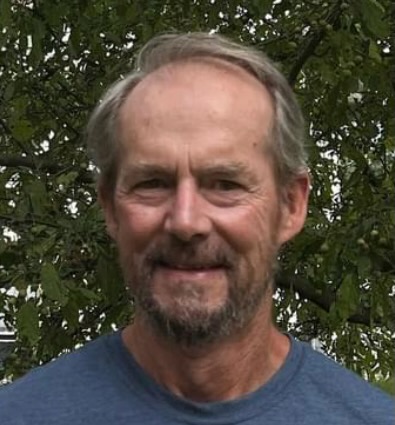
Ed Meek is the author of four books of poetry and a collection of short stories. He has had work in The Sun, The Paris Review, Plume, The North American Review, The Boston Globe. He writes book reviews for The Arts Fuse. He is a contributing editor for The Rivanna Review. He teaches creative writing at the Osher Lifelong Learning Institute. He lives in Great Barrington with his wife Elizabeth and their labradoodle Mookie. His most recent book is High Tide.
“Temp Job” by James B. Nicola

Walk down Fifth Avenue for lunch hour when
you have a temp job in the Forties or
the Fifties; next day, do the walk again
and I’ll bet you a hundred to one you’re
not going to see any of the same
faces. I did this for about a year
when suddenly I thought I heard my name,
or something similar (I’m still not sure).

I turned and shook a total stranger’s hand.
He squeezed, I think, my upper elbow too
as if some mutual past permitted such
a thing. The passing gesture, so unplanned,
impressed me. I could not say where he knew
me from, but I shall not forget that touch.

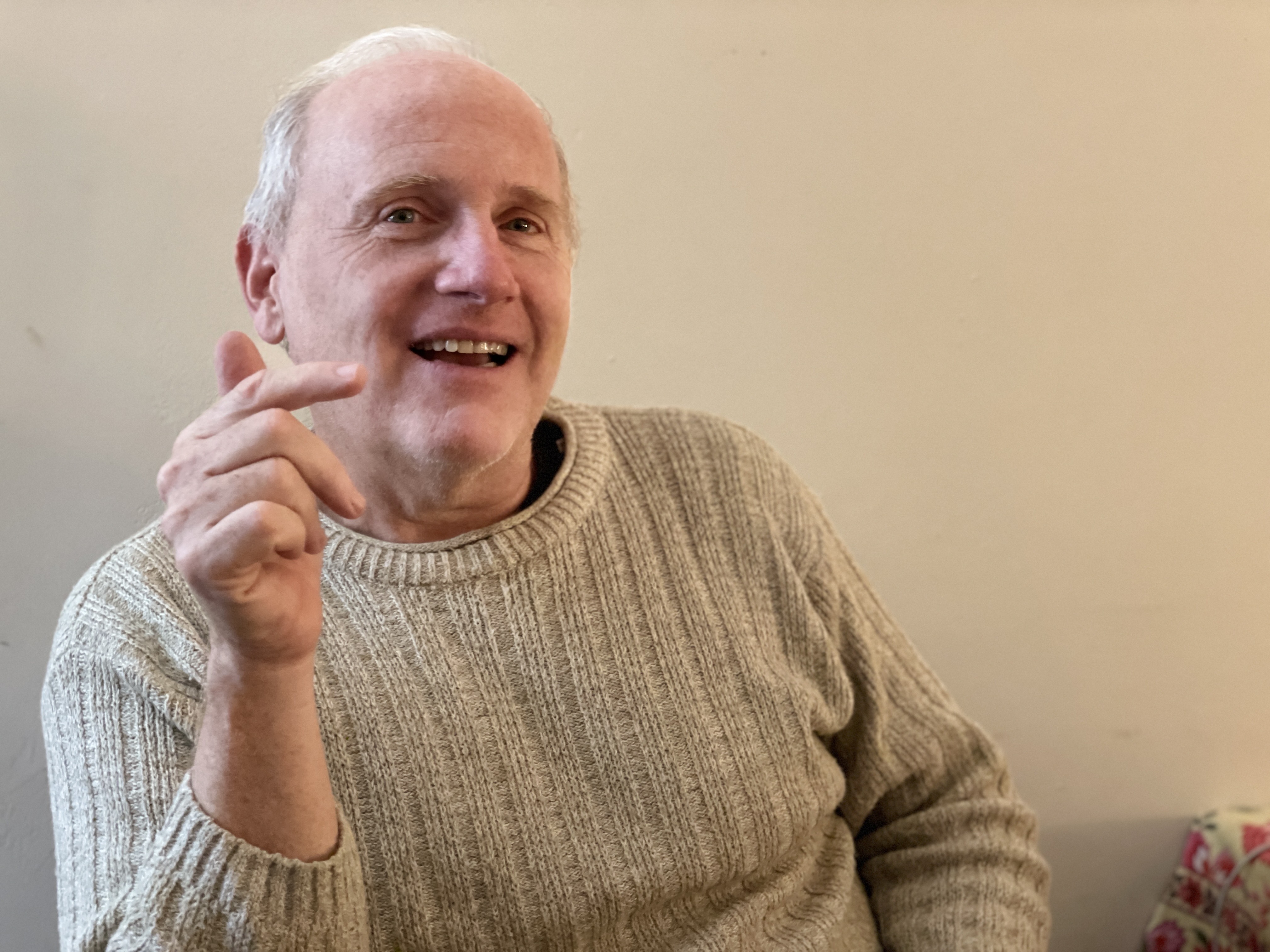
James B. Nicola, a returning contributor, is the author of eight collections of poetry, the latest three being Fires of Heaven: Poems of Faith and Sense, Turns & Twists, and Natural Tendencies. His nonfiction book Playing the Audience: The Practical Actor’s Guide to Live Performance won a Choice magazine award.

“Fickle City” by Bonnie Perkel

Please note: Poetry is compressed to fit smart phone screens. If you are reading this poem on a phone screen, please turn your screen sideways to make sure that you are seeing correct line breaks for the poem.

Sky-high stilettos echoed on the sparkling Mica sidewalks
of 70s New York, under dim yellow streetlamps
by CBGBs and the Russian baths. Oblivious to rats
scampering nearby, each beckoning corner led to a promise
of the newly possible.

This city of dreams and sorrows held me in its smoggy dome,
as the twin towers lit the starless night and seemed forever
the north star. Reaching the pinnacle, I twirled on the rooftop
dance floor of Windows on the World, adrift under a singular sky
that held me like a cocoon, vowing that I was special. I would soar.

The guru, the venture capitalist, and the Kabbalist communed
as the 80s burst forth from the sheer curtains of fire-escaped
brick. Yoga cohabited with a cocaine-infused bar scene, technology
reached in with a steely grip, and an old infrastructure crumbled.

I clung to a tattered shawl of illusion – exposed, transformed,
even beautiful now. Defined and undefined, molded
and undone, wandering through an inferno of exploding steam,
lost loves, irredeemable vertigo. Another future called –
and it was time to go.

Still, the soul of that nascent woman haunts those fickle streets,
heels keeping step with the cacophony of horns.
Loves and losses wrapped in the jangle of wild auburn hair.
Forever wandering – in the newly possible.

After many years working in Manhattan corporate life, Bonnie Perkel changed course but kept writing. She has an M.Ed. and spent several years working at Duke University Press in North Carolina before settling in the Boston area. Over the years she has been an educator/administrator, academic advisor, and editor, and she has published in anthologies and academic/trade publications.

“My Lost City” by Diana Raab

(After “Oh My Lost City” by Pablo Neruda)

New York, the place of my birth,
still hear Streisand’s words of glory—
the city that never sleeps,
even for me as a teen
who slept under stars
with sexy boyfriends and cars.

Each Sunday visited
Rockefeller Center
where dad taught ice skating
they called him Mr. Mark—
unable to pronounce his long last name—
Marquise—invented after immigration
from some French ancestors
which is maybe why I love croissants, espresso,

chestnuts and steamy nuts from street vendors.
I left before I could drive,
but now want to revisit my roots, especially
with dad gone and the city changed faces
more times than I can count.

Queens was my place, Cunningham Park
where hippies puffed joints and concerts
permeated lively words with numbered streets
and houses in rows like soldiers, only colors
setting them apart, one hundred and seventy-third street—
oh the pink shingles dad pained when I was born
to match his pink impala—
the kid mother never wanted, but dad cherished.

She planted a cherry blossom tree
in keeping with theme,
her green thumb also holding the reins of her
favorite four-legged equine partner,
always more important than me.
She’s still there, waiting to die
but never dying to live
I only wish her well— planted
in the city I used to call my own.

Diana Raab, MFA, PhD, is a poet, memoirist, workshop leader, thought-leader and award-winning author of 14 books and editor of three anthologies. Her work has been widely published and anthologized. Her poems have been nominated for the Pushcart Prize and The Best of the Net. She frequently speaks and writes on writing for healing and transformation. 

Her 14th and newest book is Hummingbird: Messages from My Ancestors, A memoir with reflection and writing prompts (2024). 

Raab writes for Psychology Today, The Good Men Project, Sixty and Me, Thrive Global, and is a guest writer for many others. Visit: https:/www.dianaraab.com. 

“Secular Ascension” by James B. Nicola

No matter how long we live
No matter how alone we lie
We are all unborn
And all deceased
For the same amount of time
And the same distance from each other
Whatever that distance may be.
Call it eternity. Call it infinity.
But like an ocean and its islands
Eternity is interrupted
By us.

No matter how high up we reside
We are all the same distance from heaven.
A lifetime.
A universe.
But a universe interrupted.
By us.

*

I live forty-five floors above Hell’s Kitchen in the middle of Manhattan.
It is my favorite place on or above Earth.
The view takes my breath away. Every day.
If you visit me, the view will take your breath away.
In such apartment buildings, the elevator is everyone’s friend.
When you visit me, the elevator will be your friend.

When the world below and outside happens to be hell and storming
With squalid snow, hectic hail, incorrigible ice, or rambunctious rain,
I stay inside instead of jogging, walking, biking, or hiking.
I stay inside so as not to catch cold.
So as to stay healthy.
On such days, I walk up the stairwell a few times
For the cardiovascular exercise.
I ascend to stay healthy.

The stairwells in such apartment buildings have no windows and no view.
It is the climb that takes my breath away.
If you visit and walk with me, the climb will take your breath away.
Then I shall cook you a meal from scratch.
If you visit me, you may feel healthy.

*

I grew up near Mt. Wachusett, Thoreau’s favorite mountain, in Massachusetts.
It’s become a favorite climb, even after a storm, branches of pine and birch,
rocks and roots strewn everywhere, a landscape mid-revision.
It’s not one of the holy mountains of the world, like Croagh Patrick in Ireland
which I’ve scaled or Denali in Alaska where I’ve hiked.
But Thoreau walked to Wachusett from Walden Pond and scaled the slope, and
he was a holy man, in a secular sort of way.
I hike to the top, then stroll down, at least once a year. When I happen to be
In Massachusetts.
I even walked to Wachusett once from Walden.
Always I breathe in the view as well as the air’s green perfume.
What exhilaration!

At the top of the mountain, I feel
As if I am on, or even am,
An island in the air and, oddly,
Not so far from either home or
Heaven.
Back at the bottom, spent, I feel
Healthy.

*

I think and feel and care, never far from You.
You are my favorite hope, like a favorite mountain,
Even when I’m confused, even when I’m an island.
After a calamity, not knowing where to turn, I glance up and ask, “Now, what?”
At times from the top of a building.
At times from the top of a hill.
And at times I have heard You answer me.
I thought I heard You answer me.
I’ve heard and hear You answer because
You take my breath away.

Each breath I take
Each blink I make
Is an elevator door slid open,
A button pushed, a panel lit,
A pace down a corridor,
A step in a hike on
A rocky, root-strewn climb
Toward the summit of a desultory life.
Toward the summit, I suppose, that’s You.
There is no down.
But what exhilaration!

And one day,
One year,
After all my years and days are done,
I shall be no longer the interruption,
No longer the island remote.
I shall be forever
Home.

And this is the only exercise, the only true exercise, the only breath truly taken away.
This is the only ecstasy: the thrall of impending rapture.

jbNicolaimage_option1

James B. Nicola is the author of eight collections of poetry, the latest three being Fires of Heaven: Poems of Faith and Sense, Turns & Twists, and Natural Tendencies (just out). His nonfiction book Playing the Audience: The Practical Actor’s Guide to Live Performance won a Choice magazine award.

Please note: Poetry is compressed to fit smart phone screens. If you are reading this poem on a phone screen, please turn your screen sideways to make sure that you are seeing correct line breaks for this poem.

“Don’t Cry for Me Ocean Parkway” by Debra J. White

Growing Up in Brooklyn, New York

Bill Clinton was president when I last lived in Brooklyn – Forty Ocean Parkway was my only address there. (I still love Brooklyn, even though I doubt I’ll ever live there again. In fact, it’s doubtful I’ll ever move back to New York City.) I moved to Phoenix in 1997, and it’s likely I’ll die here. 

I grew up in the scrappy, working-class section of Astoria. Back then, we rode the GG line that went from Queens to Brooklyn. (No doubt that train line is called something else now. Has any subway line kept its original name?) We transferred at Queen’s Plaza for the F train to Brooklyn to visit family friends on Flatbush Avenue or to look at the rats in Newtown Creek. Maybe we transferred to another line. I don’t remember. The subway cars in my youth looked like cast iron, black and ugly. Seats were made of rattan and coated with shellac. When the seats frayed, bits of rattan poked you in the butt or scratched your leg. Sometimes, a good pair of panty hose got snagged by the unruly seats. Air-conditioned cars didn’t exist. Overhead fans swirled hot stuffy air around.  

In summertime, my dad took me to Brooklyn’s Coney Island via subway. Once the crowds poured out of the station, everyone headed to rides and the fun began. I always wanted to ride the Steeplechase, but my father said I was too little. Instead, we rode the famed Cyclone rollercoaster together. I loved the thrill of zooming up and down then flying around curves. We also rode on the carousel and bumper cars. Once I exhausted myself on rides, Dad treated me to a hot dog heaped with mustard, sauerkraut, and onions at the famous Nathans. Afterwards, I begged for super sweet cotton candy. I loved our trips to Coney Island even though the ride from Astoria took over an hour. On other days, we rode the train to Brighton Beach.

From Astoria, the only seafront views were looking at the East River swill. I preferred the smell of salty air over the stench of rotting garbage in the alleys by our tenement building. Sometimes, the drunken superintendent was so hungover, he would forget to haul the cans out to the sidewalk on Sanitation Department pick-up days. Once my dad rented an umbrella, and we spread out our blanket. Waves picked us up, tossed us around like basketballs, and we loved it. After we dried off and ate sandwiches Mom had prepared, we built sandcastles with our plastic buckets then watched as the waves washed them away. A day of fun in the sun with real sand and surf was much better than tar beach, the city term for sunning on apartment buildings rooftops. Days at Coney Island with my dad were special, even if all the sweets gave me a mouth full of cavities. 

I attended Mater Christi High School (now known as St. John’s Prep) in Astoria Queens from 1968 to 1972. A sizable number of students hailed from Greenpoint, a section of Brooklyn. In freshman year, I befriended a lovable nut named Helene who lived on Dupont Street.  Assigned to every class from English to algebra, we became inseparable. She was the Abbott to my Costello. We shared chicken-salad sandwiches at lunch, hung out after school in a donut shop on Ditmars Boulevard, and talked on the phone at night. If I cracked a joke in class, Helene upped the ante and made the girls laugh even harder. I’m surprised we were never kicked out. Helene invited me to visit her family’s third-floor, walk-up railroad apartment with the tub inside the kitchen. If her Italian mother offered food, Helene said to agree, even if I wasn’t hungry. Predictably, her mother asked if I wanted a bite to eat. “A little something,” I replied.

Within minutes, the kitchen table was filled with a spread of salami, ham, cheeses of all kinds, crisp bread, olives, pickles, cannoli, and more. Wow! I couldn’t possibly eat that much, but I tried to make her mother happy. I left that night ready to explode. I tried to walk all the way home from Greenpoint to Astoria to relieve my aching stomach, but it was just too far.   

During the massive construction project to build the Verrazano Narrows Bridge, linking Staten Island with Brooklyn, Dad would sometimes take us on the subway all the way from Astoria to Bay Ridge. Mom packed us a picnic lunch for the afternoon. We sat in a park watching the workers toil away slapping concrete and steel together that would one day become a world-famous suspension bridge. When the Verrazano finally opened in 1964, I was in the fifth grade. We watched the grand opening festivities on TV. After all the publicity died down, Dad drove us across the bridge just for fun. 

Continue reading “Don’t Cry for Me Ocean Parkway” by Debra J. White

“The Problem of Sequencing” by Jim Stewart

Motivation: Brooklyn is a matrix of blocks
for example, on Church the cars roll slowly, and honk
to pick up rides off the street. Everyone knows a way
to get around, squeeze between. In a Hilbert space
the dimensions can be infinite. So where are you?
From Empire Ave to Eastern Parkway the hill rises
and the Messiah’s face is everywhere. The problem
is trivially solved in spacetime. But every corner
is different from the day before. In the old truck lot
piledrivers are pounding in another tower beam.
The pierogi place is a weed store. Everyone knows
a way to a place they saw five years ago, or twenty.
It’s still there, and all gone. I’ve seen people stay
right where they are and end up in a different city.

Jim Stewart

Jim Stewart has been published or has poems forthcoming in In Company, New Mexico Poets after 1970, Liminality, Rattapallax, Passengers Journal, and the Moonstone Arts Center’s Ekphrastic Poetry anthology. He co-edited and designed Saint Elizabeth Street magazine and hinenimagazine.com. He teaches programming and logic in New York.

Please note: Poetry is compressed to fit smart phone screens. If you are reading this poem on a phone screen, please turn your screen sideways to make sure that you are seeing correct line breaks for this poem.

From “Atlas” by Glenn Bach

Williamsburg Bridge
in the morning Manhattan bound:
the trees of the East
River park a thicket
of brambles, a brown blur
of winter, the sun behind you
a crushed daisy, hushed ferry cuts
a sword blade along the surface
of the river, the J train above your
heads a halo that goes and goes.

Williamsburg Bridge
in the evening Brooklyn bound:
a tug nudges a river barge,
you stood front window / front car
on the J train Brooklyn bound,
the underground
unfolding before you, graffiti-
thick and glimpses of squatters
and no sun forever.

And in the morning the same
rooftops and factories of Brooklyn,
the same barge again cutting
through a Hopper-painted
backdrop of skyscrapers,
green ribbon edging the Lower
East Side clockwork,
an ancient landscape
still and wise as the Hudson
Highlands, falling and falling
into Manhattan, an island
surrounded by water.

Originally from Southern California, Glenn Bach now lives in the Doan Brook watershed of Cleveland, Ohio. His major project, Atlas, is a long poem about place and our (mis)understanding of the world. Excerpts have appeared in jubilat, Otoliths, Plumwood Mountain and others. He documents his work at glennbach.com and @AtlasCorpus.

From “Atlas” by Glenn Bach

The fall of New York,
leaving the canyons of artifice
and the calculus of blooms
as we walk in our sleep, fireflies
in cupped palms, bees and their
drowning, this week a whirlwind
of weather slipped in
through an open window as keys fit
the steeplechase of locks
and shoulders find their coats
of Broadway and 115th,
flipped collars and checked
scarves framing fleeting expressions
at play across wind-bitten cheeks,
dispersing the thin threads
of words captured and elongated,
made firm in hand-set type, folded
and slipped into jacket pockets.

We breathe the runoff and the dust
of scuffling shoes, effluvia of insects,
hair growing imperceptible as bark,
cherry blossoms like WWII flak
in the sky.

Bricks across knees,
new words invented for what we see
emerging from suspended animation,
the light years of this continent
as we sew the holes in our pockets,
fill them with stones from both oceans.

But here the umber canyons, throbs
of gold taxicabs and all the trains full
of strap-hanging figures
with bodega-bought flowers
wrapped in cones of plastic,
children glancing up
at the giants
towering above them.

Originally from Southern California, Glenn Bach now lives in the Doan Brook watershed of Cleveland, Ohio. His major project, Atlas, is a long poem about place and our (mis)understanding of the world. Excerpts have appeared in jubilat, Otoliths, Plumwood Mountain and others. He documents his work at glennbach.com and @AtlasCorpus.

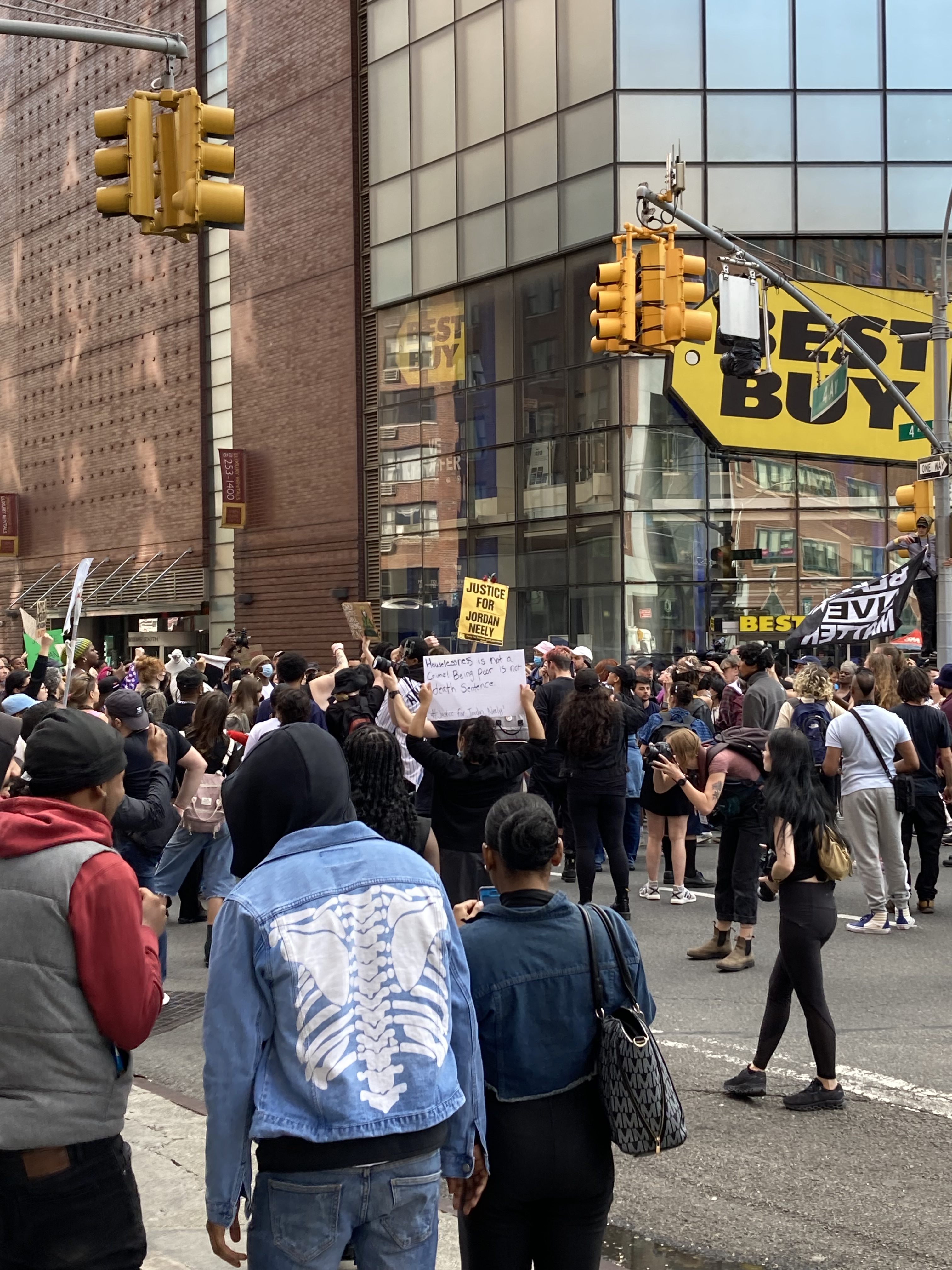
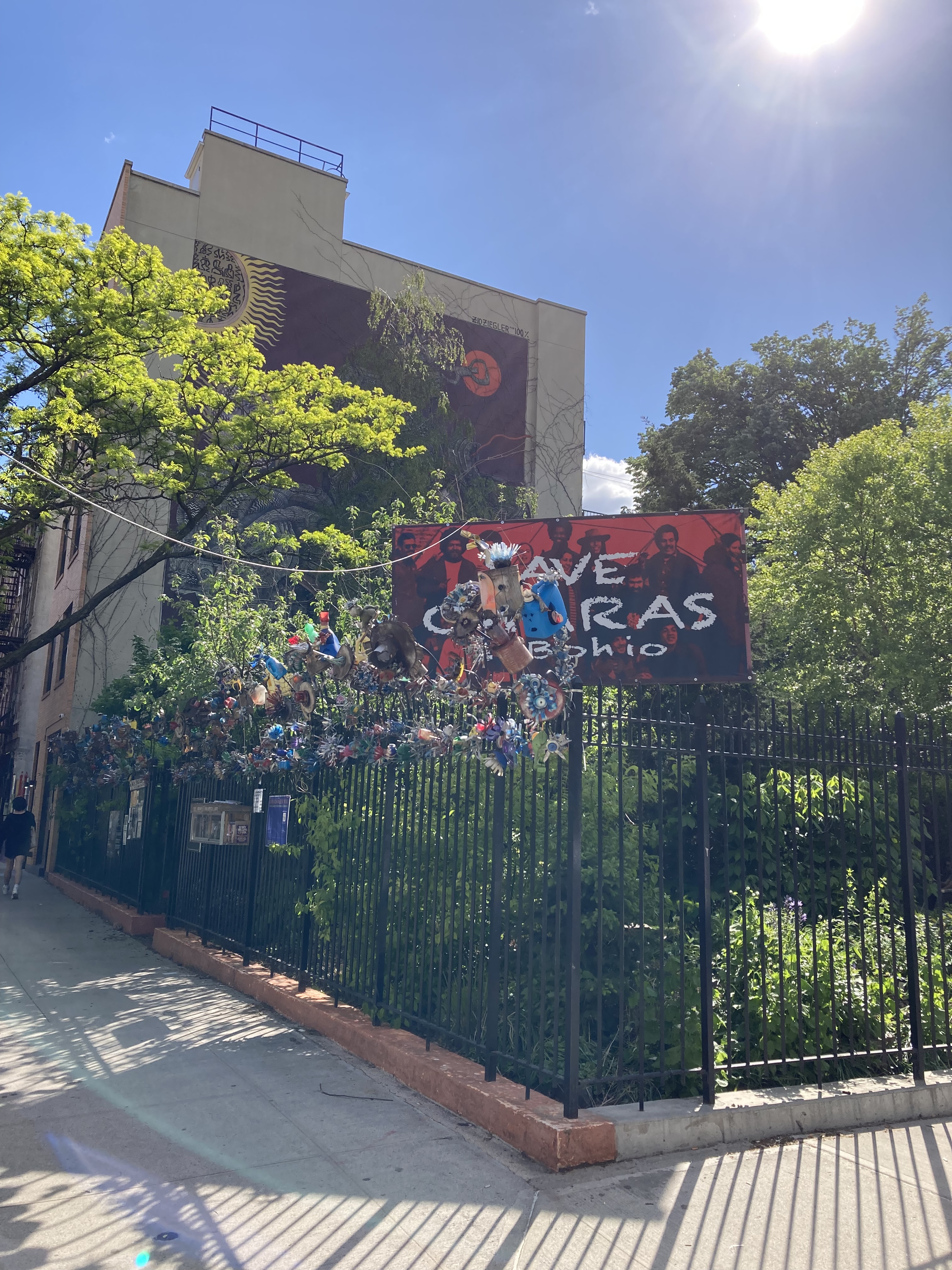
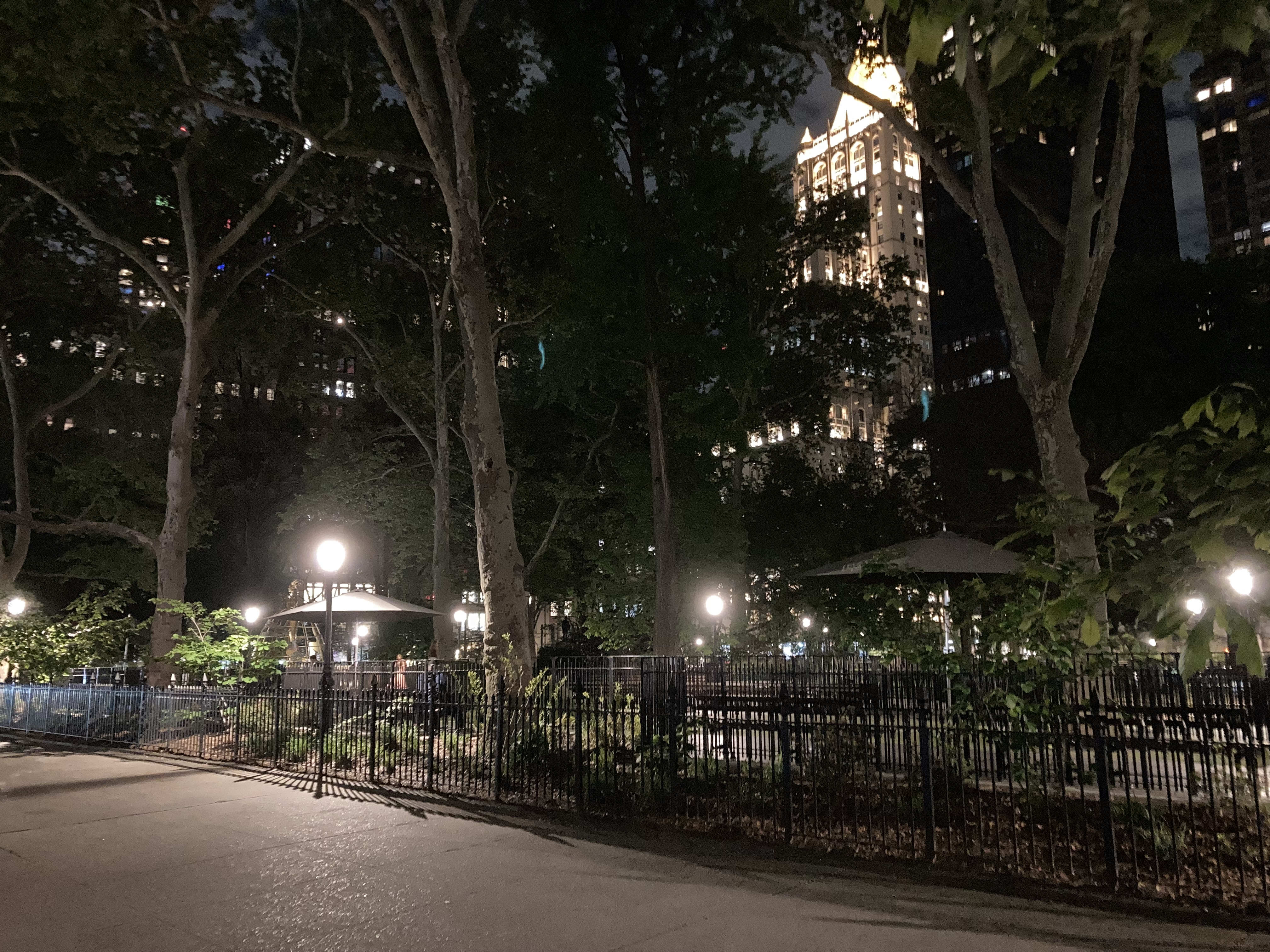
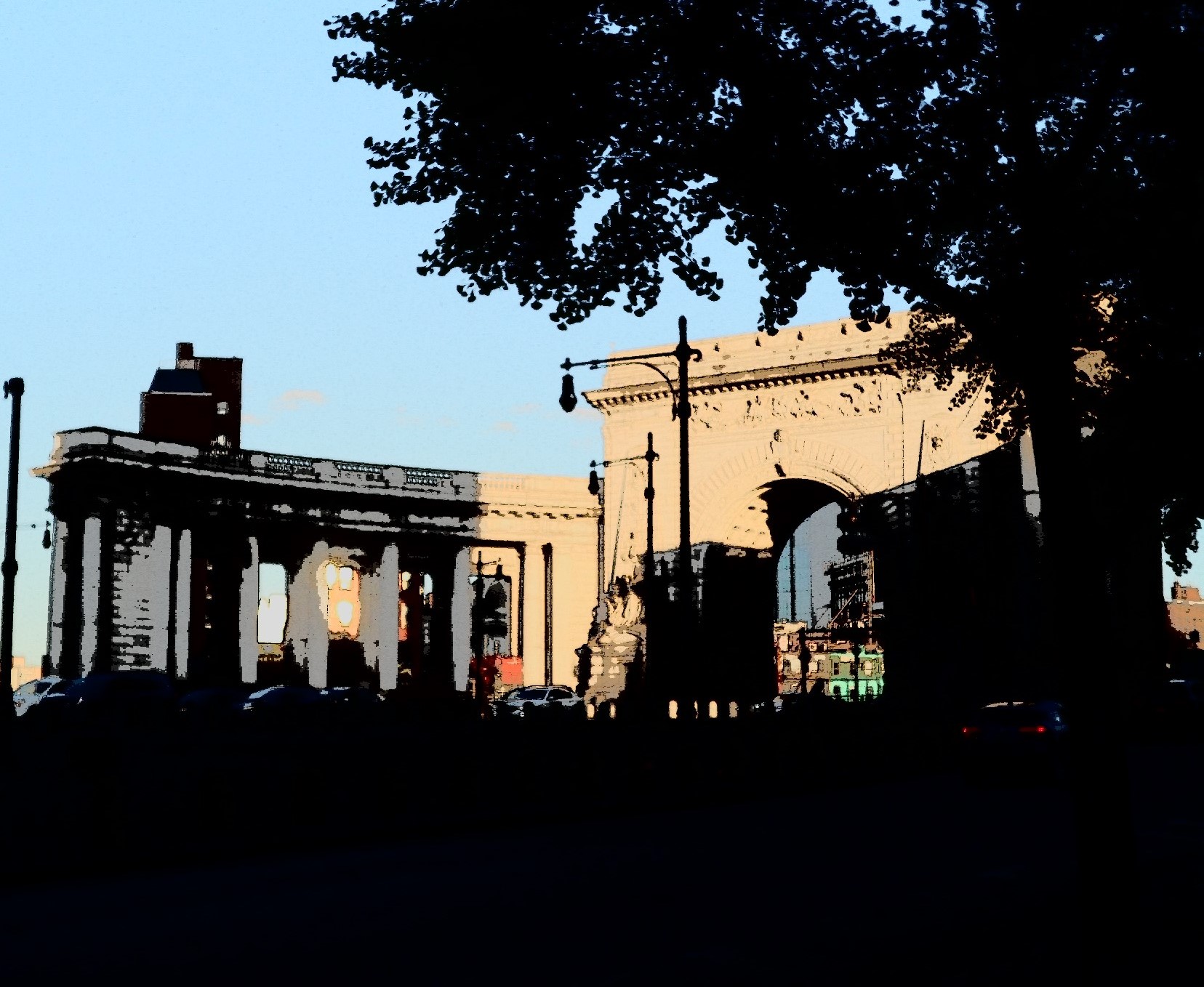
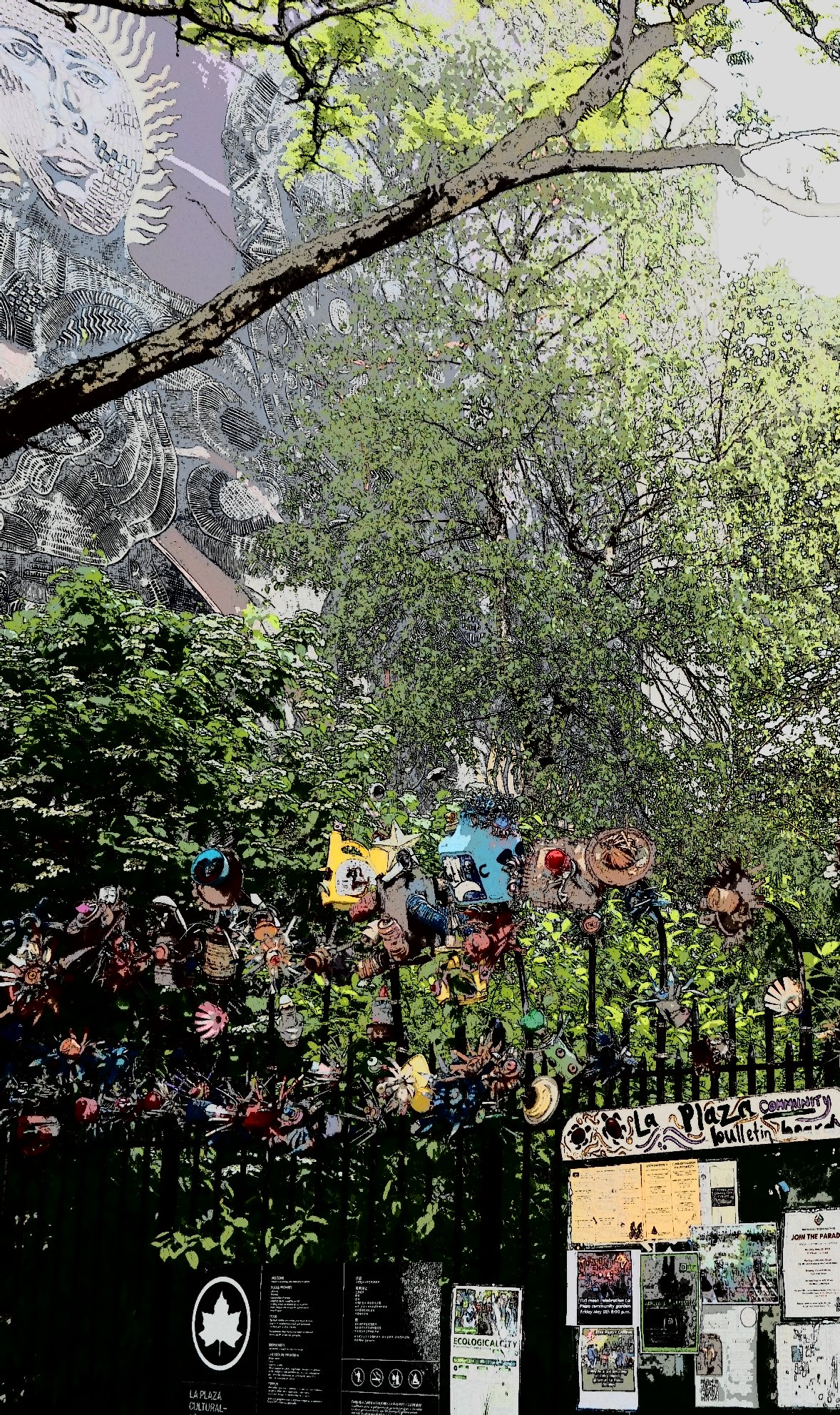
Editor’s Post “New York City, May, 2023”

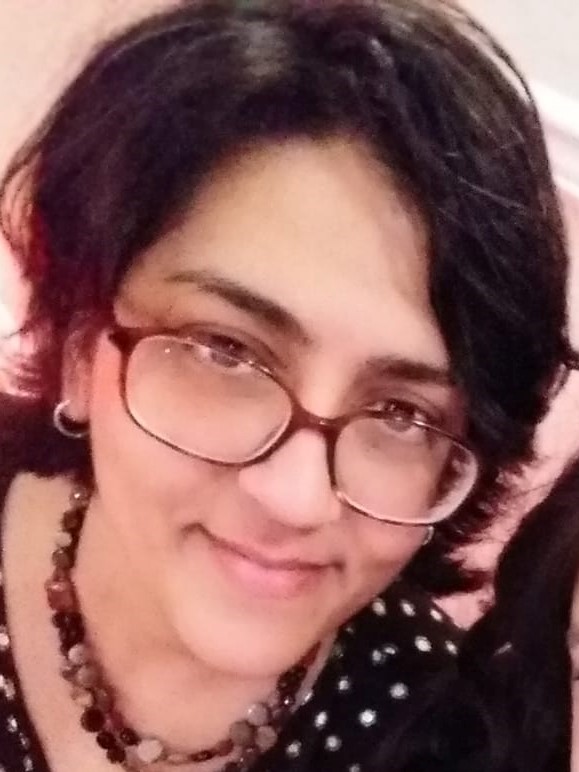
Ayesha F. Hamid is a poet and creative nonfiction writer published in Blue Bonnet ReviewPhilly Flash InfernoSheepshead Review, and Rathalla Review. Her full-length memoir The Borderland Between Worlds is available through Auctus Publishers at Barnes and Nobles and Amazon.  Ayesha also has a full-length poetry collection called Waiting for Resurrection. She is a Poetry Editor at Ran Off With the Star Bassoon and an Assistant Poetry Editor for The Night Heron Barks. She is the Editor-in-Chief at The City Key.

Ayesha holds a Bachelor of Arts in French and A Bachelors of Science in Sociology from Chestnut Hill College, M.F.A. in Creative Writing and an M.A. in Publishing from Rosemont College. She also holds an M.A. in Sociology from Brooklyn College.  Aside from writing, Ayesha also loves film, travel, and photography. You can find Ayesha on twitter @ahamidwriter Ayesha is a lover of cities, big and small.