Three Poems by Eóin Flannery

City of the future

The branches of the trees are a squall of applause,
choiring out ragged notes on the park fence.

From the bench, shedding its paint in burnt petals,
I notice a trunk like a chipped dark vase, unpolished,

leaning off-balance, steadying itself with a thin elbow
on the iron perimeter gate that keeps the children
from the traffic.

Twisted with age, its face is curved with wisdom,
and I half expect it to curl
a twig in my direction.

Milky light breaks the cover of the upper branches,
daubing the lawns with a cage of brightness and shadow,

warming my skin with unsteady jets of heat,
heat that disperses unevenly out from the lawned
park,

heat that reaches beyond the traffic blockages, carried on
the same currents as the purest pollutants

speckling the arteries of circular motion,
the city’s cluttered corridors through which
we will walk.

The unstirred air is padded out with warmth,
worn as baggage, time’s stained clouds.

Unshadow – Wurzburg

A yellow tram folds itself around
the corner,
slippage and spark
are cobbled together at high pitch.

My shadow drains through the streets,
it seizes and strains,
brown eyes look
from behind the chains of rain
mingling
on the weathering shopfronts.

Steps lead to the bridge astride
an overwhelm of Spring river,
from where a sound that clouds out
the footfall of the passing and the past.
Where its white and grey mess
trespasses on disquiet.

High above the city,
your hand presses
on castellated walls.
Knuckles of stone, worn with story.
But there are gaps,
imagined looks and bursts of smile.

And there is that heartbeat
that recoils
from expressing too much, too late.

I try to unshadow it,
through the looks of others.

Aussteigen – Stuttgart

The doors of the train
snap shut like two bare
hands clapping against
a bitter cold, sending a shiver
through the bodies of those
that cluster on its plastic
seats.

Mice thread their way through
the brackets of steel below
on the tracks as

we race the escalators to
the bottom,
hit the platform –
too late,
but take
consolation in the
underground heat that
pads out
the tunnels.

We wait.

According to the colour-coded
map, we need the S3 to
Stadtmitte,
where we change to the S6,
it will take us all the way to
Weil der Stadt –
a mythic place,
the end of the line.

On the undercard of city life,
we wait for the gathering
vibrations of the next train,
the prickling tickle of its
tongue
beneath our feet –
the shared feeling that
something is coming.
download

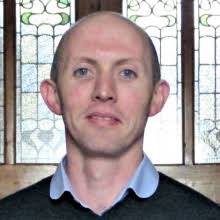
Eóin Flannery is a writer based in Limerick, Ireland, where he is Associate Professor of English Literature at Mary Immaculate College. He has published 12 books of cultural criticism. His poetry has appeared in ‘The Galway Review’ and ‘Vita and the Woolf’, it is forthcoming in the ‘Hog River Press’ and in ‘Inkfish Magazine’. He is working on a collection of poems entitled, ‘Unshadow’.

Please note: Poetry is compressed to fit smart phone screens. If you are reading this poem on a phone screen, please turn your screen sideways to make sure that you are seeing correct line breaks for this poem.


“Popstar” by Margaret D. Stetz

my skin folds like a fan
my face an overripe tomato
reddens puckers
while my spine creaks on its hinges
my fingers curl and crimp
my clothes are vintage
jackets oversized with pads
like kittens sleeping on my shoulders
songs I hum aloud today
were once too cool for words
now sound too stupid
but please do not reveal
my secret—
I am really still fourteen-years-old
onstage in school performing
sure my future
is starbound…
as I wait now on
subway platforms
the loudening rumble inside tunnels
turns into applause
my selves from seven decades
surrounding and supporting
like girl-group backups
help me to survive
the pounding waves of urban life
come up for air
and in the darkness
even see
my name in lights

Margaret D Stetz 2024

Margaret D. Stetz is the Mae and Robert Carter Professor of Women’s Studies at The University of Delaware.

Please note: Poetry is compressed to fit smart phone screens. If you are reading this poem on a phone screen, please turn your screen sideways to make sure that you are seeing correct line breaks for this poem.
Two Poems by Scott Davidson

Snow on the Cars

The couple setting off in dress shoes have no idea
what walking home means. Snow like this changes
perceptions of competence. Clueless and therefore

undeterred by muck and chaos, by the memory of sitting
in the lobby of their father’s building weeping as their
feet began to thaw. Later, on the balcony, cars along curbs

form lines that make them look abandoned. Snow has
hardened in harmless sheets conforming to hoods and
sideview mirrors. Winter back home transformed us

to heroes. All over town, cars that drove in cold from
the hills appeared on streets like battered scouts. Cars
with windows fogged all around, heat from who knows

how many bodies. Here, snow is sudden and never
prepared for. The woman in heels and the man in loafers
will understand how wrong they’ve been. Those of us

leaning on fences back home, peering down creek valleys,
take it on faith there’s wisdom in surviving where those
valleys lead. I was only a quarter mile from my house,

standing in snow and stubble of weeds. In my layers of
clothes, my cinched down hood, it was clear in the suddenly
anxious distance, we are all of us lucky to be alive.

Streetlights

Blue or not, the last man through the door
never noticed the color of the walls or the height
of the man running in front of him. In those ways he
knew he was a disappointment. Later, in the coffee shop,
stumped by what to do when he leaves, he waits for some-
one to enter and change the direction of his life. Walking
home he feels unburdened – night air, streetlight hum,
hiss of traffic like a river. As he crosses Broadway, looks
back for cars, anything could be about to happen.

Scott Davidson • Author Photo

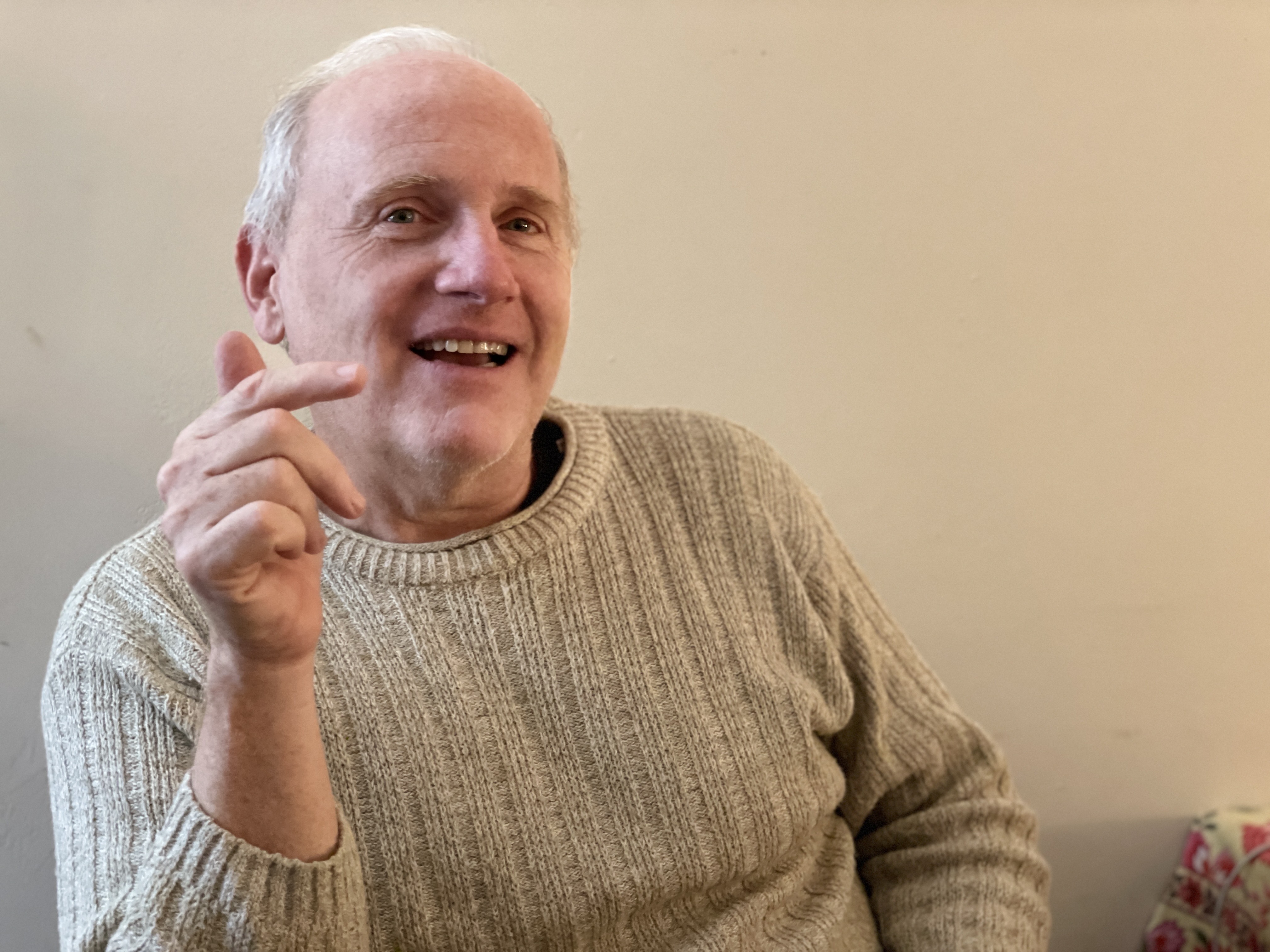
Scott Davidson grew up in Montana, worked as a Poet in the Schools and lives with his wife in Missoula. His poems have appeared in Southwest Review, Bright Bones: Contemporary Montana Writing, and the Permanent Press anthology Crossing the River: Poets of the Western United States.

Please note: Poetry is compressed to fit smart phone screens. If you are reading this poem on a phone screen, please turn your screen sideways to make sure that you are seeing correct line breaks for this poem.

“Secular Ascension” by James B. Nicola

No matter how long we live
No matter how alone we lie
We are all unborn
And all deceased
For the same amount of time
And the same distance from each other
Whatever that distance may be.
Call it eternity. Call it infinity.
But like an ocean and its islands
Eternity is interrupted
By us.

No matter how high up we reside
We are all the same distance from heaven.
A lifetime.
A universe.
But a universe interrupted.
By us.

*

I live forty-five floors above Hell’s Kitchen in the middle of Manhattan.
It is my favorite place on or above Earth.
The view takes my breath away. Every day.
If you visit me, the view will take your breath away.
In such apartment buildings, the elevator is everyone’s friend.
When you visit me, the elevator will be your friend.

When the world below and outside happens to be hell and storming
With squalid snow, hectic hail, incorrigible ice, or rambunctious rain,
I stay inside instead of jogging, walking, biking, or hiking.
I stay inside so as not to catch cold.
So as to stay healthy.
On such days, I walk up the stairwell a few times
For the cardiovascular exercise.
I ascend to stay healthy.

The stairwells in such apartment buildings have no windows and no view.
It is the climb that takes my breath away.
If you visit and walk with me, the climb will take your breath away.
Then I shall cook you a meal from scratch.
If you visit me, you may feel healthy.

*

I grew up near Mt. Wachusett, Thoreau’s favorite mountain, in Massachusetts.
It’s become a favorite climb, even after a storm, branches of pine and birch,
rocks and roots strewn everywhere, a landscape mid-revision.
It’s not one of the holy mountains of the world, like Croagh Patrick in Ireland
which I’ve scaled or Denali in Alaska where I’ve hiked.
But Thoreau walked to Wachusett from Walden Pond and scaled the slope, and
he was a holy man, in a secular sort of way.
I hike to the top, then stroll down, at least once a year. When I happen to be
In Massachusetts.
I even walked to Wachusett once from Walden.
Always I breathe in the view as well as the air’s green perfume.
What exhilaration!

At the top of the mountain, I feel
As if I am on, or even am,
An island in the air and, oddly,
Not so far from either home or
Heaven.
Back at the bottom, spent, I feel
Healthy.

*

I think and feel and care, never far from You.
You are my favorite hope, like a favorite mountain,
Even when I’m confused, even when I’m an island.
After a calamity, not knowing where to turn, I glance up and ask, “Now, what?”
At times from the top of a building.
At times from the top of a hill.
And at times I have heard You answer me.
I thought I heard You answer me.
I’ve heard and hear You answer because
You take my breath away.

Each breath I take
Each blink I make
Is an elevator door slid open,
A button pushed, a panel lit,
A pace down a corridor,
A step in a hike on
A rocky, root-strewn climb
Toward the summit of a desultory life.
Toward the summit, I suppose, that’s You.
There is no down.
But what exhilaration!

And one day,
One year,
After all my years and days are done,
I shall be no longer the interruption,
No longer the island remote.
I shall be forever
Home.

And this is the only exercise, the only true exercise, the only breath truly taken away.
This is the only ecstasy: the thrall of impending rapture.

jbNicolaimage_option1

James B. Nicola is the author of eight collections of poetry, the latest three being Fires of Heaven: Poems of Faith and Sense, Turns & Twists, and Natural Tendencies (just out). His nonfiction book Playing the Audience: The Practical Actor’s Guide to Live Performance won a Choice magazine award.

Please note: Poetry is compressed to fit smart phone screens. If you are reading this poem on a phone screen, please turn your screen sideways to make sure that you are seeing correct line breaks for this poem.

“Watercolor: Umbrella with Girl” by Jeff Burt

August rain,
her umbrella taut
as a puffed cheek,
a gust and she’s dragged
like a rag doll.
Soon, rain absent,
slack as an accordion,
she twirls it
like a baton
as if orchestrating weather.
In softened soil
at Gault Street Park,
she turns the umbrella
into a walking stick
poking holes
by the sidewalk
some will believe
have been made
by tunneling creatures.

Jeff+Burt+NP1

Jeff Burt lives in Santa Cruz County, California. He has digital chapbook available from Red Wolf Editions, Little Popple River and Other Poems, and a chapbook from Red Bird Chapbooks, A Filament Drawn so Thin.

Please note: Poetry is compressed to fit smart phone screens. If you are reading this poem on a phone screen, please turn your screen sideways to make sure that you are seeing correct line breaks for this poem.

Two Poems by James Conroy

EVERY CITY IS MY HOME

Someone says my name
in another place as if they know me.
Every bus, every train is a homecoming.
I see my father in a stranger’s eyes
and my mother on a billboard.

Every city is my home,
mountains and prairies in the yard.
I tend to things the way this river
spreads itself in high-water season.
My clothes fit every occasion.

Every city is my home
though I am always going;
horns and sirens late at night
and a newspaper in the morning.

NO ONE SAYS…

“Correct me if I’m wrong,”
and means it.

‘L train rumbles by;
rumbling because it never
wants answers
to questions it hasn’t asked.

If I cross another bridge
will the river feel diminished?
The river heeds my concern
so we remain friends.
It will still freeze next month.

I pass an old building in demolition
and think it was a school, once.
Might have been.
I taste the chalk.

J. Conroy. heashot.3

James Conroy is a writer and editor living in Chicago. His poetry and short fiction have appeared in BLUE UNICORN, THE CAFÉ REVIEW, XANADU, THE ICONOCLAST, FREEFALL, SPEAKEASY, and the THE GROVE REVIEW among numerous other distinguished journals. He has also published a collection and eight novels.

Please note: Poetry is compressed to fit smart phone screens. If you are reading this poem on a phone screen, please turn your screen sideways to make sure that you are seeing correct line breaks for this poem.

Three Poems by Michael J. LaFrancis

The Goal Rush

Grand Central Station next stop.
Exit to the right of the train.
Watch the gap between the car and the platform please.

Thousands climb the stairs and converge
as they pass the golden clock tower,
that perches above the ticket counter.

The pounding of their leather heels
against the tile floor
sounds like a stampede

toward a set of stairs, these down,
to the Red Line 1, 2, 3
to the right side for Uptown, left for Downtown.

As the next train arrives the brakes are screeching,
the number or letter and destination is flashing
in red colored lights. The door opens, some get out.

Those who have been waiting push forward
trying to make sure they get all the way in,
before the door closes in front of them.

Some look forward, some look out
for the white letters and numbers
painted on black placards

This is 14th Street, Union Square.
The next stop is Brooklyn Bridge, City Hall.
Transfer is available to the 4, 5, J, and Z trains,

At the end of the day or week,
they will reverse this migration
to arrive home again.

I am in awe how many millions of people
can get where they want to go,
with a few simple signs for direction.

What Will Become of Me?

While so many of you
were under lockdown,
my clock at Grand Central was still

on duty directing traffic;
my trains and buses were delivering
those working to keep you alive.

I see you looking beyond your masks
into each other’s eyes, perhaps seeing
a cocktail of emotions for the first time

shaken and stirred are your stories
loss with longing,
like those that have been told before.

We will need to open our hearts
wider and deeper for me to be THE City
in your American dream.

The Dream

Your eyes are blue like the ocean,
observed the customs agent
at Beijing International.

“They are my mom’s eyes.”

A Chinese photographer
was taking pictures of me
in a tan fedora, brown felt boots,
snapping photos on my phone.

Cream-colored condos climb
out of the ground, like hollyhocks,
as bankers and investors play poker,
matching and raising tall buildings.

Cars crowd the throughways,
like ants on a hill. Tail lights,
street lights, and lanterns, all red,
decorate large cities, not scooters or bikes.

Our official tour guide,
a dark-haired woman, 30ish,
tells us everyone wants cash,
credit, cars and condos.

Permits are issued for alternate days of the week
that allow us to drive and run air conditioning,
guns and knives are not allowed in public,
police carry wooden clubs and walkie talkies.

China Dream was written in calligraphy
on a sign posted on a green construction wall.
“What is China Dream?”

We want harmony with our spirit,
in our relationships, meaningful work,
health and prosperity now, in the afterlife.

Michael

Michael J. LaFrancis is a trusted advisor and advocate for individuals, groups and organizations aligning purpose, capabilities and ideals. Writing poetry is a contemplative practice providing him with insight and inspiration for living a life imagined. He and his partner Sharon are co-authors of their autobiography.

Please note: Poetry is compressed to fit smart phone screens. If you are reading this poem on a phone screen, please turn your screen sideways to make sure that you are seeing correct line breaks for this poem.

“River City, Downtown” by Elliott Martin

The power of a river
cannot be contested by man,
whether by warship under sail,
or steam, harnessed for grain,
dammed for energy and commerce,
or forgotten and neglected.

In winter, the sun shines on the river
from over the bridge to the west,
and the mirror-glass-still water is broken only by its rocks.
On a summer eve, those rocks break white caps
as the force of nature rushes past, and a man in a kayak
journeys through downtown, a block away.

In wartime, these waters rushed past a foundry,
where hundreds of young women gave their lives making bullets,
and armies and navies battled for control of the capital city.

And the water rushes farther,
to where there was no Virginia,
to when Powhatan was understood by all,
the power of a river is in the life of its green algae,
and herons, and sturgeons as they pass,
struggling upstream to spawn where they were born.

Richard

Elliott Martin is a graduate student, writer, historian, musician, and poet living in Richmond, Virginia. His writing has appeared in The Copperfield Review, Artemis Journal, JerryJazzMusician.com, and elsewhere. Originally from Southwest Virginia, he has lived in Richmond since 2019.

Please note: Poetry is compressed to fit smart phone screens. If you are reading this poem on a phone screen, please turn your screen sideways to make sure that you are seeing correct line breaks for this poem.

Two Poems by Bradford Middleton

FELL IN LOVE AGAIN, GOD-DAMN IT!

I started looking again, looking
for somewhere new to lay my
head at night & write all day but
as I look out my door at this old
Brighton I think maybe tomorrow
I’ll start looking for a job in London
as the weekend past I went to see
& god-damn it I feel in love all over
again…

BRIXTON AIN’T ABOUT BASEBALL CAPS IT’S MORE A STATE OF MIND

On social media I see it a lot, white privileged
Guys rocking BRIXTON branded baseball caps
& each one I’m sure is so convinced of his own
Cool that I know none would have been able to
Live down that road like I did all those years ago
Above the Ethiopian restaurant & live to tell
The tale of the madness of those times with the
One woman I’ve ever really loved…

Bradford

Bradford Middleton lives in Brighton on the UK’s south-coast. Recent poems have featured in the Good Press’ The Paper, Dear Booze and the Mad Swirl. His most recent book The Whiskey Stings Good Tonight… came out last year from the Alien Buddha Press. He tweets occasionally @bradfordmiddle5.

Please note: Poetry is compressed to fit smart phone screens. If you are reading this poem on a phone screen, please turn your screen sideways to make sure that you are seeing correct line breaks for this poem.

“Memories, Like Leaves” by Tohm Bakelas

On the edge of town lies another town,
and beyond that, another. You lean
against a wood fence, watching invisible
wind move across untamed fields of
green that have begun to brown. It is
November and cold. Things are living
and dying. You think back, eleven or
more years ago, when, for twenty-eight
days, your punk band toured across the
country in a run-down green ’98 Chevy
conversion van that was purchased for
$1200 and came with two seats in the
front, a cigarette burned couch in the
back, no seatbelts, and a suicide knob.
You think about the long drives before
the shows, passing through towns and
cities with names you can’t remember,
across highways you can’t recall,
through states that you never stopped in,
and places that never knew you were
there. Long days of endless driving to
play fifteen minute sets in crowded
basements, dark bars, beige living rooms,
moldy garages, anywhere with electricity.
And when the tour ended, and the van
broke down, you had it towed to outside
your house to serve as a reminder of the
feats you accomplished and the memories
made. But tonight, eleven or more years
later, leaning against this wood fence,
you think of the nights after the van died,
after the band died, after the fun died.
Those cold November nights when you
and your friends spent in the van, huddled
together under blankets and sleeping bags
for warmth, drinking Heaven Hill Whiskey
and smoking pot, like a lost tribe of
shamans, exiled to die in New Jersey.
And tonight, these memories, like leaves,
are few and far between, little to none
remain. And it is cold, so very, very cold.

Tohm

Tohm Bakelas is a social worker in a psychiatric hospital. He was born in New Jersey, resides there, and will die there. He is the author of several collections of poetry, including “Cleaning the Gutters of Hell (Zeitgeist Press, 2023) and “The Ants Crawl in Circles” (Bone Machine, Inc., 2024).

Please note: Poetry is compressed to fit smart phone screens. If you are reading this poem on a phone screen, please turn your screen sideways to make sure that you are seeing correct line breaks for this poem.