“How to Survive Rain in Los Angeles” by Miro Myung

New moon in Aries, and the rain is pounding down on Los Ángeles. Patio furniture is tested throughout every neighborhood as parrots take shelter in the branches guarding us from high above. Love is a theme of this erotic moon phase–as well as the honking of car horns as the 110 South dangerously fills with standing water. Disjointed, disoriented, chaotic flow of the city that captures so many of our imaginations slowly molds you into its form: flexible jelly with a core of steel.

This is one of those days where it seems safer to just stay in bed. It sounds bad out there I think to myself as the beeswax candle cultivates a world of shadows on my bedroom walls. It’s 6:42am and the forecast is already set–scroll down and down, fall in and out of love with the bathroom mirror, cook dinner with your ex, play tug-of-war with your dog–do anything but open that front door.

But if you do have to leave, make sure to have water in your car in case you get sucked into a sinkhole on Sunset Boulevard and eat a healthy breakfast, but–no eight-hour fasting-whole-thirty kind of thing. Eat something hearty that gives your day a “leg up” or a “leg sideways” so that you can circumnavigate the loneliness of rain in Los Ángeles. The only certainty of today is that we will all have patio furniture that is going to be sixty-percent rot by summer and that our collective anxiety about the rain pounding that engineered Ikea wood will also hold us back from saving our four-legged friends from their fate. When it rains in Los Ángeles we live in denial–like when it’s 108 degrees Fahrenheit–we put a podcast on, throw some boy-brow gel on or whatever makeup makes you feel more ghastly and beautiful, and traverse through the city like it’s made for living.

To live in Los Ángeles is to be in love with the non-ending. Other cities might promise you solid conclusions–you know the neighborhoods well enough to predict the calm dinner out with the same friends, you know that people will complain about traffic and the influx of tech workers, you know that there will be no crowd spilling out of the neighborhood bar on a Tuesday night, you know that if you are lucky enough you will end well here in a way that will satisfy the order of things–a house, a career, a marriage, and even a golden retriever.

To live in Los Angeles is to be in love with the non-ending; a neighborhood bar is hard to locate because the highways keep beckoning you further and further into the tangled web of homes and palm trees and tiny restaurants bursting at their seams and linen-wearing humans picking herbs in Griffith and hidden farms in South Central twirling disco balls over colorful chickens and bowling alleys that sit along train tracks serving sukiyaki and cheese fries. This is a city of lonely transplants mixed impossibly with families who have lived here for generations and they clash in their cultures, but together, fall in love with the clean air after a steady rainfall.

On the highway is where I find my largest community–I used to think of myself as entering the herd, but now I see it as a convergence of “we’re all in this together” mentality and a “we are also very fucked” thought process. I love it. Does that make me abnormal? I’m not sure if Los Ángeles has a barometer for “normal” like smaller, more organized towns do. To be wacky, loud, disruptive, joyous, angry, and incredibly scared is to blend in here. If you’re not a little worried from time to time you’re not driving through the city enough.

Yet within the chaos are microcosms of sensual peace–Ethiopian jazz filtering through old speakers as lemon trees drip water onto terracotta tiles, smoke from chicken being barbecued in a grocery-store parking lot that captures your imagination, sunbeams melting over two-story level buildings in Koreatown, waves in Malibu tilting towards land boasting their dolphins, the clinking of glasses in old Hollywood steakhouses where the red velvet looks better in the dim light, spiraling labyrinths in Topanga Canyon where hikers hug the famous tree, mornings in your bedroom as you listen to the music of horns and rain and parrots and your neighbor chuckling to herself.


Miró Myung published articles in Tom Tom Magazine, a poem in Luna Collective Magazine, LA County Library’s “Love Letters in Light,” and co-published poetry book “Almanac of Tiny Clouds.” She does visuals for indie band Tangerine featured in NME, The Guardian, Rolling Stone India, Billboard with a BFA from UCLA.

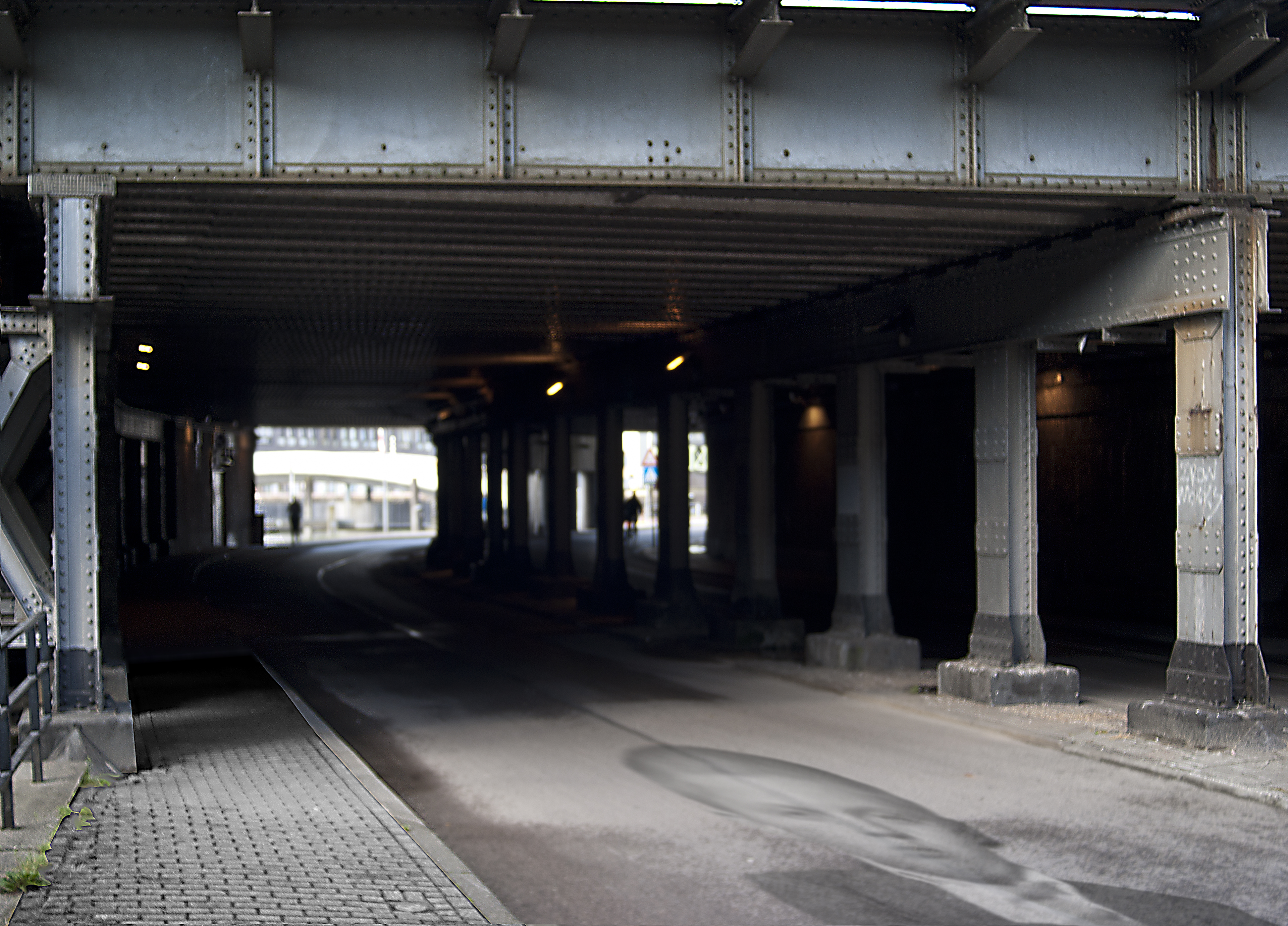
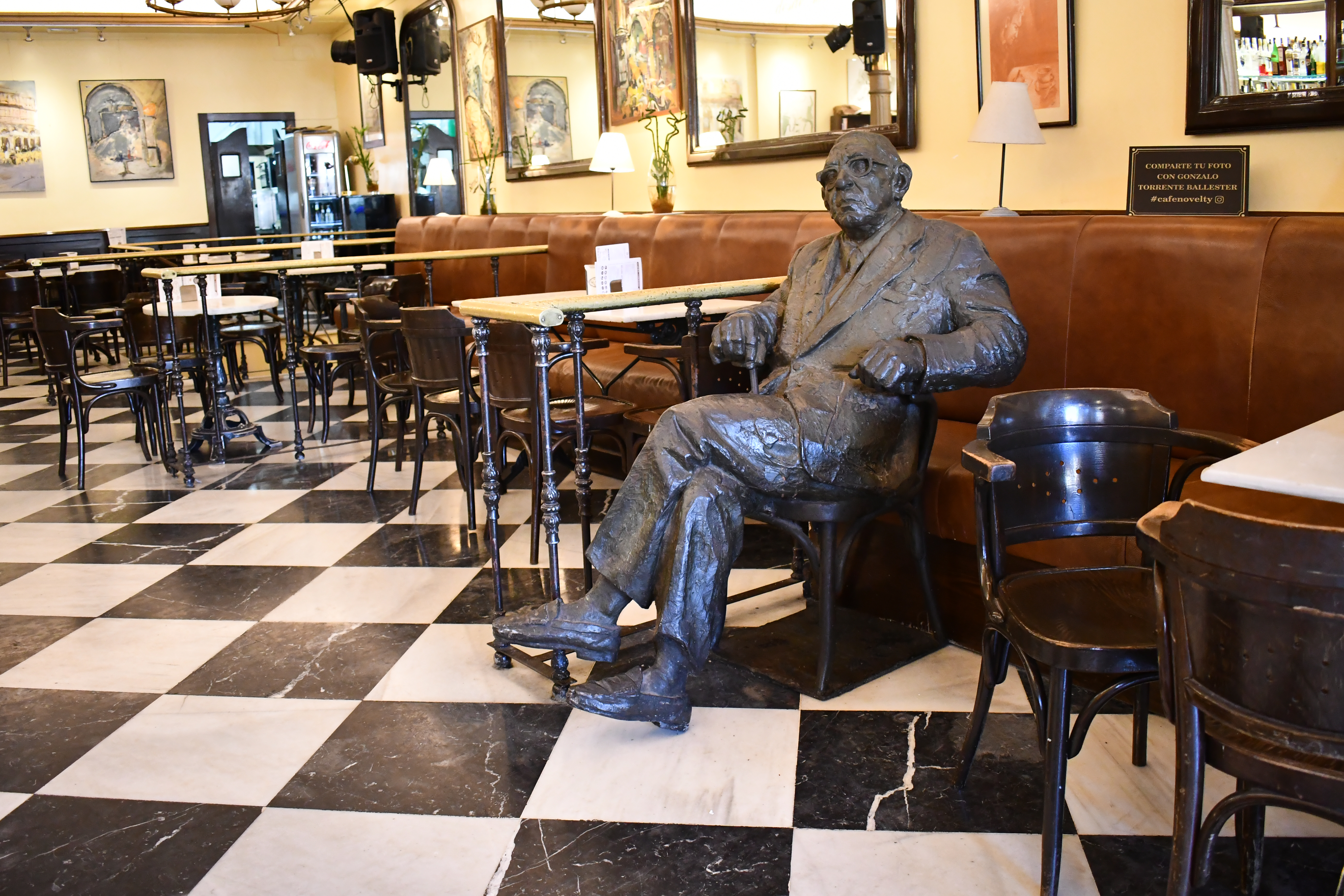
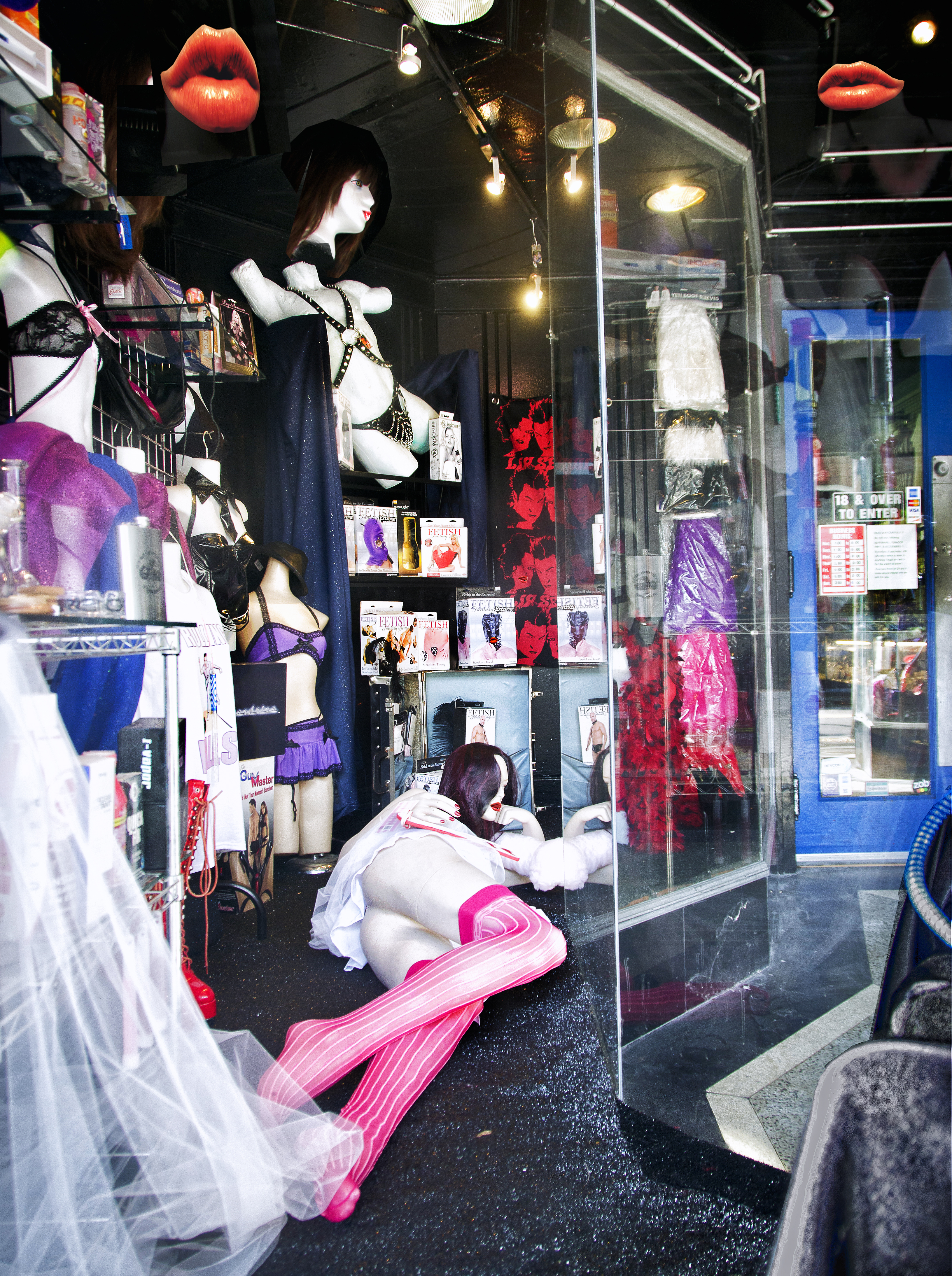
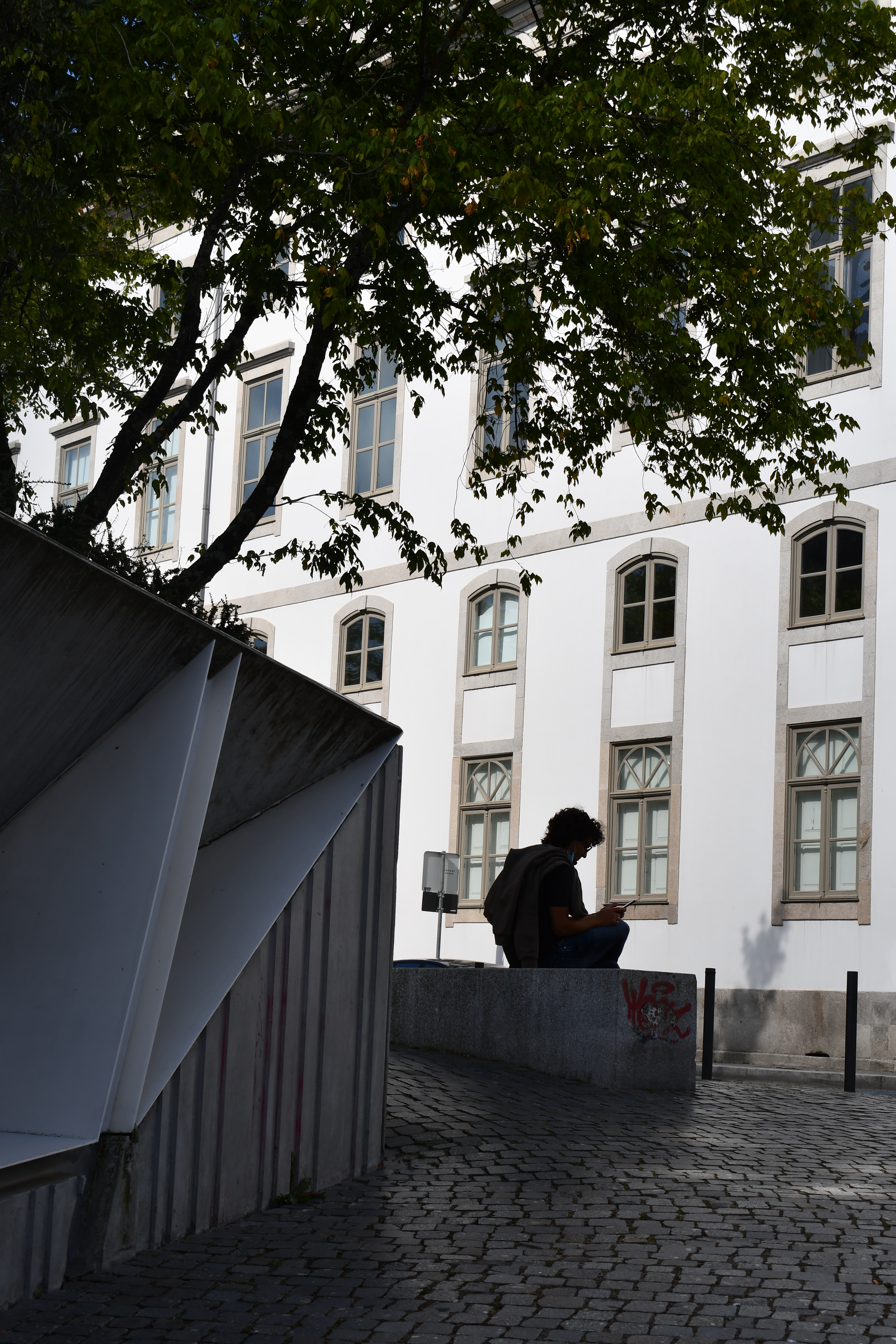
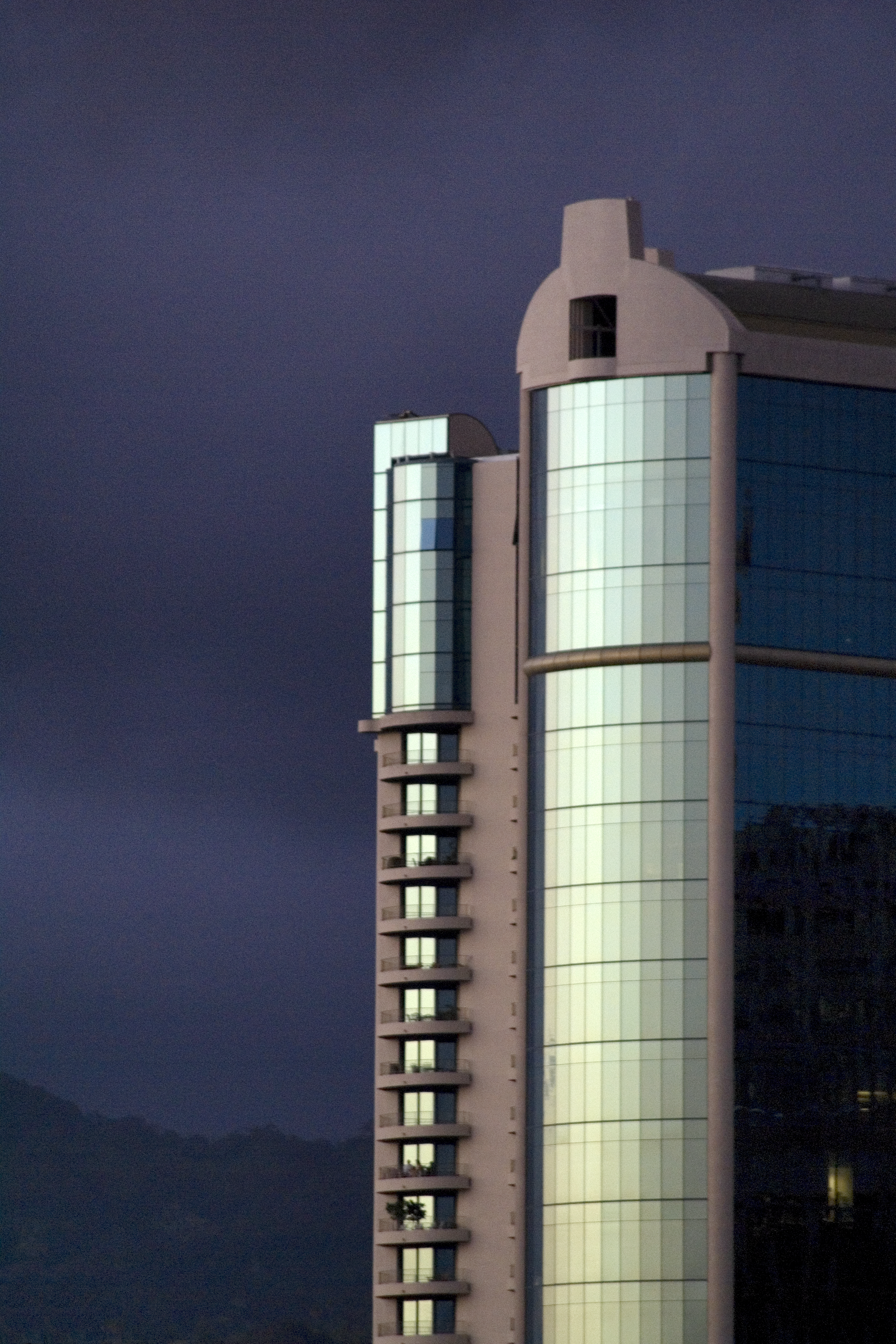
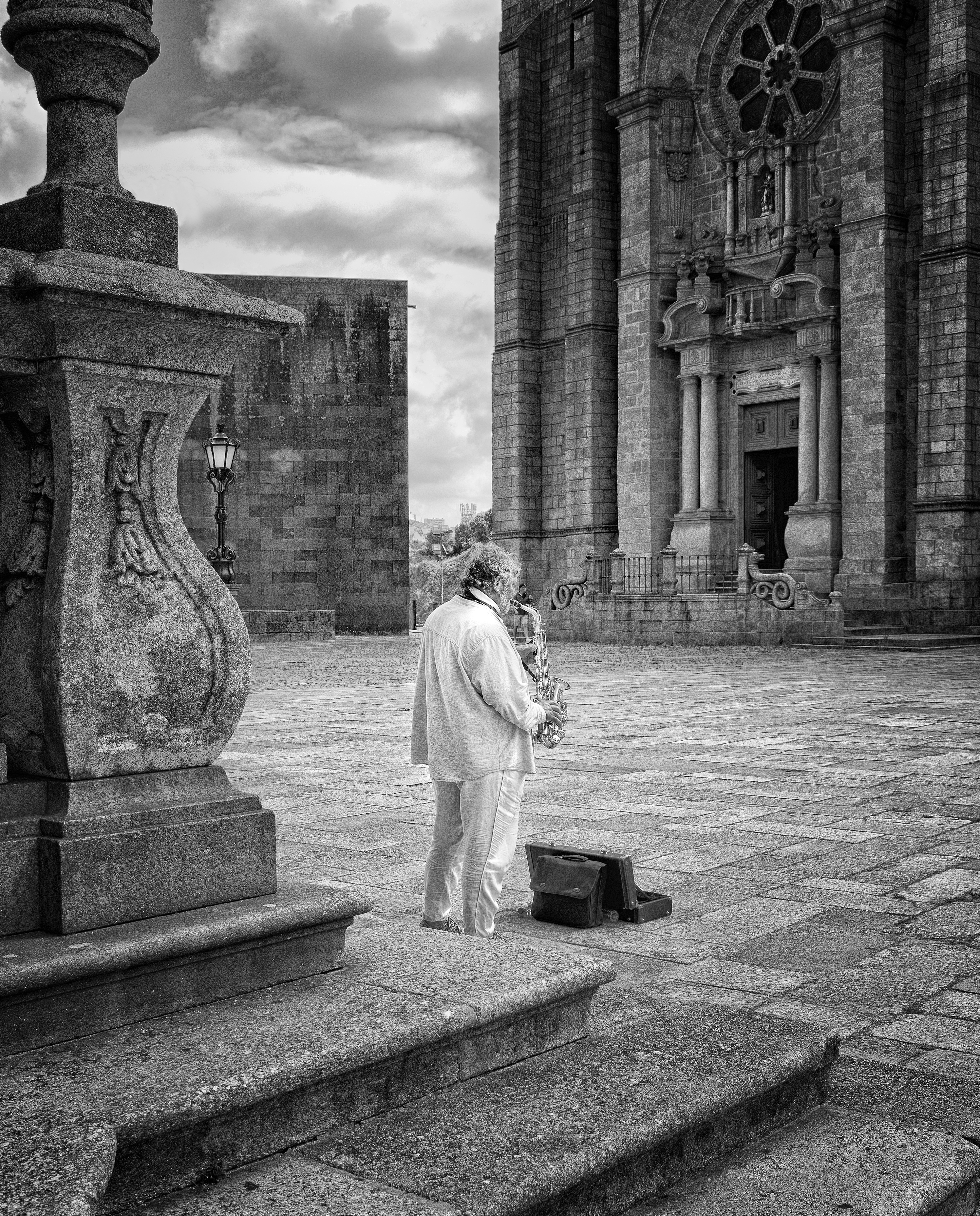
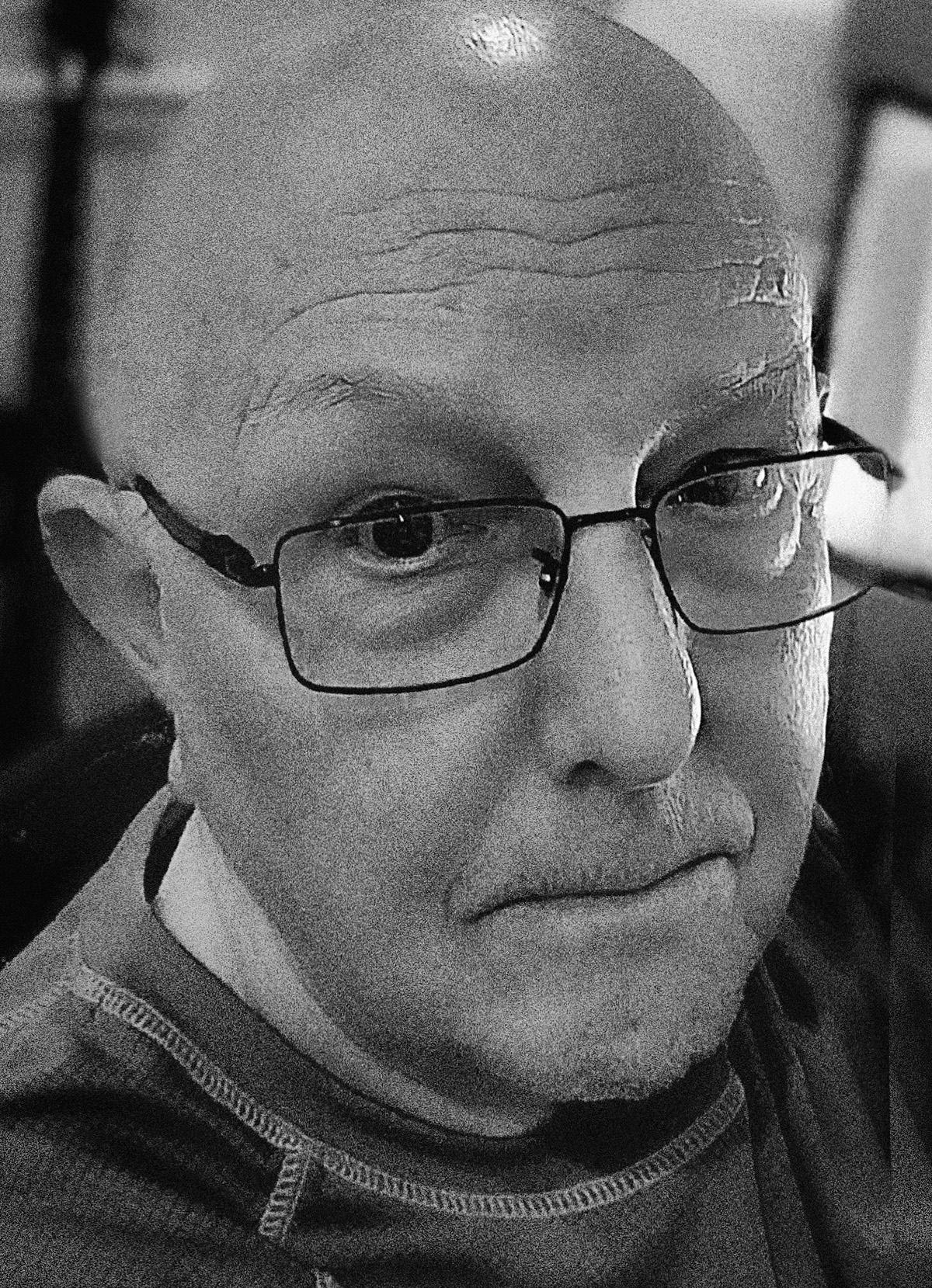
City Photography by Roger Leege

Roger Leege is a photo-artist who draws on his past as a lawn boy, meat cutter, trucker, EMT, carpenter, bass player, painter, embalmer’s assistant, weed-eater, printmaker, union agitator, journalist, videographer, educator, computer scientist, and deep blue Florida man, to tell his tales.

He keeps much more of his art at rogerleege.com.

“Chiang Mai” by Neal Donahue

Please note: Poetry is compressed to fit smart phone screens. If you are reading this poem on a phone screen, please turn your screen sideways to make sure that you are seeing correct line breaks for the poem.

The Muslim call to prayer
awakens us at quarter to six
in the morning, the pulsing
voice otherworldly and insistent.

We find ourselves in Chiang Mai,
a market city, prosperous and
alive, a religious mecca with
golden temples and Buddhist monks.

The air is cool and fresh,
a welcome change from Bangkok,
and we are uplifted by flowers and
the majesty of surrounding mountains.

As we make our way upward
on the winding mountain road,
the city falls away below, a busy hub
in the shadow of Suthep Doi.

At the temple, we ring the bells,
their throbbing tones rising up
toward heaven, the benevolent
spirits welcoming our prayers.

Neal

Neal Donahue majored in English at the University of Oklahoma, then served 5 years as a submarine officer. After his stint in the Navy, he taught elementary school in Massachusetts and Vermont, incorporating poetry into his curriculum. Neal has had a number of poems published in small journals.

Two Poems by Sarah Zietlow

Please note: Poetry is compressed to fit smart phone screens. If you are reading this poem on a phone screen, please turn your screen sideways to make sure that you are seeing correct line breaks for the poem.

The View from My Balcony

The corner of Animas and Campanario
Centro Habana, Cuba

Three boys shoot marbles on the sidewalk below
the laundry their mothers strung from one crumbling balcony
to the next. Each glass orb, glistening, bounces into the street
and underneath the ‘55 Buick Special, painted Tiffany Blue
over Bondo, and parked beside mounds of trash on the corner
where old men pick through the rubbish, seeking useful things

hidden in a sea of plastic bottles and rancid food. Things
like one aluminum can, just peeking out from below
soiled diapers and molded, rotten fruit—one crushed corner
of the can gleaming in the sunlight, just visible from my balcony
above. Two blocks up the road, the Malecón heralds the blue
Atlantic beyond, where a north wind blows down the street,

bringing with it dreams of Florida and another sun-drenched street
somewhere in the south of Miami. Alicia upstairs says that things
are better there. In Florida, the sky and the water are impossibly blue—
Madres, padres, and their familias, can escape out from below
the crumbling facades here that threaten to crush them. One balcony
fell last week and took the whole building with it, just around the corner

from here. Four cubanos muertos, Alicia tells me, on that corner,
but you wouldn’t know it after the rubble was swept from the street.
¿De donde eres? the cubanos, one after another, call up to my balcony,
and after my response, shout, ¡Americana! America, after all, a thing
they’ve imagined in a daydream more than once upon a time. Below,
a woman walks past to empty her trash into the pile beside this blue

building on this blue street in this blue town, under a sky of blue
that makes everything still somehow seem gray. I wonder if this corner
is the same as any other, but then remember Miramar, just west. Below
each building there, the view is not like this. On each manicured street,
freshly-pressed suits stroll from one embassy to the next. Everything
is planted and pruned and contorted into lies that echo off each balcony

here in no-man’s land, where Yessie sells cigarillos from her balcón
for thirty-five cents a pack, and cold cervezas in cans of green and blue
for only forty more. But these little luxuries are the bigger things
that most cubanos in Centro cannot afford. On every corner
up and down Campanario, the buildings close in on the calle,
and an invisible gray fog settles more each day on everyone below.Perched high on a Habana balcony, I miss the little things:
The boy in blue shoots pebbles of plaster into the street
from the corner of the curb, and there are no marbles below.

This Side of Negril

Down here at the West End
on Hylton Avenue is where
Wen fries snapper at his roadside stand
on Sundays. Red sauce too,
poured over rice and peas
with a side of slaw on top. I’ll
wait across the way at Whoopie’s and I’ll
save you a seat at the westernmost end
of the bar. Together, we’ll share each piece
while the sun sinks (the sky wears
his Sunday best) down, journeying on to
the Caymans, Belize, then Guatemala. Stands
of palms hold hammocks, and you’ll stand
at the edge of the cliff—the edge of this isle,
while I’ll snap just a picture or two
before the green flash that comes at the end
of the day. The Canadian ex-pat, Brian, wears
another Hawaiian shirt and breaks off a piece
of his gizzada—and another piece
for the goat that stands
nudging her nose at the pocket where
the bag used to be. I’ll
call Ardie over from the other end
of the bar, and order two
more. Red Stripe for you, and a white rum too,
with fresh-squeezed orange juice and a piece
of hand-chipped ice.

                                                   Back at East End
women in shanty-town stands
sell tchotchkes arranged in tightly-packed aisles
to American tourists come to ogle there,
just steps, but a world away from their
all-inclusive hells (women that wear too
much makeup and too much money).

                                                                                     I’ll
take my rice and peas and the peace
of the doctor birds that flit through stands
of ackee trees down here at the West End.
Before she closes tonight, you stop for a few pieces
of bacon, two potatoes, and four eggs from Dora’s stand.
We’ll fry it all in the morning for breakfast—at the West End.

Sarah Zietlow is from a small town in northeast Ohio where she currently teaches language arts to 7th-grade students. She holds a BA in Education from the University of Akron, an MA in English from Bowling Green State University, and is currently working on an MFA in Creative writing in the Bluegrass Writers Studio at Eastern Kentucky University. Sarah’s work has appeared or is forthcoming in Adanna and Merion West. In her free time, Sarah enjoys sitting by campfires with her husband while simultaneously staring at the stars and contemplating how best to sell off all she owns in an effort to find herself in some place other than Cleveland.

Zietlow


“Umbrella” by Peter Rustin

Not What I Expected

We both agreed: eff it, let’s not cook.  It was the first hot night in May, and the air had that 7 p.m. green/grey heaviness.  This usually heralds the kind of thunderstorm that, in 15 minutes, cleans the air of the fragrances of the now-ubiquitous reefer and garbage, to be replaced by ozone and the leaves of the valiant sycamores in Central Park.

Our jobs were energy vampires: Vanessa endures her waitership at an expense-account Midtown restaurant where Amex Platinum holders pay $32 for a mediocre burger.  I’m an IT guy for a hedge fund.  Our life-force was too low that evening for us to weave around each other to cook in what was risibly described by the coiffed realtor as a Manhattan “kitchenette.” 

So, after we changed into our civilian gear (jeans and Converse for me; pale blue sundress for Vanessa) we headed out to Wok Cottage, our default neighborhood joint about 6 blocks away on Amsterdam.  Yeah, it’s nothing to look at, but the food was consistently good, and we loved the whole old-school Chinese restaurant vibe: the grimy plastic-encased menus with the red edges still dangling ancient gold tassels; the torn leatherette booths; the paper placemats with the Chinese Zodiac (amusingly, we were both Year of The Rat); the hint of orange in the fortune cookies.

Right away, I could tell something was off the moment we sat down.  Vanessa usually sits next to me in the 4-person booth that we always gravitate towards.  Tonight, though, she sat opposite me; what was that?  A classic Vanessa move would be to suggest some absurdly gross item (rabbit head is always a sound choice, as is duck blood soup).  But this evening she immediately suggested the usual Szechuan beef. 

If I’ve learned anything from stand-up comedians, it’s to not ask questions, but to let your girlfriend get there on her own dime.  So, I waited.  And sure enough, it came before the waiter did.

“Dave?  Can we talk?”

Oh, shit.  “Sure, of course.  What’s up, V?”

“So listen. Are you happy?”

Is there a right answer to that question?  If you say yes, and they disagree, you’re an asshole.  If you say, “uh, not really,” but they are happy, you’re still an asshole.  I warily cocked my head.

“Anyway, I’ve been thinking,” she continued.  “We like the same music, we like the same bands, we like the same clothes….”

She knew that this quote from Springsteen’s “Bobby Jean” would make me smile and lighten the mood.  Still, I waited.

“I know that this is out of the blue and we have never discussed it, and you probably never even thought about it, but…. (deep breath). What about you and me getting married this summer?”

She was wrong.  I had thought about it, plenty. But can I be honest?  I had always thought Vanessa was a bit out of my league, with her careless beauty, quick wit and an effortless ability to charm any group, anytime.  And so, I was kind of waiting for the shoe to drop, thinking that I was on borrowed time to begin with, and when the inevitable breakup came, I’d just be grateful for what I had had.

Continue reading “Umbrella” by Peter Rustin

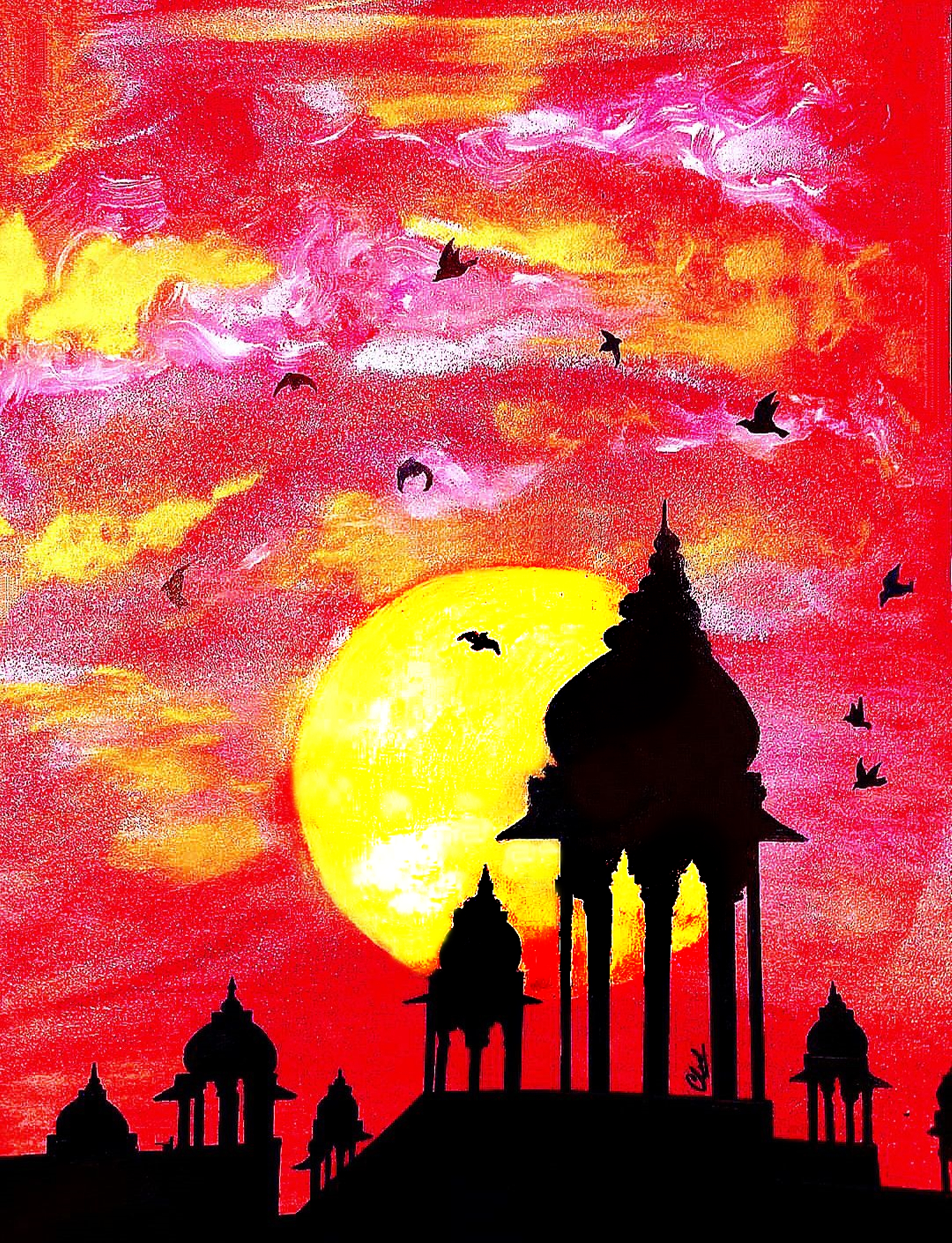
“Nakhoda Mosque” by Camellia Paul

Camellia Paul has a Masters in Comparative Literature from Jadavpur University, India. She works as a Senior Instructional Designer in a multinational ed-tech company.

Her works of translation, fiction, poetry, and art regularly appear in magazines, online journals, and anthologies. Camellia loves owls, reading, listening to music, and exploring cultures.

“Don’t Cry for Me Ocean Parkway” by Debra J. White

Growing Up in Brooklyn, New York

Bill Clinton was president when I last lived in Brooklyn – Forty Ocean Parkway was my only address there. (I still love Brooklyn, even though I doubt I’ll ever live there again. In fact, it’s doubtful I’ll ever move back to New York City.) I moved to Phoenix in 1997, and it’s likely I’ll die here. 

I grew up in the scrappy, working-class section of Astoria. Back then, we rode the GG line that went from Queens to Brooklyn. (No doubt that train line is called something else now. Has any subway line kept its original name?) We transferred at Queen’s Plaza for the F train to Brooklyn to visit family friends on Flatbush Avenue or to look at the rats in Newtown Creek. Maybe we transferred to another line. I don’t remember. The subway cars in my youth looked like cast iron, black and ugly. Seats were made of rattan and coated with shellac. When the seats frayed, bits of rattan poked you in the butt or scratched your leg. Sometimes, a good pair of panty hose got snagged by the unruly seats. Air-conditioned cars didn’t exist. Overhead fans swirled hot stuffy air around.  

In summertime, my dad took me to Brooklyn’s Coney Island via subway. Once the crowds poured out of the station, everyone headed to rides and the fun began. I always wanted to ride the Steeplechase, but my father said I was too little. Instead, we rode the famed Cyclone rollercoaster together. I loved the thrill of zooming up and down then flying around curves. We also rode on the carousel and bumper cars. Once I exhausted myself on rides, Dad treated me to a hot dog heaped with mustard, sauerkraut, and onions at the famous Nathans. Afterwards, I begged for super sweet cotton candy. I loved our trips to Coney Island even though the ride from Astoria took over an hour. On other days, we rode the train to Brighton Beach.

From Astoria, the only seafront views were looking at the East River swill. I preferred the smell of salty air over the stench of rotting garbage in the alleys by our tenement building. Sometimes, the drunken superintendent was so hungover, he would forget to haul the cans out to the sidewalk on Sanitation Department pick-up days. Once my dad rented an umbrella, and we spread out our blanket. Waves picked us up, tossed us around like basketballs, and we loved it. After we dried off and ate sandwiches Mom had prepared, we built sandcastles with our plastic buckets then watched as the waves washed them away. A day of fun in the sun with real sand and surf was much better than tar beach, the city term for sunning on apartment buildings rooftops. Days at Coney Island with my dad were special, even if all the sweets gave me a mouth full of cavities. 

I attended Mater Christi High School (now known as St. John’s Prep) in Astoria Queens from 1968 to 1972. A sizable number of students hailed from Greenpoint, a section of Brooklyn. In freshman year, I befriended a lovable nut named Helene who lived on Dupont Street.  Assigned to every class from English to algebra, we became inseparable. She was the Abbott to my Costello. We shared chicken-salad sandwiches at lunch, hung out after school in a donut shop on Ditmars Boulevard, and talked on the phone at night. If I cracked a joke in class, Helene upped the ante and made the girls laugh even harder. I’m surprised we were never kicked out. Helene invited me to visit her family’s third-floor, walk-up railroad apartment with the tub inside the kitchen. If her Italian mother offered food, Helene said to agree, even if I wasn’t hungry. Predictably, her mother asked if I wanted a bite to eat. “A little something,” I replied.

Within minutes, the kitchen table was filled with a spread of salami, ham, cheeses of all kinds, crisp bread, olives, pickles, cannoli, and more. Wow! I couldn’t possibly eat that much, but I tried to make her mother happy. I left that night ready to explode. I tried to walk all the way home from Greenpoint to Astoria to relieve my aching stomach, but it was just too far.   

During the massive construction project to build the Verrazano Narrows Bridge, linking Staten Island with Brooklyn, Dad would sometimes take us on the subway all the way from Astoria to Bay Ridge. Mom packed us a picnic lunch for the afternoon. We sat in a park watching the workers toil away slapping concrete and steel together that would one day become a world-famous suspension bridge. When the Verrazano finally opened in 1964, I was in the fifth grade. We watched the grand opening festivities on TV. After all the publicity died down, Dad drove us across the bridge just for fun. 

Continue reading “Don’t Cry for Me Ocean Parkway” by Debra J. White

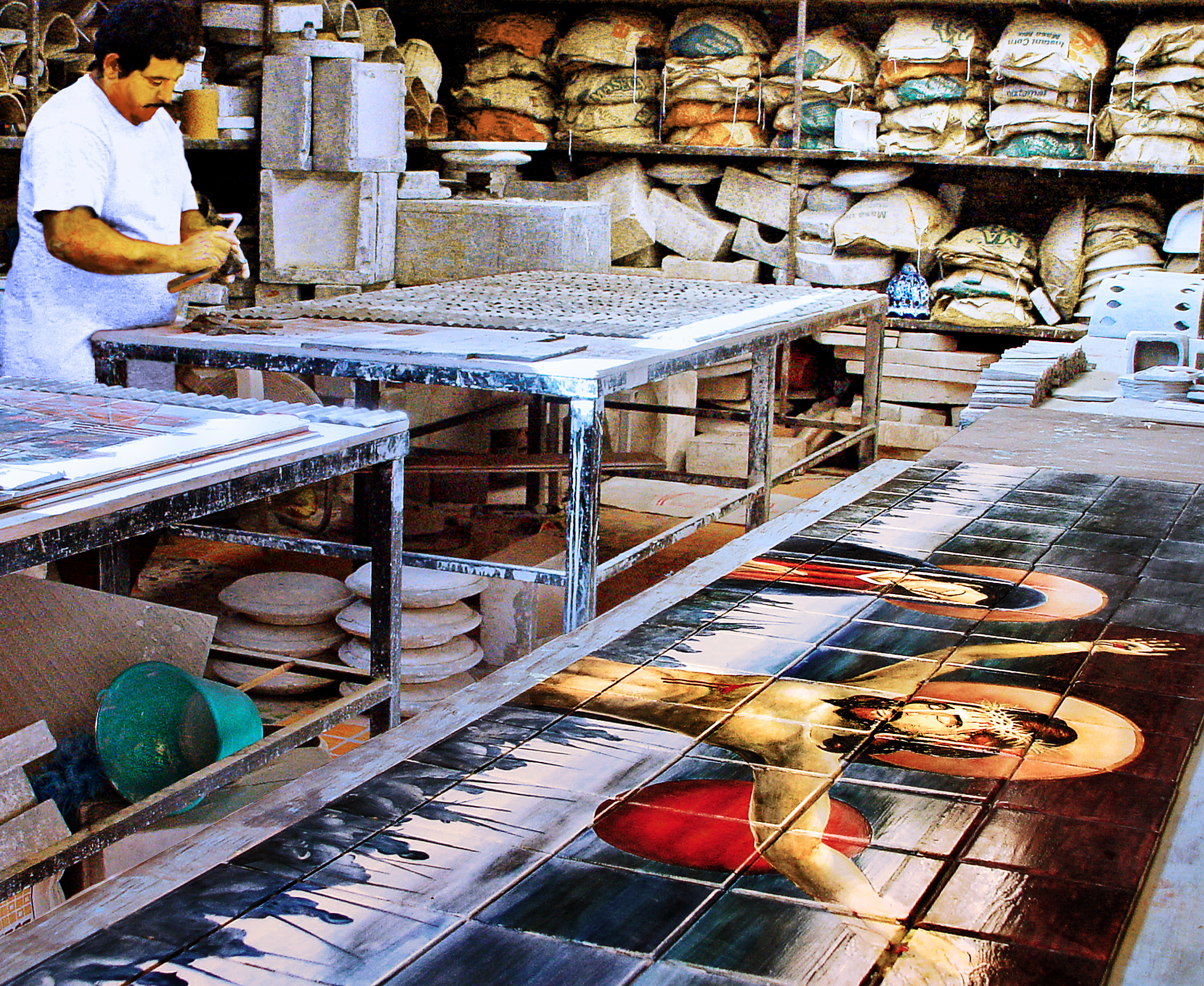
City Photography by Edward Lee

Edward Lee is an artist and writer from Ireland. His paintings and photography have been exhibited widely, while his poetry, short stories, non-fiction have been published in magazines in Ireland, England and America, including The Stinging Fly, Skylight 47, Acumen and Smiths Knoll. His poetry collections are Playing Poohsticks On Ha’Penny BridgeThe Madness Of QwertyA Foetal Heart and Bones Speaking With Hard Tongues.

He also makes musical noise under the names Ayahuasca Collective, Orson Carroll, Lego Figures Fighting, and Pale Blond Boy.

His blog/website can be found at https://edwardmlee.wordpress.com

“Empire State to World Trade” by Natasha Cobb

In South Carolina, Ester spent years wondering what big cities were like – Visiting her cousin Tessa in New York City, Ester initially found that they could be overwhelming with smells of fuel and perfume mixed with the sounds of cars honking and people speaking quickly as they searched for their loved ones. 

As Ester waited for Tessa at Kennedy Airport, she thought of how lucky Tessa was to be able to make it in N.Y.C. Ester looked forward to the week ahead because Tessa had promised her that she’d show her the best parts of the city. From the moment Ester placed her suitcase in the trunk of Tessa’s car, her cousin did not disappoint her. Tessa took Ester right into the heart of the city. They boarded a train at one of the main transportation hubs in the city, Atlantic Terminal, and then caught the three train to thirty-fourth street. 

Tessa gave Ester a crash course in train etiquette before they got on the train. 

“Don’t stare at anyone. Don’t talk to anyone, even if they say something to you. And if you accidently touch anyone in anyway apologize immediately, even if it is not your fault.” 

Tessa knew that Ester would stick out as a tourist – It was March, but Ester had brought her winter coat, hat, and gloves. N.Y.C in March was too chilly for Ester, who was used to sixty as a low temperature in South Carolina at that time of year. Also, Ester would stop without warning, take out her camera. and take pictures of the most ordinary things like buildings and streets that didn’t stand out to Tessa at all.

Continue reading “Empire State to World Trade” by Natasha Cobb

“Lost Chicago” by Joshua Ginsberg

This will be the only key now
to the map that leads back
to that place I left –

All other directions take me
somewhere I don’t know,
down endlessly defeated rows
of broken, boarded windows
and too-quiet streets
beneath the lonesome
shriek of wind.

Empty towers lean shadows
over every intersection
of is and was,
like a just-finished necropolis
of glass and steel

waiting to find
new use.

Joshua Ginsberg is a writer, entrepreneur, and curiosity seeker who relocated from Chicago to Tampa Bay in 2016. He is the author of “Secret Tampa Bay: A Guide to the Weird, Wonderful and Obscure,” (Reedy Press, 2020), and his poetry, fiction, and non-fiction has appeared in various print and digital publications. He maintains a blog, Terra Incognita Americanus and has been a business proposal and resume writer for over 10 years. He currently resides in Tampa’s Town and Country neighborhood with his wife, Jen, and their Shih Tzu, Tinker Bell.

Please note: Poetry is compressed to fit smart phone screens. If you are reading this poem on a phone screen, please turn your screen sideways to make sure that you are seeing correct line breaks for this poem.