She stood expectantly before remembering to push a thin panel on the glass. The doors chimed and the cashiers called out welcome without breaking away from their tasks.
The convenience store was clean, full meals stocked the fridge, counters offered tea-boiled eggs, sweet potatoes, and hot dogs. Cold air quickly enveloped her and made her forget the summer heat. She wandered from aisle to aisle, wanting to buy instant noodles but too afraid to ask what the sign on the hot water machine meant. She knew how to say hot water and excuse me, but worried that her butchered delivery would confuse or insult the cashier. She stood by the water for too long, a short woman squeezed past her to fill up her cup. She jumped back and bumped into a man using the ATM. She wondered when she would become used to filling up smaller spaces, navigating aisles wide enough for one.
She bought a noodle dish for dinner and sat down at one of the few tables left. Some people bowed their heads over their tables, squeezing in a quick nap, probably fresh off work like her. Others had their eyes on their phone screens and were scrolling past social media updates at the speed of light. Someone came by her table and silently took a chair.
If you looked foreign, people would likely approach you in English, or avoid talking to you because they didn’t want to speak it. She never assumed anyone spoke her language and was annoyed when people replied to her competent pronunciations with English. It would become a small battle, both of them speaking a tongue not their own, with heavy accents and awkward phrasing.
Some avoided engaging with her at all. She shopped and often the clerk wouldn’t say anything except the total or even meet her gaze. Even as she said thank you, even when she made sure to respectfully take her card back with both hands.
She looked out the window as she ate, using chopsticks with increasing dexterity. Up and down the streets small folding tables were covered with tablecloth. On top of them lay bags of potato chips, round fruit arranged on a plate, cases of juice and tea. Incense sticks towered in small bowls filled with uncooked grains of rice. Coarse bamboo paper with gold foil and crimson lettering burned small infernos in kettles, ghost money wafting up, blasting small plumes of black smoke, as people folded stacks several inches thick and willed the money to placate the departed.
She sat, seeing the smoke without smelling it, listening to the din of other conversations but not understanding enough to eavesdrop.
To walk out the door, she squeezed in between people paying their bills at the counter and others using tongs to select their snacks. Her music was playing and she was content to submerge herself in the language of her native land, transported.
At the subway station, her transit pass didn’t work when she swiped it and the teller lost patience explaining when she went to the kiosk for assistance, quickly moving on to the next person in line. From outside, she could see people pressed up against the sides of the train car, spilling out every time the door opened, gingerly squeezing themselves back in, first breathing in deeply like they were going back underwater. She climbed back up the steps, planned to stroll until traffic slowed. Groups hesitantly broke rank to let her pass, she felt them stare past her, already forgotten.
Little temples filled the gaps between buildings, bordered by skyscrapers that cast long shadows and storefronts with illuminated hanging signs. A few passers-by stood before the sand-filled, three-legged tripods brimming with red remnants of incense sticks in front of the temple. They bowed three times in deference to the deity housed within. For many, a look of peace and a small smile came to them. Others were still stoic, but they walked slower when they left. She saw this and thought for the first time since arriving nearly a year ago, why not?
She breathed in the incense, then she bowed three times. Where others wished for health, she thought of belonging. She felt a little light-headed and for a while, words left her.
Around the temple’s shade, the dusk stretched people’s shadows into long marionettes. For some reason, she couldn’t find her own when she stood back up and wandered away. While glancing behind her, she ran into a man. He was thin and young and wearing torn clothes. In a haze, she thought she saw a red halo around him. She was saying sorry when he grabbed a sweet potato from a nearby table and started eating it. She took off her headphones and stared without meaning to. He had grabbed the sweet potato, a shadow of it, and its transparent twin was in between the man’s chomping teeth, but it was there on the table still.
He caught her eye then, and started laughing at the bewildered expression on her face. She looked around; no one else in the street watched the man stealing the offerings. He was standing uncomfortably close to the spirit money burning in the cauldron but seemed distracted by his free meal. Even if she could reprimand him for stealing, it wasn’t like they started that module yet in her language class. At most, she could say stop that! and it would likely come out sounding like pig hand. Maybe one day. She started to walk away when he said, Miss, aren’t you going to eat, too?
She turned back and scoffed, I only eat food I pay for.
What are you talking about? He followed in step with her, finishing the potato and throwing the wrapper into the kettle with burning money. This is all for us.
It had gotten dark, but the street was illuminated with haloed human forms, some of them glowing a light blue or red. There were a few white ones, haggard with gaunt faces. Those spirits stumbled around and stayed away from the more full shapes.
The man nodded to her and ran over to an elderly couple carrying a pink plastic bag loaded with spirit money to a kettle. One of them lit up a flame; every sheet that they burned was eagerly grasped by the spirits surrounding them. The couple kept burning papers, oblivious to their audience.
She stopped. She turned to the people near her, dull or occasionally lit up by the light of their phone screens. Excuse me- she started, and they passed through her. She tried again and again, sometimes reaching for arms and pleading. This was different than the half-apology smiles and brisk walking of people trying to avoid interacting with her: she did not exist to them. Her heart was in her throat. She grabbed for her phone, only to find it was a shiny, useless brick. She thought she saw a purple haze around her. It couldn’t be, so she ran.
At this point she was close to home, the third-floor walk-up of a smaller apartment complex. Her keycard didn’t work on the gate, her hand went through the buzzer, and no neighbors could be seen. She let out a scream that curled the edges of her throat. Everyone who cared about her was asleep across the globe. They could do less to help her than she could.
In reaction to her scream, a few of the red and blue forms turned around. They walked faster still, restrained enough to grab only a serving or two of food and then move on.
A spirit around her age approached her. The young woman sported a shag cut that would have looked on-trend decades ago, and clashed even more with the white qipiao she was wearing. She glowed a soft blue and smiled.
Where did you come from? The woman asked.
I don’t know. I just got off work, ate, and the next thing I knew no one could see me. I- Without thinking, the words came fluently out of her mouth.
You’re not from here. You look Indonesian. Or Spanish. The woman touched her curly hair, and unlike the people she encountered, her hand made contact. Very soft.
She couldn’t remember where she was from. The woman said she smelled beef noodles on a distant table and left. The idea of sitting down and someone coming to sit on her was too disheartening. She kept going as the crowds thinned out.
Hunger as she had never known it filled her brain, an instinct to eat enough to last however long until her next meal. Most businesses and homes had closed and took their offerings with them. On she went, Finally, down an alleyway, there were some lights up, in consideration for anonymous dinner guests. On the table, large red candles, a bag of seaweed-flavored chips, and fruit. She could smell them from far away, and she called out thank you to the couple with the door open in the living room, sitting on carved teak furniture and watching the TV on full volume. She walked closer, hoping they would react, but she was unwilling to intrude on their threshold. Their kindness in leaving food out had been enough.
She grasped at the bag and pulled out its glowing twin. She could see more now that her eyes had adjusted. Her light was indeed purple, and her hands matched the bag she was holding, translucent and faintly outlined. The chips tasted the same as they always did, but delayed. She tasted each bite only after she swallowed it. She watched the TV from the threshold of their home, the news chyrons sprinting in separate horizontal and vertical lines, her eyes able to glimpse the first and last character of every announcement.
All tables and offerings were being brought inside now. She searched in the ashes of the kettle and found a trove of unclaimed dollars. She grasped at them, certain she would need them soon.
There was a cold hand on her arm and she looked up. The white spirit grasping her had sunken eye holes. The older woman squeezed and let go, held out a palm. She hesitated. Shouldn’t she look out for herself first? The woman’s other hand grasped at her tattered clothing that barely concealed a body mutilated by violent caprice.
I will be fine, she thought and for the first time since the temple, she felt safe.
She gave the woman the money and walked with her a bit. She watched other white spirits limping, sifting through cinders, grabbing the last grapes. The woman nodded to her and left a few bills in her hand before joining the others. She watched the woman place money in their palms as well.
There had to be others, so she kept walking until fields overtook tall buildings, where family compounds were isolated except for dirt roads and rice paddies. The moon was the brightest light in the sky. She found one little white outline, a skeletally-thin boy trembling against a crumbled wall. When she tried to talk to him, the boy flinched and covered his ears. She put the last of the money on the ground in front of him and left him in peace.
She wandered until dawn, listening to the city’s relative silence as she walked back towards it, feeling a pulse and an obligation. On the way back, she watched her lavender light bloom and dim. There were small temples here and there; she stopped at each one on the way. She let all her fears and worries pour out of her when she bowed.
Later, the sun’s rays warmed her skin and she saw the outlines of her form fill out more. She couldn’t find the original temple, and she continued to walk until she was close to a school. She sat on a bench across the street and watched the children with their ID numbers patched on their uniforms swing their backpacks. They filed inside and she took in the scene with a vague recognition.
Behind her was a row of stores, with owners in aprons or employees in uniforms opening for the day. They pulled steel grates up and put out new offerings.
She grabbed an orange and was about to start peeling when she saw a girl with pigtails jaywalking. An oncoming motorcyclist was laughing with his companion, turning around to look at him, seconds away from crashing into her little body.
She grabbed the girl by the arm, stopped her with one leg hovering over the pavement. The wind of the motorbike was shrill as it passed, swerving around them without slowing down.
“Teacher, were you going to eat that?” The girl spoke in English and was frowning at her.
She kept staring at the girl, wondering why there was no light halo around her. None of the people around them glowed, and they turned to glance at them briefly before continuing on their way. She looked at her hands, how long had her halo been gone?
A bell rang, and the girl pulled her arm, “Teacher Sophia, we’ll be late!” When she heard her name, Sophia breathed in and her memories fell into place.
“Okay, Amber. Did you study for your English test?” Sophia smiled when the girl shook her head. She put the orange back on the table, and they crossed the street to enter the school.
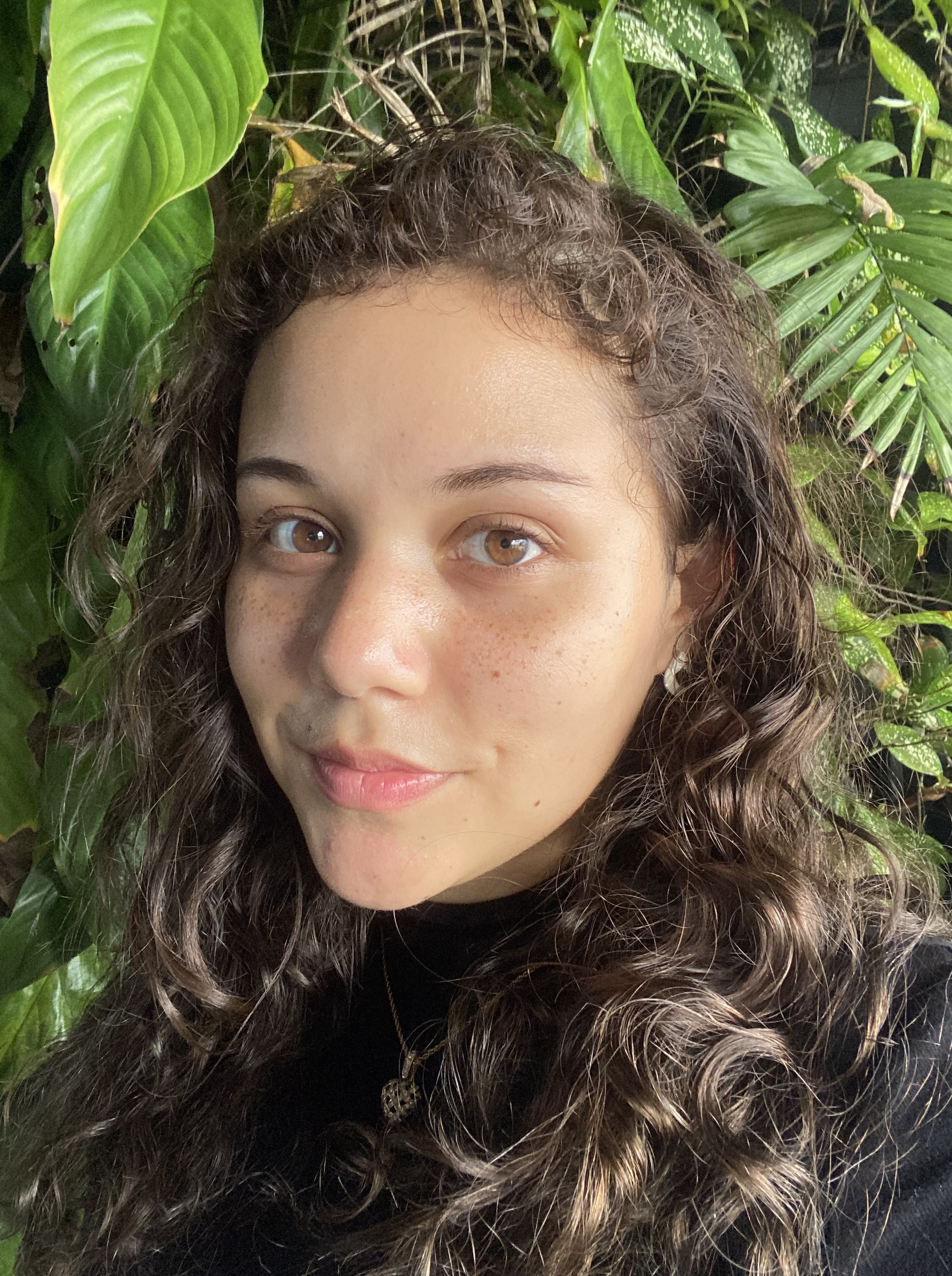
Olga Trianta-Boncogon grew up outside Chicago, where she later attended Loyola University. Her interests include playing harp, learning languages, and writing. She is currently a teacher living in Taiwan. Her work explores themes of identity, alienation, and hope based on her experience as a biracial, multilingual, and incorrigible immigrant.
 THE CITY KEY