“Empire State to World Trade” by Natasha Cobb

In South Carolina, Ester spent years wondering what big cities were like – Visiting her cousin Tessa in New York City, Ester initially found that they could be overwhelming with smells of fuel and perfume mixed with the sounds of cars honking and people speaking quickly as they searched for their loved ones. 

As Ester waited for Tessa at Kennedy Airport, she thought of how lucky Tessa was to be able to make it in N.Y.C. Ester looked forward to the week ahead because Tessa had promised her that she’d show her the best parts of the city. From the moment Ester placed her suitcase in the trunk of Tessa’s car, her cousin did not disappoint her. Tessa took Ester right into the heart of the city. They boarded a train at one of the main transportation hubs in the city, Atlantic Terminal, and then caught the three train to thirty-fourth street. 

Tessa gave Ester a crash course in train etiquette before they got on the train. 

“Don’t stare at anyone. Don’t talk to anyone, even if they say something to you. And if you accidently touch anyone in anyway apologize immediately, even if it is not your fault.” 

Tessa knew that Ester would stick out as a tourist – It was March, but Ester had brought her winter coat, hat, and gloves. N.Y.C in March was too chilly for Ester, who was used to sixty as a low temperature in South Carolina at that time of year. Also, Ester would stop without warning, take out her camera. and take pictures of the most ordinary things like buildings and streets that didn’t stand out to Tessa at all.

Continue reading “Empire State to World Trade” by Natasha Cobb

“Brooklyn Royalty” by Steve Slavin

1

As someone born and bred in the borough, I am well acquainted with Brooklyn royalty. In fact, only great modesty prevents me from even mentioning my own royal blood.

Brooklyn, of course, was once part of the British Empire, and many reminders can still be found. I grew up just a block from our neighborhood’s main shopping strip, Kings Highway. Just off the Highway is a well preserved pre-Revolutionary farmhouse, the Wycoff-Bennett mansion. In recent decades, it was owned by Annette and Stu Mont, who sometimes called their home the Wycoff-Bennett-Mont house.

Annette and I met at James Madison High School and became friendly again about twenty years ago. She invited me to monthly political meetings and occasional parties at her home. She and her husband had restored the house to look much as it did during colonial times. There were even numerous oil portraits of the home’s earlier residents, as well as furniture and farm implements dating back to the eighteenth and nineteenth century.

When new guests arrived, Annette graciously showed them around.  Sometimes I could not resist telling the more gullible among them that I too had descended from the Wycoffs or the Bennetts – or even both families.  Annette smiled when she overheard me, but she never bothered setting the record straight.

Another structure surviving from colonial times was a store on Montague Street, in historic Brooklyn Heights. If you looked in a Brooklyn phone book from the 1970s, you’d find a listing for King George Pizza. It’s still whispered that after their victory in the Battle of Brooklyn, scores of Redcoats stopped in for a celebratory slice, while Washington’s army escaped to New Jersey to fight another day.

Continue reading “Brooklyn Royalty” by Steve Slavin

“John’s” by Ken Romanowski

Over ninety modest row homes occupied the two and three-hundred blocks of East Sheldon Street. Situated between C Street and Rising Sun Avenue, the homes formed a continuous line on either side of the street. The houses across from us were older, taller, and had a small flowerbed in front, whereas our homes, newer and smaller, had a small lawn in the front and back. Our block was flanked by C Street to the north and Rising Sun Avenue to the south.

Before we moved to Sheldon Street, we lived a few miles away on a block of even smaller row homes. It was there that Mom began to send me on errands. So, around five years of age, I started riding to the corner grocery store on my tricycle. Holding my little sister, Mom stood in the doorway with her red bandanna, light cardigan, and dark-colored slacks and watched me. I would ride my bike in my rolled-up dungarees and tee shirt and return with the goods in a basket secured behind me.

As I grew older, I graduated to the next level of independence and responsibility. So, when it was time for me to get a haircut when I turned eight, I could walk to the shop by myself. Nevertheless, there would be an impediment to reaching the barber shop — Rising Sun Avenue. John’s Barber Shop occupied a small storefront on Albanus Street near the other side of the Avenue. Albanus was not very wide, and its one-way traffic emptied onto Rising Sun, which was three times as wide as Sheldon with heavier and faster traffic. Driving it proved challenging to all because two sets of trolley tracks dominated its center lanes. Mom didn’t drive, so walking was my only option.

Continue reading “John’s” by Ken Romanowski

“Come Here Often?” by Patty Somlo

Kevin O’Rourke had been a fixture in the bookstore for longer than anyone in the neighborhood could remember. At one time, the famous poet and owner of Left Bank Books had stood behind the counter, mostly chatting with up-and-coming writers, but occasionally working the register. When the store closed at ten o’clock, or even later on nights there had been a reading in the dark cramped space at the back, O’Rourke climbed the stairs to his spacious flat, where he’d lived going on five decades.

O’Rourke had never married. He was rumored to have been involved with many women, some famous and some not. On the list of his lovers were writers, as well as artists, actresses, and even a handful of models. As a younger man, O’Rourke’s hair had been thick, wavy and black. He wore it stylishly long. His blue eyes were the first thing women noticed, and then his smile.

He no longer stood behind the counter, but some days could be found in a worn upholstered green chair, situated in a quiet corner of the shop. The chair rested in front of a scratched oak coffee table, with other once-comfortable seats that had long ago lost their support. The chairs were meant to encourage customers to linger.

Continue reading “Come Here Often?” by Patty Somlo

“The Eagle and Mrs. B.” by Linda Romanowski

Many a Philadelphia area college student spent those post-Thanksgiving/Pre-Christmas days working at one of the “Big Three” department stores in Center City: Strawbridge & Clothier, Lit Brothers, or John Wanamaker’s. Due to my mother’s influence, I thought working at Wanamaker’s was the best of all worlds. After all, who could resist the classy interior and exterior window displays, the jagged mountain range stroke of the owner’s signature on the side of the building, and the transportation proximity?

Two other striking figures claimed the store’s signature distinction: the Wanamaker eagle and the annual Christmas fountain and light show. The serene and imposing gilded bronze aviary statue was the focal point for gathering, for claiming  “lost parents,” and for bon voyages until next time.

Lifting one’s eyes to the sights, sounds, and waving fountain streams of the hourly Christmas performance stopped shoppers in their tracks and delighted the minds of wide-eyed youngsters who rarely cried during those few minutes of awe. My first recollection of seeing the aqua wonder made me fearful, thinking at any moment, the fountains would fall from their upper stage perch and drown the audience below, extinguishing the prancing lights in the process.

Not every pair of eyes welcomed this holiday diversion. My first Christmas working season in the children’s department in 1972 provided a novel view of the saleswomen employed at the makeup counters. The daily music grinding of “Frosty the Snowman” did nothing for their business. No cash registers rung in harmony with “O, Christmas Tree.” Gazers leaned on their pristine cosmetic display cases; their backs turned away from the porcelain faces of Estee Lauderettes, who resorted to makeup remover to erase the handprints and elbow marks on their precious encasements of promised beauty and glamour. No allure of scented bottled blossoms could overpower the lofty sounds and scenery above the audience. It must have been the bane of their existence, their dreams of pocket money ruined by lit-up distraction. One year, I counted viewing thirty-six performances of Rudolph’s very shiny unpowdered nose glowing across the ceiling.

*****

Every college student on Wanamaker’s holiday payroll hoped to work for the main floor supervisor, Mrs. B., known for her kindness. She was a smartly dressed, middle-aged Jewish lady, brownish-black hair coiffed to perfection, with no-nonsense eyeglasses attached to a pearl chain that hung elegantly around her neck. Her high-heeled pumps that coordinated with every outfit gave her an acceptable height, appearing taller than she was. Her trim figure clicked in tandem with her stride. Mrs. B. took the time to acquaint herself with several of us. One afternoon, during the height of the Christmas rush, she announced that she would retain us for the week after Christmas. We were delighted, as it meant money for next semester’s textbooks would be less of an issue. All we needed to do was follow her instructions without variation.

When we punched in on the time clock on December 26th, Mrs. B. led us to an unfamiliar store area, one at a time. We were placed separately in obscure areas of dressing rooms and stock areas, out of the view of the “suits” who might sniff through the aisles looking for post-holiday imperfections. There were close calls, but none of us were spotted. Had we been “caught,” we would say we were Christmas shopping to maintain our ruse. During that week, Mrs. B. was ubiquitous, her eagle eyes surpassing that stony sculpture’s glance on the first floor. We functioned seamlessly as the suits paraded the aisles, praising Mrs. B. for her diligence and attention to detail. I’ll always wonder if the Wanamaker eagle suspected her and kept the secret, among all the others, under its ornate-clad feathers.

Linda M. Romanowski is a graduate of Rosemont College, in 1975 with a BA in Psychology and Elementary Education, and this past May as an MFA graduate in Creative Non-fiction. She was assistant editor of Non-fiction for Rathalla magazine, Rosemont’s literary publication. Her Italian heritage-based thesis, “Final Touchstones”, earned with distinction, is scheduled for publication by Sunbury Press within the coming months. Several of the essays from her pending book were published on City Key, Ovunque Siamo and the Mario Lanza Institute Facebook page. She recently reviewed Ellen Stone’s poetry book “What is in the Blood” for the online Philadelphia Stories 2021 Fall issue. Her poem, “Seen In Translation” was selected for inclusion in the Moonstone Arts Center Protest 2021-100 Thousand Poets for Change.
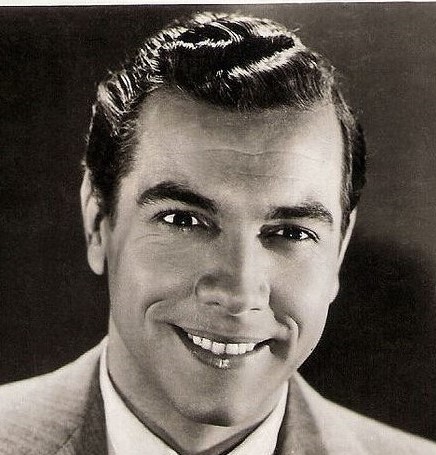
“Lips Boudreaux” by James Knipp

The fat guy at the bus stop reminded Leonard of Tug Rooney.  He didn’t especially look like Tug.   The fat guy was tall and white and had the well-fed jowls and loud, bright voice of a suburban Rotarian, while Tug was short and gimpy with ashen skin and an asthmatic wheeze brought on by breathing decades of smoke.  It was more in the way they both could spin into a tale, the way the audience leaned in expectantly, especially the ladies, and how each always ended with a flourish, riding a wave of laughter through the finish.  Leonard had once asked Tug how he did it, how he commanded such attention. 

Tugs had put one hand on the back of Leonard’s neck and drew the younger man closer so he could smell the stale beer and cigar smoke that seeped from his pores.  He pointed at Leonard, the ever-present stub of cigar wedged between his fingers and said in his broken, sibilant croak, “Lips, you believe in what you say, people will follow, understand?”

Leonard, not quite a whisker past twenty at the time, didn’t, but he nodded all the same.  That was just how he was with Tug, when he asked, you nodded.  He had that way of making you agree.

The Rotarian at the bus stop finished his story and the ladies around him cackled laughter.  A bus growled up to the stop, belching diesel, and he strode away.  The ladies watched him leave with bird-like avidity, their eyes bright and admiring.

“He’s so nice,” one of them whispered.  The others nodded approvingly.

Continue reading “Lips Boudreaux” by James Knipp

“The Election that Changed the World” by Linda Romanowski

In 1952, ten men assembled in a modest two-story building, in the Spring Garden Section of Philadelphia at Ridge and Callowhill Streets. They worked as technicians for Remington Rand Inc., founded by University of Pennsylvania graduates, J. Presper Eckert and John Mauchly. One of these technicians was my father.

That night, the group set out to do what had never been done before – with six Univac computers spread out on their test floor, they’d predict the results of the 1952 Presidential election. It worked out according to plan – they determined early on that evening that Eisenhower would win the election.

Continue reading “The Election that Changed the World” by Linda Romanowski

“Christian Street Caruso” by Linda Romanowski

A quest in the present can help us to access eras, events, and people who are meant to live on forever. My pilgrimage to the Mario Lanza Museum was such a quest, evoking memories of one of the greatest tenors of all time. It would include visiting the museum, the Mario Lanza mural, Lanza’s birthplace, the Italian Market, and St. Mary Magdalen de Pazzi Church. 

The most recent South Philadelphia location of the Mario Lanza Museum at 7th and Montrose Streets was sold to a developer. The new location at 12th and Reed Streets was scheduled to open during the late spring of 2019. My cousin lived across the street from the now “former” museum, and I called her and excitedly told her about my upcoming pilgrimage. She would join my husband Ken and I on our visit to the church.

Continue reading “Christian Street Caruso” by Linda Romanowski

“That Night on the Old Girard Avenue Bridge” by Ken Romanowski

In the early 1960s we were a young, row home family. Dad was employed while Mom was a homemaker. My parents saved enough money to take the four of us, including my younger sister and me, to a Big Five college basketball game in West Philadelphia. For us, this was huge.

Our destination was the Palestra, located on the campus of the University of Pennsylvania (Penn). This 8,700-seat arena was the hub of the Big Five, which included LaSalle, Temple, Penn, Saint Joseph’s (St. Joe’s), and Villanova.

Continue reading “That Night on the Old Girard Avenue Bridge” by Ken Romanowski

“Swimming in Montevideo” by Steve Carr

Swimming, my arms slice through the water, one arm, and then the next. Over and over. My fingers are held firmly together, and pointed, like the head of a spear. My shoulders swivel from side to side, twisting my torso. My muscles are like pulled taffy, pliable, twisting, elastic. A continuous flow of power – an electric current of physical, bodily, energy – courses through my legs. They are scissors cutting the water. My feet are fins, paddles, webbed-like, kicking and churning up the water, leaving a continuous splashed trail of bubbles in my wake. The water is cool. It slides over the smoothness of my flesh. I shed it like ever-changing layers of liquid skin.

Continue reading “Swimming in Montevideo” by Steve Carr