Enter the City

Five Poems by John Grey

ALLEYWAYS

If it weren’t for alleyways,
these creatures would not exist.
If trash didn’t overflow the bins
and bleary faces stare down
through cracked window panes,
there’d be no predator
with hat shielding his eyes
or knife-wielding tattooed hooligan
stabbing his blade in crumbling brick.
A cardboard hovel
sheltering a white-haired jabbering homeless man,
breeds a fleeting taloned stranger
barely deeper than the wind
or a shadow on the wall of something horned.
Rats bear some of the guilt.
Random gunfire also.
And likewise the cop who patrols
the neighborhood
but leaves the dismal dark dead ends
to their deadly discrete marauders,
Every so often,
in the best light day can manage,
Rescue drags a body out
of one of those smelly pits.
For an hour or two,
it’s Lumley Lane
not spawning ground.

AT HOME BELOW STREET LEVEL

occasional glance through the window bars
of the room I’m in…
closed in judgment and in fact –
promise to bathe more often,
or give the tanned young man in my head
a chance to breathe –
or stop lapping up tap-leak with my tongue,
and ignore the landlady
screaming about the rent –
sky can never clear,
air can’t warm up not even a little –
spend my last years
surprised to meet a man
of my shrunken dimension –
take money where I find it,
converse with my dead mom but not my dead dad –
ask a cop – sip the flask –
rot in my cellar, unequal even to the buzzing flies
sucking on the crystal sugar of my energy –
imprisoned by the roof, the windows, everything…
sad fate of a dead man in a cellar apartment
clutching the tattered family Bible,
my sins staring up at the street

JUNGLE

in the jungle,
red ants, lounge lizards,
jaguars, both feline
and valet parked,
potential prey
done out in the latest
slinky fashions,
spiders as big as tabletops,
piranhas and vultures,
snakes of all varieties,
vines and other stranglers,
interact, compete
and prey upon each other –
a paradigm of Gaia’s
ever-evolving
dynamical system
or Saturday night
once the clubs heat up

DEATH OF A WARRIOR

The cracks in the face are painted over.
The eyes are closed,
two bulges in the forehead,
where red veins used to be.

That’s normal under the circumstances.
As is the closed mouth,
that raspy voice no longer required.

And there is nothing of barrooms
and diners,
those bookends to his daily routine.
The man in the box
could have attended church daily
for all the lies
the undertaker’s handiwork tells.

But what choice was there?
A man who began his day
eating greasy slop
to disregard his heart.
A drunkard at night
with an entire family to defy.
Wakes are general exhibition
not parental guidance.

So the man is concealed.
Someone smooth, innocuous,
takes his place.
Maybe the mourners won’t notice.
Or memory will make good times
out of bruises.

Thankfully, the eyes are closed.
Now death is only sad.
It could have gotten ugly.

BOYS WILL BE BOYS

Yes, we were the ones
who scooped tadpoles from ponds,
gave turtles new unwanted homes,
boys in our early teens
with the belief that nature
didn’t belong in nature,
was more suited as periphery,
atop dressers, on bedroom floors.

With nets on sticks,
we chased butterflies,
pearl crescents with black and orange wings,
red admirals, eastern commas,
killing them with one squeeze of the abdomen,
pinning them to project books
where their wings crumbled,
and bodies turned to dust.

Our parents said,
at least they don’t get into trouble
like other kids –
no shoplifting,
no breaking into abandoned houses.

But we stole from the leaf-mold and the wildflower.
We busted into the fragile cycle of life.

A glass jar half full of brown water,
holes punctured in its lid,
and a creature stalled, stiffened,
halfway through metamorphosis –
a crime scene.
I was there.


File0005 V3 (2)


John Grey is an Australian poet and US resident. Recently published in New Plains Review, Stillwater Review and Big Muddy Review with work upcoming in Louisiana Review, Columbia College Literary Review, and Spoon River Poetry Review.

Please note: Poetry is compressed to fit smart phone screens. If you are reading this poem on a phone screen, please turn your screen sideways to make sure that you are seeing correct line breaks for this poem.
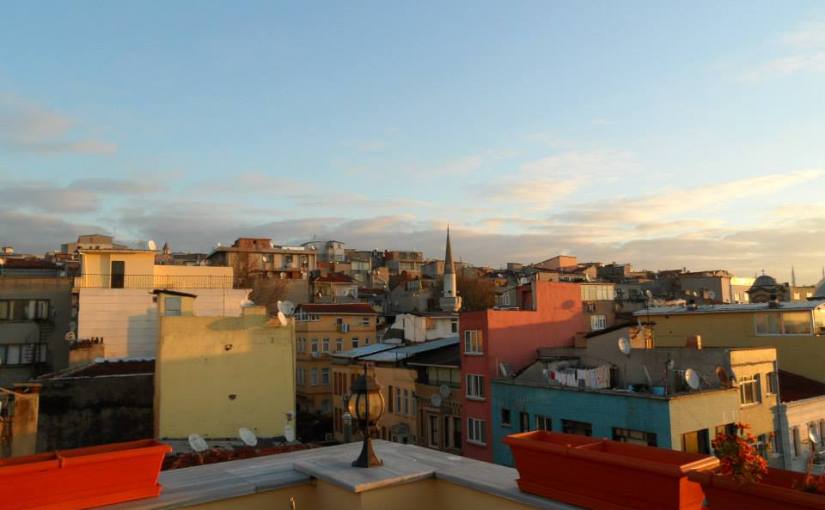

Pictures of the City by Thomas Gillaspy

Thomas Gillaspy is a northern California photographer. His photography has been featured in numerous magazines including the literary journals: Compose, Portland Review and Brooklyn Review. Further information and additional examples of his work are available at:

http://www.thomasgillaspy.com

Thomasmichaelart@yahoo.com

“Red Philadelphia Years” by Carlos Jose Perez Samano

cropped-capture.jpg

Years like bubbles,
leaves, or cups.

Before Market Street
just a plateau,
back in time
those old trees
that now name
our beautiful streets.

1634,
Lenape woman,
an Armewamese one,
corn, beans, squash,
three sisters,
daughters of
Kishelemukonk.

1682,
cousin of William Penn,
son of two good Quakers,
also called friends.

Can you imagine
Richard Saunders
writing in his almanac,
words to the wise,
just to become Benjamin Franklin,
our first American guy?

Coming from Haiti,
1793,
a relative of Mackandal,
speaking only Creole.

Summer 1800,
slave 24 years,
from Cuba by boat
waits in Lanzaretto a month.

In 1849
the Moyamensing prision saw
how Edgar Allan Poe
tried to kill himself.

The same year,
some boats,
some Germans came,
the 1848 revolution ended.

By 1984 a guy from South Korea,
with a name hard to pronounce,
came after rolling for years
in the South Cone,
also called South America.

Coming from a wealthy family,
he became poor,
like an Allegheny or Kensington
meth woman dancing
without mouth.
Now his name is Jimmy Pak.

We all came
from different places,
and different times,
and here we go,
the years like empty drawers,
rusty dishes,
broken and dirty dolls,
pieces of me and you.

We all know that brotherly love
is a beautiful image
but Lorraine Hotel was full of stories
that we try to forget.

L-O-V-E in red,
pictures of Philadelphia.
with or without the hashtag
#love.

Philadelphia can be,
a nest,
a red brick,
some red
and yellow
and pink,
falling leaves,
touching lightly
the surface of the river
floating smoothly
through the small waves of
the Schuylkill.

And Philadelphia is
snow when it snows,
and heat like hell
if you don’t have a fan.

Years will come,
we will be gone.

But today here we are,
sharing this
Philadelphia year.

1469853_10156691086150608_7801394668337527901_n
 
Carlos José Pérez Sámano is a literary fiction and nonfiction author, teacher of Creative Writing Workshops in countries like Mexico, USA, Kenya, and Cuba. He has four published books, and is the recipient of the “Best Seller” award of Ad Zurdum Publishing House. His work has been featured in more than 20 international magazines like Fredericksburg Literary and Art Review, Errr Magazine, Quinqué, Poetry in Common, Cultura Colectiva, among others. He is pursuing an MFA in Creative Writing and an MA in Publishing at Rosemont College. He will be published by Temple University Press in “Who Will Speak For America?” in 2018. Find him on Twitter: @carlosjoseperez
 

Please note: Poetry is compressed to fit smart phone screens. If you are reading this poem on a phone screen, please turn your screen sideways to make sure that you are seeing correct line breaks for this poem.

Editor’s Post: “Walking the City”

Walking through a city is a transformative act. Contemplation, movement, and observation come together in a wonderful whole, so that walking in a city proves to be a transcendent experience. During this pursuit, we seek greater insight into events in our lives and our minds. We can simultaneously be alone but connected to the multitude of humanity surrounding us, which puts us in tune with a larger consciousness. In this way, walking the city can be one of the most contemplative state in which we find ourselves.

Continue reading Editor’s Post: “Walking the City”

Editor’s Post: “Coney Island Cats”

In front of freezing beach air, NATHAN’S glows neon, pink, and green while other lights from the central-subway depot glimmer phosphorescent. In this cold, what could be better than a steaming cup of tea? I remember that doughnut place outside the station like it’s a revelation, but you say that tea would be a distraction, and it’s impossible to get driving lessons from anyone, so instead of tea, we circle the boardwalk, learning to turn, how to brake, and accelerate.

Continue reading Editor’s Post: “Coney Island Cats”

Three Poems by John Grey

CITY BOY

A city grew out of where I lived,
full of voices,
full of bouncing on the box spring.
It kicked stray dogs in the teeth
but worshiped whatever lurked inside its cracks.
It was loud on its feet
and lost a lot of blood when the moon came out.
The city listened in.
It figured me out.
It said “Sorry, no work,”
as it chiseled out slabs of stone
to honor some long-dead gangster.
But it never cooked enough
so it could feed everyone.
And nor was there ever enough warmth
so its inhabitants could sleep.
The city just sprawled away from my chair
in the small kitchen
of my second-floor apartment.
Whatever promises it made to me
were undone like my bed.

FROM THE TOP OF THE TOP FLOOR

Grand view.
Game board streets.
Taxis like moving pieces.
Factories below smoking cigarettes.
This is the highest of the high-rises.
Lungs feels like they’ve climbed ten thousand feet.
But here I am – eyes in the clouds,
elbows in the wind –
up fifty stories.
Hats off to the architect
with his inflated dreams.
And the construction crew of course.
And the electricians. And the plumbers.
There’s power and water all the way up here.
All adding to my vision.
All making me this human sky-cam.
I pity the generation
addicted to social media.
Is that a pavement down there
or a cell phone screen?
Their awe will pay for it in the end.
Such a small price to pay to ride the elevator
but the pettiness of talking to a friend prohibits.
So here I am, top floor, delirious with
the kind of fever
doctors cannot classify.
Look at those overworked corporate-slaves below.
Those ants must surely be cursing their luck.
They can’t even get out of the city’s shadow
while all I have to contend with is my own.
So how long can I stay up here?
Vertigo’s no issue.
I’m sure I’m part mountain goat.
And the spectacular never wearies me.
Only my ordinary life does that.
Yes, I will have to rejoin it eventually.
That’s the far shore, the cruel one,
straight below.

SOUND OUT

Jackhammers crack open a sidewalk two blocks away
to get at civilization’s mysterious underworld.
It’s the necessary noise of living in this age.
It’s the sound of the car engine, the cries
of lovemaking, the hellos of people who vaguely
know each other, the loud music some need
in their lives to compensate for how little
impact they’d make on the world without it.
I imagine a city in which we were all deaf.

How well we’d need to know our fingers.
Eyes would follow hands as we each spelt out our needs, our desires.
No worry about being shaken out of sleep
by the pounding of our surrounds.
I’d really want to have you in my presence
for your sense to get through to me.
Can’t you just see it.
In fact, that’s all you could do –
our hands flapping like wings,
a dainty twirl of the thumb,
a slight cock of the index finger
bringing such a smile to your silent lips.
But I would miss the symphonies and the jazz
and the lilt in your voice of course.
So I must endure the worst of buses
to get at the resonance of the heart.
Honking horns, screaming neighbors –
they’re archaeological digs
scouring down to the timbre of the true treasure.
The phone rings – another necessary evil.
Your warm greeting vindicates one sense at least.
All kinds of noise in the background.
For now, at least, it knows its place.

File0005 V3 (2)

John Grey is an Australian poet, US resident. Recently published in New Plains Review, Stillwater Review and Big Muddy Review with work upcoming in Louisiana Review, Columbia College Literary Review and Spoon River Poetry Review.

Please note: Poetry is compressed to fit smart phone screens. If you are reading this poem on a phone screen, please turn your screen sideways to make sure that you are seeing correct line breaks for this poem.

Two Poems by Mitchell Grabois

Broom

The boys in baseball caps
wolf down ice cream
grab their temples and
moan about headaches

They toss remnants of cones
onto the dull green linoleum
and run out the door

the bell ringing in their wake
leaving me and Eppa with
a whole lot of quarters

I go get the broom

Age

I feel the heaviness of my body
It has too much age
has suffered too much exertion
Its labor has been exploited
and used for others’ pleasure
Soon I won’t be able to move it

Vivian refuses to send me a photo of herself
I haven’t seen her in forty years
as long as Moses wandered in the desert

Perhaps she is doing me a favor
We want things that are
not good for us
She claims she is marred by warts
and carbuncles
but perhaps it is even worse than that

Perhaps her la raza cosmica
has lost its cosmica
and all a photo would show
would be a graceless chunk of mud

Vivian is right
It is better that she remain invisible,
that I not be subjected to reality
but instead imagine something finer

photo 4

Mitchell Krockmalnik Grabois has had over twelve-hundred of his poems and fictions appear in literary magazines in the U.S. and abroad. He has been nominated for numerous prizes.  His novel, Two-Headed Dog, based on his work as a clinical psychologist in a state hospital, is available for Kindle and Nook, or as a print edition. To see more of his work, google Mitchell Krockmalnik Grabois. He lives in Denver.

Please note: Poetry is compressed to fit smart phone screens. If you are reading this poem on a phone screen, please turn your screen sideways to make sure that you are seeing correct line breaks for this poem.

Three Poems by Spencer Shaak

Winter Janggi in Chilseong Market

You can hear the two men’s chuckles
throughout Chilseong Market.
Their fingers tap
cold octagon pieces
on wooden board
propped by stool.

Hot coffee, scallions, and garlic
rest by their restless feet
as they plan each other’s defeat.

People come and go
sometimes stop in street
to watch both sides unfold,
like two suns splitting rays
over Sincheon River.

Boys and girls run
with fried eomukguk on sticks,
their parents close behind
carrying fresh fruit and vegetables.
Jung-go furniture sells in stands,
mulmandu and gimbap steam
underneath colored umbrellas.

Many hours later
still warm coffee, scallions, and garlic
rest by restless feet
as both men plan each other’s defeat.

People come and go
sometimes stop in the street
to watch both sides unfold
like two half-moons casting shadows
over Sincheon River.
Here you can hear each man laugh
and listen to their Janggi pieces
tap tap tap.
It’s with tips of their caps
they become most alive.

They look like two werewolves
eyeing a full moon.

PC Bang

Oh, but it is smoky!
-this little PC Bang
smoke-filled, smoke-stilled
to choking encounter.
Be careful with your lungs!

PC man wears a hoody
that droops over his face
concealing his cigarette embrace
smoke between teeth.
Who does he meet
on his way home?

Poker cards flicker
on his screen
as he opens brown paper bag.
Three azaleas sleep in back
on a window sill,
still and patient.
Why such pretty petals?
Shouldn’t they be on Mt. Biseul?

Somebody must water these azaleas
or soju them.
Somebody must arrange them
watch them grow
amidst flickering smoke
and poker cards.
Somebody must love us all.

Seoul Man’s Soul

Strumming silver-lined strings to Hey Jude
Wearing New York shirt and shoes
I heard Seoul man play
Down on Dong-Seong-ro the other night
By his radio store’s fainted light.
He rocked back and forth
To the tune, Hey Jude
With his calloused hands on each string
He made that goose-necked guitar sing
Hey Jude
Rocking back and forth on his swivel seat
He played that tune while tapping his feet
Sweet Jude
Coming from a Seoul man’s soul.
O Jude!
In high-pitched voice with pleading tone
I heard Seoul man’s song, his guitar’s stroke:
Hey Jude, don’t make it bad
Take a sad song and make it better
Remember to let her into your heart
Then you can start to make it better.
Tap, tap, tap, went his foot on the ground
He strummed more chords then opened his mouth:
Hey Jude, don’t be afraid
You were made to go out and get her
The minute you let her under your skin
Then you begin to make it better.
And far into the night he played Hey Jude
Till Dong-Seong-ro radio street was lit by moon
Then Seoul Man stopped playing and rested his eyes
While Hey Jude traversed through his mind.
He dreamt like a child, or man missing his wife.

Capture

Spencer Shaak is a MFA Writing graduate from Rosemont College in Philadelphia. He has had many great experiences in South Korea from teaching kids to spending great times with friends in downtown Daegu, Pohang, Busan, and Seoul. The following are poems about his own experiences and reflections in South Korea.

Please note: Poetry is compressed to fit smart phone screens. If you are reading this poem on a phone screen, please turn your screen sideways to make sure that you are seeing correct line breaks for this poem.

Editor’s Post: “Finding Magic in the City”

Even on an uneventful trip to New York City, I’ve always had one moment, at least one, that was magical. Take my last trip to New York. After a relentless winter with little sunlight, I thought that a trip to the city, on a relatively sunny day, would be a welcome change. Hopeful for a fun-filled trip, I woke up at six a.m. and prepared myself for an eight o’clock bus ride. As I drove to Philadelphia’s 30th Street Station, the sun was already bright, heating the city and melting snow. After boarding the bus, I fell asleep immediately, so the ride to New York seemed to happen in a matter of minutes. I woke up as the bus entered Manhattan.

Continue reading Editor’s Post: “Finding Magic in the City”

“Cheers” by Steven Rosenfeld

Stan Feldstein was having lunch alone at his desk on a bitterly cold and windy Tuesday in early January, absently perusing the New York Law Journal. It wasn’t the press of work that kept him there over the lunch hour; in all honesty, he wasn’t very busy just then. No, he was eating at his desk, as usual, because there really was no one in or near his Murray Street law office that he wanted to spend an hour gabbing with over lunch. Anyone he could think of would quickly get around to asking about his love life and would suggest another “perfect woman” to fix him up with, leading to another of those excruciating dinner dates that couldn’t be over fast enough. If he’d made any New Year’s resolution, it was to be done with that dreary game.

Continue reading “Cheers” by Steven Rosenfeld