Three Poems by Ed Meek

Soundtrack of the City

The soundtrack of the city
can keep you up nights
or hum in the background
a discordant tune of wheels turning
and gears interlocking, trucks
unloading, planes taking off
and coming down.
The bass thumping in a passing
smoke-filled car. A Harley roaring
down the street. Sirens wailing
of rescues and D.O.A.
daytimes the volume
jumps to life with the birds
who serenade leaf blowers, lawn mowers,
horns, the ebb and flow
of traffic, the heavy breathing buses
the scraping skateboards,
barking dogs. The disembodied voices
of neighbors you’ll never know.

The Reserved Section

I’d wandered into the reserved section by mistake
but the performance had begun
and it was too late to escape
to the seats for the general public
my inexpensive ticket already paid for.
It was as if I had pulled back the curtain
and entered the first-class cabin–
been admitted to the club
and seated at the head table.
The champagne was vintage.
The caviar Russian.
The lights dimmed.
I was just behind
a Guggenheim and a Rockefeller.
They didn’t seem to see me.
I was invisible as I often am.
For once it was an advantage.
I glanced down the row at two
black women who smiled and nodded.

Hostages to Heat

In Brooklyn when the temp hits 90
the heat invades our claustrophobic co-op.
Outside, the cement sends the heat
up through our bodies in waves.
We float in our sweat like seals in the shallows.
I used to love the feel of sweat
blanketing my body
running in the mid-day sun
and playing pick-up basketball on black tar.
Now we dread summer days when
an orange disk occupies a hazy sky,
Particles of ash coat our lungs
and the sunlight sears our eyes.
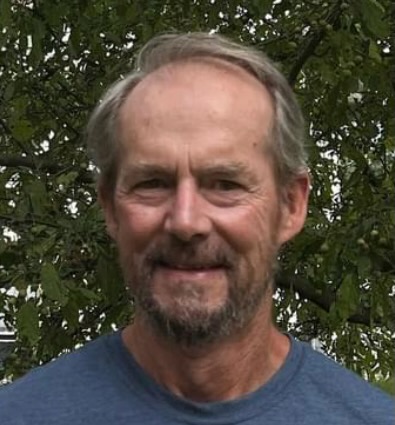
Ed Meek is the author of four books of poetry and a collection of short stories. He has had work in The Sun, The Paris Review, Plume, The North American Review, The Boston Globe. He writes book reviews for The Arts Fuse. He is a contributing editor for The Rivanna Review. He teaches creative writing at the Osher Lifelong Learning Institute. He lives in Great Barrington with his wife Elizabeth and their labradoodle Mookie. His most recent book is High Tide.

“Hungry Ghosts” by Olga Trianta-Boncogon

She stood expectantly before remembering to push a thin panel on the glass. The doors chimed and the cashiers called out welcome without breaking away from their tasks.

The convenience store was clean, full meals stocked the fridge, counters offered tea-boiled eggs, sweet potatoes, and hot dogs. Cold air quickly enveloped her and made her forget the summer heat. She wandered from aisle to aisle, wanting to buy instant noodles but too afraid to ask what the sign on the hot water machine meant. She knew how to say hot water and excuse me, but worried that her butchered delivery would confuse or insult the cashier. She stood by the water for too long, a short woman squeezed past her to fill up her cup. She jumped back and bumped into a man using the ATM. She wondered when she would become used to filling up smaller spaces, navigating aisles wide enough for one.

She bought a noodle dish for dinner and sat down at one of the few tables left. Some people bowed their heads over their tables, squeezing in a quick nap, probably fresh off work like her. Others had their eyes on their phone screens and were scrolling past social media updates at the speed of light. Someone came by her table and silently took a chair.

Continue reading “Hungry Ghosts” by Olga Trianta-Boncogon

“A Quality of Silence” by David M. Rubin

Slumped on a ratty couch three feet from the fifty-five-inch screen, Kovlov sighed along with Ryu. His cell buzzed and he hit green to Elaine’s midflight yelling that he had better Venmo $1200 as she had to pay her rent. Kovlov grunted, tapped the red icon, and refocused on the movie where an elderly woman, a middle-aged man, a young woman, and two young children sat on individual tatami mats around a low wooden table. The elderly woman scooped rice slowly into bowls. The doorbell rang. Kovlov’s roommate Sal popped from the kitchen, crossed between him and the screen. He opened the door to a man in a suit who queried, “Eugene Kovlov?” and dropped a sizable envelope on the floor. “Consider yourself served.” The family held their bowls, gently shoveling at their portions. A teapot marked the foreground.

Sal closed the door and kicked the envelope toward the couch. “Kovlov, you’re wastin’ away. Maybe eat some Ramen or something.”

When the movie ended, he clicked off the TV, headed into his room and flopped onto the futon.

Moonlight guided a SEPTA train as it emerged from underground and clanked up onto the elevated tracks that ran alongside Route 95 above Northern Liberties, Fishtown, and Kensington row homes, soot blonde brick schools, and entropy riddled factories.

“Wakey up!”

One-eye took in the clock which was mostly hidden behind tipping piles of Japanese cinema books. Why the hell was Sal waking him up? A red neon 1. Maybe 1:00 PM? Could be 10, 11 or 12? Or maybe any hour at all and the one a minute’s digit. He’d hold still within the warm comforter, thwarting any consideration of least bad choices that would hurl him into the world. He might wait until the 1 changed to a 2, which meant waiting on average 30 seconds to 30 minutes, but his concentration broke and he slipped back into oblivion.

“Kovlov! Wake up and listen good. You owe me $1400.”

Continue reading “A Quality of Silence” by David M. Rubin

“Lips Boudreaux” by James Knipp

The fat guy at the bus stop reminded Leonard of Tug Rooney.  He didn’t especially look like Tug.   The fat guy was tall and white and had the well-fed jowls and loud, bright voice of a suburban Rotarian, while Tug was short and gimpy with ashen skin and an asthmatic wheeze brought on by breathing decades of smoke.  It was more in the way they both could spin into a tale, the way the audience leaned in expectantly, especially the ladies, and how each always ended with a flourish, riding a wave of laughter through the finish.  Leonard had once asked Tug how he did it, how he commanded such attention. 

Tugs had put one hand on the back of Leonard’s neck and drew the younger man closer so he could smell the stale beer and cigar smoke that seeped from his pores.  He pointed at Leonard, the ever-present stub of cigar wedged between his fingers and said in his broken, sibilant croak, “Lips, you believe in what you say, people will follow, understand?”

Leonard, not quite a whisker past twenty at the time, didn’t, but he nodded all the same.  That was just how he was with Tug, when he asked, you nodded.  He had that way of making you agree.

The Rotarian at the bus stop finished his story and the ladies around him cackled laughter.  A bus growled up to the stop, belching diesel, and he strode away.  The ladies watched him leave with bird-like avidity, their eyes bright and admiring.

“He’s so nice,” one of them whispered.  The others nodded approvingly.

Continue reading “Lips Boudreaux” by James Knipp