Enter the City
“Tangiers, July” by Hillary Smith-Maddern
On this infinitely sunny day,
after a long ride in a surfer’s van,
the moon begins its glow behind stone
mosques. In the turrets’ shadows,
the broken light of stained glass
windows searches for untouched
surfaces. Defiant street cats,
the dingy angels, stretch,
reluctant to begin their search
for the evening’s sustenance.
It is my best friend and me in Tangiers,
holding the first breath of summer
to the wine bottle’s open mouth.
We would like to believe it is too early
and too late, so there is still
time, that the sunset will laze on
until morning, that our magnificent
suffering has poured itself a tall
glass and sits in silence beside us.

Hillary Smith-Maddern (she/her) is an educator and committed dilettante. A proud cat lady and avid collector of neglected plants, she enjoys diving into the shallow end of everything and scrolling casually through JSTOR. Currently residing in Western Massachusetts, she aspires to fake her death and never return to America. She will obviously take her cats with her. You can find her work in Whale Road Review, Only Poems, and The Disappointed Housewife among others.
Two Poems by Kenneth Reimer
Drowning
It’s during the day when they come.
They shuffle in before noon
and sit in the dark corners of the bar
drinking beer and rye.
They rarely talk,
except to shout at remembered faces
of people they loved
and drove away.
I’m witness to these moments of pain,
and hope that I never grow old and alone.
I’m helping them kill themselves.
It takes a long time, but the poison will eventually work,
and there are always others to fill these empty seats.
Writing on Napkins
Writing on napkins
and scrapes of paper
make me feel inspired.
Little treasures of thoughts and words
forgotten on cluttered tables.
I came on them seldomly
as a waiter searching for my own muse
(in the off hours before sunrise),
and I wondered what it could mean
to find such scattered messages:
a list,
a request for rendezvous,
an expression of joy
or sorrow,
and sometimes a poem –
scribbled and discarded,
left behind by a vagabond artist,
left behind to be read and loved by me.
Kenneth D. Reimer lives on the Canadian Great Plains with his wife, Lisa, and a cat named Nazca who likes to bite him on the leg. His favourite art form is the short story, but occasionally he takes on the challenge of longer fiction ranging from novellas to novels. He has had short works published in a variety of magazines and anthologies including The NightWriter Review, Four Tulips, The Saint Katherine Review, The Brussels Review, and Scribeworth Magazine. Zero Time, his novel of time travel, is available on Amazon. Samples of his other writing can be viewed at KennethDReimer.com.
“Charge of the Night Brigade” by Linda Romanowski
From 1/6/1996 to 1/8/1996, 30.7 inches of snow fell in Philadelphia.
My husband and I lived in NE Philadelphia for 23 years. Our row house was located on a small one-way street, with parking on both sides. There were several snowstorms in 1996. One in particular brought much havoc into our neighborhood. It was an all-day snow socker, which conveniently ended at 9:00PM. As all of us gathered outside to shovel through the damages, a plan emerged.
We knew we would be trapped for days, with no hope of any city assistance. It was decided that we would get ourselves out of the mess by working together. One of our neighbors had access to a snow plough. Every able-bodied person, teenagers included, set themselves to the task at hand. One by one, two by two, alone and side by side, we dug every car out of the snow. There were several elderly neighbors who gladly threw their car keys from their windows when we knocked on their doors to explain our idea. I can still see and hear those keys flying through the air.
The women who were not shoveling canvassed the street with coffee, tea, hot chocolate, gloves, hats, scarves. There was so much snow, we made every child’s dream come true when snow forts appeared on their front lawns the next morning.
The final act was a drama in itself. Each car was moved out of its spot, cleared of snow, plowed out of their spot, and re-parked. Clearly, there were moments of danger. Clearly, it was exhausting. All was done before dawn’s shocked arrival at the sight of mission accomplished. The Noble Act of Neighbors ended.
Thereafter, parking was a non-event. It has been many years since I’ve thought of that crisis. My mind’s eye still sees the men’s arms flailing like speed skaters, their efforts causing the snow to part like the Red Sea. Just as the Amish raised the barn in the movie “Witness,” we raised the bar of decency and conquered the aftermath of the storm. There was no better moment than that one.
Some of you who might read this were part of that miracle. Know how very grateful I am to have been your neighbor, to have worked shovel to shovel with you that night.
My mother would always say that good neighbors are a gift from God. That’s how my husband and I were raised. That’s how my husband and I raised our shovels, did the coffee runs, and caught jangling keys before they could be lost in the white avalanches.
Thank you again, former wonderful neighbors of Mayfair. You will always have a special place in my heart. I remain forever grateful.
Linda M. Romanowski Linda M. Romanowski returned to Rosemont College (Class of 1975) to obtain an MFA in Creative Writing, Non-Fiction in 2021. Her thesis, earned with distinction, became her debut hybrid Italian memoir, Final Touchstones, published by Brown Posey Press, an imprint of Sunbury Press in January 2023. Her non-fiction and poetry publications include The City Key, the Mario Lanza Institute Facebook page and website, Moonstone Arts, Ovunque Siamo, and Vine Leaves Press. Her book reviews appear in Philadelphia Stories magazine, the Italian American Herald newspaper, and the US Review of Books. The Historic Society of Pennsylvania and the Library Company of Philadelphia accepted Final Touchstones into their collections in 2023. Final Touchstones earned Finalist status for the Eric Hoffer Book Award for 2023, for memoir, culture, and poetry, and is nominated for their Legacy category for 2025. “Final Touchstones” won the Sunbury Press 2023 and 2025 SUNNY Award for Non-Fiction. “Bearing Witness,” an excerpt from Final Touchstones was included in A Conspiracy of Ravens, A Collection of Work by Rosemont College MFA Alumni, Spring 2025.Linda is a member of the Book Authors of Southeastern Pennsylvania and can be found at www.LindaMRomanowski.com.
Three Poems by Shontay Luna
Weekend in NOLO (sometime in twenty thirteen)
He signed up for one of those time-shares
presentation deals at the mall without my knowledge.
Under a big sign that said “Free Weekend in (insert any
city name here). Includes three-day stay at such-and-such
hotel, just fulfill attendance presentation requirement.
Of course, they tell you that afterwards. It was cool riding
down a freeway I’d never seen before, developing a new
affinity for the number “ten”. We were within walking
distance of the French Quarter with its multitude of
bric-a-brac stands and shops. Open air bars
beckoning us in and disposing massively
inebriated tourists back onto the street at 12:30 in
the afternoon. My only regret at the time was that
I considered it too early to drink. From there we
went to the seafood place recommended by a
local at the meeting where there was a bit
of a wait but the food was fantastic.
During which I got to see a bonafide, second
line parade. The happy couple strutting
behind the brass band, followed by the
attendees. Sound filled the street outside.
It was normal and slow motion both at
once.
Afterwards, we walked along the streets
whose shores kissed the edge of the
Mississippi. Picked up a card from a
coin-operated fortune teller. Can’t remember
what the fortune said, but it was good
(I believe they always are) and I kept it for
many years. And the time flew. Before I knew
it, the weekend was over. As we hit the road
toward home, I made a promise to myself to
one day, return to New Orleans. When I had
just a little more time in my pocket.
My Return to NOLO, Part Two (January 6-8th, 2023)
I made it back to NOLO, several years after my initial visit.
Hotel room absolutely lovely; with its kitchenette and extra
bed that I didn’t need. Maybe I was so excited to go, I forgot
to order a single bedroom. View was of other windows, but if
I looked to the right, I could see the Jackson Avenue traffic
bustling under a sky tinged in amber sunsets. My, how those
streets called themselves to me as I walked the nearest ones.
getting a latte and chocolate croissant a block away, staring
at both the streetcars and palm trees in absolute wonder.
When I found Canal Street, my prior recollections came to life.
Returning back to me fully in real time, I remembered. Even
though I was still heady from both the travel high and densely
erotic dreams in the early morning hours as my eyes witnessed
both a sea of stars and fleur-de-lis.
The possibilities are endless for I am “home” in a place
I wasn’t born in, but my people were. Albeit two and a half
hours away. And somehow, the city knows it as I feel its
embrace around me.
This trip a complete contrast to the one before. Yet,
it doesn’t phase me at all. Because there’s something
different here about the Sun and sky; the vibe so
distinct. Maybe it calls to me because it’s the land
of my mother’s people, the land of my Great –
Grandparents. Maybe it just wants me, period.
I don’t know why it feels like this – I’m just glad
that it does.
Back to the palm trees – yes, the palm trees. Being from
Chicago, I find them fascinating. I stare at them
helplessly upon my outings, in awe of the varying
heights and the unrelenting casualness they
embody.
Return to NOLO, Part Three
Travelling completes the soul. That’s the only way
I can explain it. I once had a co-worker that had
several tattoos. Every time I’d see her, she’d show
me her newest tat while excitedly talking about the
next one she’d get. I’ve realized how she felt about
tattoos, I feel about travel. As I sit here in the
airport terminal, all I can think about is where my
next trip will take me. The thought leaving me
excited, breathless and grateful as this last trip
was years in the making and sorely needed.
As it was winter, I didn’t smell magnolia in the
breezes, but I felt the ragtime rumble itself
through me in an off street by the French Market. I
traipsed on cobblestone streets among buildings
brocaded in metal flowers and secrets.
Canal Street crept quietly into my memories,
with its broad width and sun setting horizon.
The ancient souvenir shop I frequented
the first time still standing on the corner.
The large white sign with black letters, an
antique in the digital age. Now flooded by
several CBD shops that, of course, weren’t
there in years past.
I forgot to return to Duke’s for the seafood,
but I did go to Cafe Du Monde and
The Court of the Two Sisters Buffet.
Flavors staying with me long after
delicacies were consumed. As the titles
ingrained themselves in my memory –
Red Beans, Shrimp Etouffee, Gumbo,
Jambalaya. And I’m left with two
certainties: New Orleans calls me like
no other city ever has and I will definitely
return.
Chicagoan Shontay Luna is a poet, blogger and fanfiction author. Her work first appeared in Anthology and Capper’s and her most recent appearances include The Crucible, Press II Press and Blue Lake Review. Her newest book is ‘The Goddess Journal – a tool for unlocking the Goddess within every Woman.’
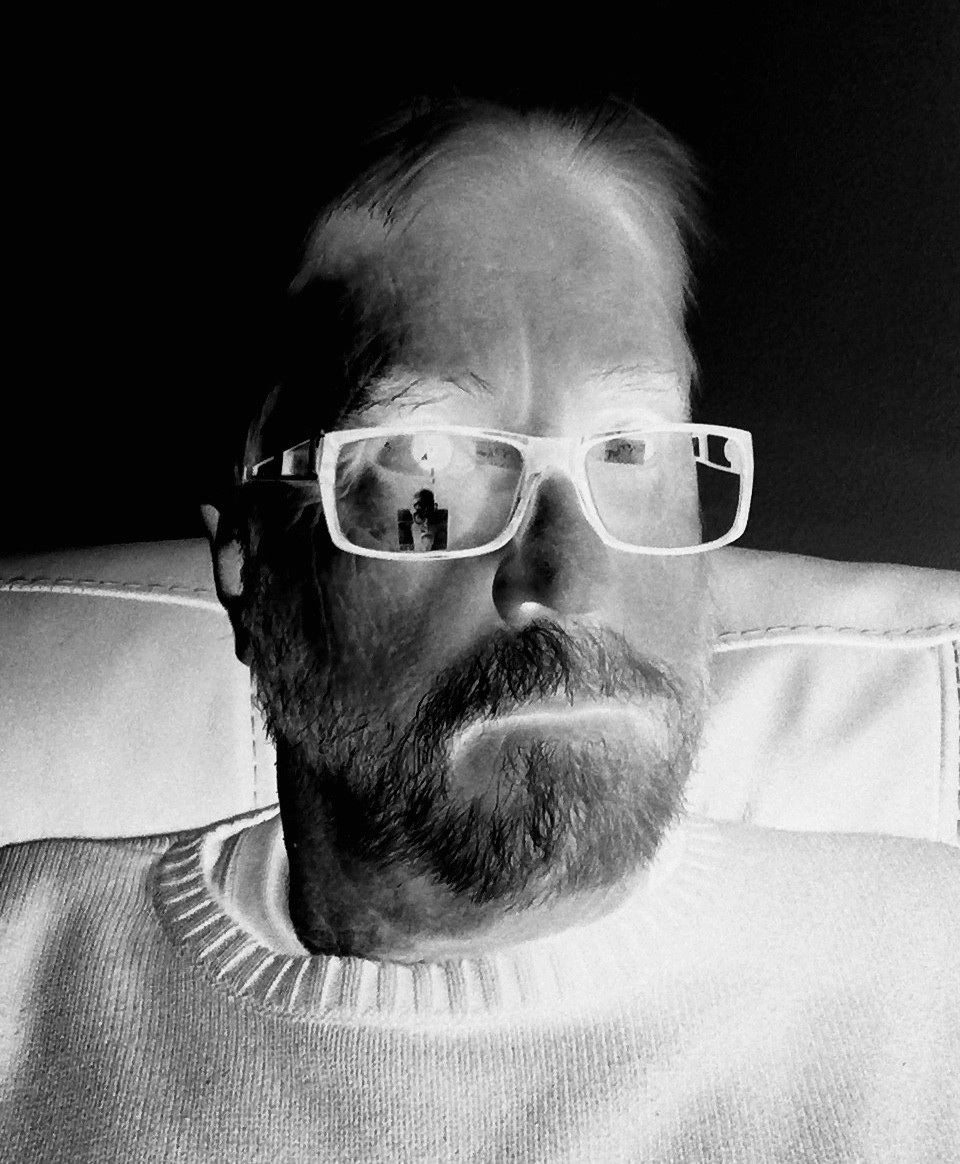
“Lithouse” by Hugh Findlay

Hugh Findlay’s writing and photography have been published worldwide. Nominated for a Pushcart Prize in 2020 for poetry, and the Best Microfiction Anthology 2024, he is in the third trimester of life and hopes y’all like his stuff. Instagram: @hughmanfindlay. Portfolio: https://hughmanfindlay.com
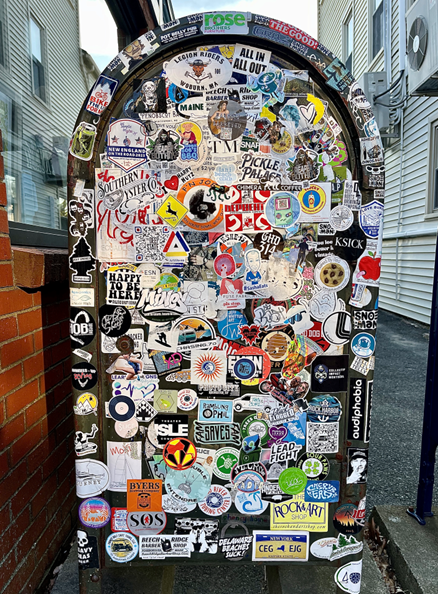
“Posted” by Hugh Findlay
Hugh Findlay’s writing and photography have been published worldwide. Nominated for a Pushcart Prize in 2020 for poetry, and the Best Microfiction Anthology 2024, he is in the third trimester of life and hopes y’all like his stuff. Instagram: @hughmanfindlay. Portfolio: https://hughmanfindlay.com
“Alphabet City” by John Repp
I’d walked the length of Murray Avenue many times
& strode up or down Forbes disdaining bus exhaust & rain,
stopping on the public course’s first tee to marvel at the lights,
an industrial tang suffusing the Pittsburgh air then, Flagstaff Hill behind
or just ahead, depending, but this was the far-downtown bedlam
of Manhattan, where I couldn’t help thinking myself
one of Whitman’s roughs while seventeen times a block
being revealed as a permanent rube. My new wife motored
down the sidewalk when one existed & zoomed faster
when all we had was asphalt or plywood-roofed scaffolding.
The noise obliterated metaphor. To keep pace, I imagined myself
Frank O’Hara & patted my pocket notebook. She yelled when I stopped
to answer the first few nut jobs ranting at my helicopter & gold bullion.
At the red light, she said, “You’ll never get anywhere like that.”
John Repp is a writer, folk photographer, and digital collagist living in Erie, Pennsylvania. His most recent collection of poetry is Never Far from the Egg Harbor Ice House, published by Sheila-Na-Gig Editions. Scads more information about Repp, his work, and his interests/obsessions can be found on his website: http://www.johnreppwriter.com
“Under a Verdigris Streetlamp” by Sara Backer
Please note: Poetry is compressed to fit smart phone screens. If you are reading this poem on a phone screen, please turn your screen sideways to make sure that you are seeing correct line breaks for the poem.
Paris Street; Rainy Day by Gustave Caillebotte
“Like real weather atomized”—Ciaran Carson
Caillebotte’s pale clouds fight to hold back
the sun, rain pooling between worn cobblestones, a shimmering
veneer, flatiron buildings nosing into a five-point intersection.
When I went to Paris, neon lit a dark sky. Cobblestones now paved.
Wheezing buses blocked my view. Caillebotte’s streets have no cars.
Pedestrians space themselves, walking in all directions, holding identical
umbrellas, large and curved, the color of sealskin. The closest couple
turn their placid eyes to look at something beyond the edge
of the canvas. The man wears a top hat and bow tie. His wife
wears diamond earrings and a fur-collared coat. She holds his arm
that carries their umbrella high. Brick walls, muted ochre, could be gold
with a bit more optimism, sluiced in the mesh-like rain.
My December was chilled by drizzle, no coffee or brandy capable
of even transient warmth, and I, who cherished solitude, wished
I had someone to joke about conformity or bourgeoisie. I rode
the warm subways so often I memorized metro maps.
At Gare Saint-Lazare, a couple asked me how to get to Opera.
I understood their question, told them in French how to get there.
My sudden competence thrilled me! The husband frowned
and murmured, elle n’est pas francais. They asked a young man
the same question and he repeated my answer. Suddenly sick
of rain and trains and tiny cheese sandwiches,
that evening I left for Italy.

Sara Backer’s first book of poetry, Such Luck, follows two chapbooks: Scavenger Hunt, and Bicycle Lotus, which won the Turtle Island Chapbook Award. Recent publications include Lake Effect, Slant, CutBank Online, Poetry Northwest, Poetry Ireland, and Kenyon Review. She lives in New Hampshire and is currently writing novels.
“The Eagle and Mrs. B.” by Linda Romanowski
Many a Philadelphia area college student spent those post-Thanksgiving/Pre-Christmas days working at one of the “Big Three” department stores in Center City: Strawbridge & Clothier, Lit Brothers, or John Wanamaker’s. Due to my mother’s influence, I thought working at Wanamaker’s was the best of all worlds. After all, who could resist the classy interior and exterior window displays, the jagged mountain range stroke of the owner’s signature on the side of the building, and the transportation proximity?
Two other striking figures claimed the store’s signature distinction: the Wanamaker eagle and the annual Christmas fountain and light show. The serene and imposing gilded bronze aviary statue was the focal point for gathering, for claiming “lost parents,” and for bon voyages until next time.
Lifting one’s eyes to the sights, sounds, and waving fountain streams of the hourly Christmas performance stopped shoppers in their tracks and delighted the minds of wide-eyed youngsters who rarely cried during those few minutes of awe. My first recollection of seeing the aqua wonder made me fearful, thinking at any moment, the fountains would fall from their upper stage perch and drown the audience below, extinguishing the prancing lights in the process.
Not every pair of eyes welcomed this holiday diversion. My first Christmas working season in the children’s department in 1972 provided a novel view of the saleswomen employed at the makeup counters. The daily music grinding of “Frosty the Snowman” did nothing for their business. No cash registers rung in harmony with “O, Christmas Tree.” Gazers leaned on their pristine cosmetic display cases; their backs turned away from the porcelain faces of Estee Lauderettes, who resorted to makeup remover to erase the handprints and elbow marks on their precious encasements of promised beauty and glamour. No allure of scented bottled blossoms could overpower the lofty sounds and scenery above the audience. It must have been the bane of their existence, their dreams of pocket money ruined by lit-up distraction. One year, I counted viewing thirty-six performances of Rudolph’s very shiny unpowdered nose glowing across the ceiling.
*****
Every college student on Wanamaker’s holiday payroll hoped to work for the main floor supervisor, Mrs. B., known for her kindness. She was a smartly dressed, middle-aged Jewish lady, brownish-black hair coiffed to perfection, with no-nonsense eyeglasses attached to a pearl chain that hung elegantly around her neck. Her high-heeled pumps that coordinated with every outfit gave her an acceptable height, appearing taller than she was. Her trim figure clicked in tandem with her stride. Mrs. B. took the time to acquaint herself with several of us. One afternoon, during the height of the Christmas rush, she announced that she would retain us for the week after Christmas. We were delighted, as it meant money for next semester’s textbooks would be less of an issue. All we needed to do was follow her instructions without variation.
When we punched in on the time clock on December 26th, Mrs. B. led us to an unfamiliar store area, one at a time. We were placed separately in obscure areas of dressing rooms and stock areas, out of the view of the “suits” who might sniff through the aisles looking for post-holiday imperfections. There were close calls, but none of us were spotted. Had we been “caught,” we would say we were Christmas shopping to maintain our ruse. During that week, Mrs. B. was ubiquitous, her eagle eyes surpassing that stony sculpture’s glance on the first floor. We functioned seamlessly as the suits paraded the aisles, praising Mrs. B. for her diligence and attention to detail. I’ll always wonder if the Wanamaker eagle suspected her and kept the secret, among all the others, under its ornate-clad feathers.
Linda M. Romanowski is a graduate of Rosemont College, in 1975 with a BA in Psychology and Elementary Education, and this past May as an MFA graduate in Creative Non-fiction. She was assistant editor of Non-fiction for Rathalla magazine, Rosemont’s literary publication. Her Italian heritage-based thesis, “Final Touchstones”, earned with distinction, is scheduled for publication by Sunbury Press within the coming months. Several of the essays from her pending book were published on City Key, Ovunque Siamo and the Mario Lanza Institute Facebook page. She recently reviewed Ellen Stone’s poetry book “What is in the Blood” for the online Philadelphia Stories 2021 Fall issue. Her poem, “Seen In Translation” was selected for inclusion in the Moonstone Arts Center Protest 2021-100 Thousand Poets for Change.
 THE CITY KEY