Tag: Philadelphia
“Charge of the Night Brigade” by Linda Romanowski
From 1/6/1996 to 1/8/1996, 30.7 inches of snow fell in Philadelphia.
My husband and I lived in NE Philadelphia for 23 years. Our row house was located on a small one-way street, with parking on both sides. There were several snowstorms in 1996. One in particular brought much havoc into our neighborhood. It was an all-day snow socker, which conveniently ended at 9:00PM. As all of us gathered outside to shovel through the damages, a plan emerged.
We knew we would be trapped for days, with no hope of any city assistance. It was decided that we would get ourselves out of the mess by working together. One of our neighbors had access to a snow plough. Every able-bodied person, teenagers included, set themselves to the task at hand. One by one, two by two, alone and side by side, we dug every car out of the snow. There were several elderly neighbors who gladly threw their car keys from their windows when we knocked on their doors to explain our idea. I can still see and hear those keys flying through the air.
The women who were not shoveling canvassed the street with coffee, tea, hot chocolate, gloves, hats, scarves. There was so much snow, we made every child’s dream come true when snow forts appeared on their front lawns the next morning.
The final act was a drama in itself. Each car was moved out of its spot, cleared of snow, plowed out of their spot, and re-parked. Clearly, there were moments of danger. Clearly, it was exhausting. All was done before dawn’s shocked arrival at the sight of mission accomplished. The Noble Act of Neighbors ended.
Thereafter, parking was a non-event. It has been many years since I’ve thought of that crisis. My mind’s eye still sees the men’s arms flailing like speed skaters, their efforts causing the snow to part like the Red Sea. Just as the Amish raised the barn in the movie “Witness,” we raised the bar of decency and conquered the aftermath of the storm. There was no better moment than that one.
Some of you who might read this were part of that miracle. Know how very grateful I am to have been your neighbor, to have worked shovel to shovel with you that night.
My mother would always say that good neighbors are a gift from God. That’s how my husband and I were raised. That’s how my husband and I raised our shovels, did the coffee runs, and caught jangling keys before they could be lost in the white avalanches.
Thank you again, former wonderful neighbors of Mayfair. You will always have a special place in my heart. I remain forever grateful.
Linda M. Romanowski Linda M. Romanowski returned to Rosemont College (Class of 1975) to obtain an MFA in Creative Writing, Non-Fiction in 2021. Her thesis, earned with distinction, became her debut hybrid Italian memoir, Final Touchstones, published by Brown Posey Press, an imprint of Sunbury Press in January 2023. Her non-fiction and poetry publications include The City Key, the Mario Lanza Institute Facebook page and website, Moonstone Arts, Ovunque Siamo, and Vine Leaves Press. Her book reviews appear in Philadelphia Stories magazine, the Italian American Herald newspaper, and the US Review of Books. The Historic Society of Pennsylvania and the Library Company of Philadelphia accepted Final Touchstones into their collections in 2023. Final Touchstones earned Finalist status for the Eric Hoffer Book Award for 2023, for memoir, culture, and poetry, and is nominated for their Legacy category for 2025. “Final Touchstones” won the Sunbury Press 2023 and 2025 SUNNY Award for Non-Fiction. “Bearing Witness,” an excerpt from Final Touchstones was included in A Conspiracy of Ravens, A Collection of Work by Rosemont College MFA Alumni, Spring 2025.Linda is a member of the Book Authors of Southeastern Pennsylvania and can be found at www.LindaMRomanowski.com.
“The Eagle and Mrs. B.” by Linda Romanowski
Many a Philadelphia area college student spent those post-Thanksgiving/Pre-Christmas days working at one of the “Big Three” department stores in Center City: Strawbridge & Clothier, Lit Brothers, or John Wanamaker’s. Due to my mother’s influence, I thought working at Wanamaker’s was the best of all worlds. After all, who could resist the classy interior and exterior window displays, the jagged mountain range stroke of the owner’s signature on the side of the building, and the transportation proximity?
Two other striking figures claimed the store’s signature distinction: the Wanamaker eagle and the annual Christmas fountain and light show. The serene and imposing gilded bronze aviary statue was the focal point for gathering, for claiming “lost parents,” and for bon voyages until next time.
Lifting one’s eyes to the sights, sounds, and waving fountain streams of the hourly Christmas performance stopped shoppers in their tracks and delighted the minds of wide-eyed youngsters who rarely cried during those few minutes of awe. My first recollection of seeing the aqua wonder made me fearful, thinking at any moment, the fountains would fall from their upper stage perch and drown the audience below, extinguishing the prancing lights in the process.
Not every pair of eyes welcomed this holiday diversion. My first Christmas working season in the children’s department in 1972 provided a novel view of the saleswomen employed at the makeup counters. The daily music grinding of “Frosty the Snowman” did nothing for their business. No cash registers rung in harmony with “O, Christmas Tree.” Gazers leaned on their pristine cosmetic display cases; their backs turned away from the porcelain faces of Estee Lauderettes, who resorted to makeup remover to erase the handprints and elbow marks on their precious encasements of promised beauty and glamour. No allure of scented bottled blossoms could overpower the lofty sounds and scenery above the audience. It must have been the bane of their existence, their dreams of pocket money ruined by lit-up distraction. One year, I counted viewing thirty-six performances of Rudolph’s very shiny unpowdered nose glowing across the ceiling.
*****
Every college student on Wanamaker’s holiday payroll hoped to work for the main floor supervisor, Mrs. B., known for her kindness. She was a smartly dressed, middle-aged Jewish lady, brownish-black hair coiffed to perfection, with no-nonsense eyeglasses attached to a pearl chain that hung elegantly around her neck. Her high-heeled pumps that coordinated with every outfit gave her an acceptable height, appearing taller than she was. Her trim figure clicked in tandem with her stride. Mrs. B. took the time to acquaint herself with several of us. One afternoon, during the height of the Christmas rush, she announced that she would retain us for the week after Christmas. We were delighted, as it meant money for next semester’s textbooks would be less of an issue. All we needed to do was follow her instructions without variation.
When we punched in on the time clock on December 26th, Mrs. B. led us to an unfamiliar store area, one at a time. We were placed separately in obscure areas of dressing rooms and stock areas, out of the view of the “suits” who might sniff through the aisles looking for post-holiday imperfections. There were close calls, but none of us were spotted. Had we been “caught,” we would say we were Christmas shopping to maintain our ruse. During that week, Mrs. B. was ubiquitous, her eagle eyes surpassing that stony sculpture’s glance on the first floor. We functioned seamlessly as the suits paraded the aisles, praising Mrs. B. for her diligence and attention to detail. I’ll always wonder if the Wanamaker eagle suspected her and kept the secret, among all the others, under its ornate-clad feathers.
Linda M. Romanowski is a graduate of Rosemont College, in 1975 with a BA in Psychology and Elementary Education, and this past May as an MFA graduate in Creative Non-fiction. She was assistant editor of Non-fiction for Rathalla magazine, Rosemont’s literary publication. Her Italian heritage-based thesis, “Final Touchstones”, earned with distinction, is scheduled for publication by Sunbury Press within the coming months. Several of the essays from her pending book were published on City Key, Ovunque Siamo and the Mario Lanza Institute Facebook page. She recently reviewed Ellen Stone’s poetry book “What is in the Blood” for the online Philadelphia Stories 2021 Fall issue. Her poem, “Seen In Translation” was selected for inclusion in the Moonstone Arts Center Protest 2021-100 Thousand Poets for Change.
“A Quality of Silence” by David M. Rubin
Slumped on a ratty couch three feet from the fifty-five-inch screen, Kovlov sighed along with Ryu. His cell buzzed and he hit green to Elaine’s midflight yelling that he had better Venmo $1200 as she had to pay her rent. Kovlov grunted, tapped the red icon, and refocused on the movie where an elderly woman, a middle-aged man, a young woman, and two young children sat on individual tatami mats around a low wooden table. The elderly woman scooped rice slowly into bowls. The doorbell rang. Kovlov’s roommate Sal popped from the kitchen, crossed between him and the screen. He opened the door to a man in a suit who queried, “Eugene Kovlov?” and dropped a sizable envelope on the floor. “Consider yourself served.” The family held their bowls, gently shoveling at their portions. A teapot marked the foreground.
Sal closed the door and kicked the envelope toward the couch. “Kovlov, you’re wastin’ away. Maybe eat some Ramen or something.”
When the movie ended, he clicked off the TV, headed into his room and flopped onto the futon.
Moonlight guided a SEPTA train as it emerged from underground and clanked up onto the elevated tracks that ran alongside Route 95 above Northern Liberties, Fishtown, and Kensington row homes, soot blonde brick schools, and entropy riddled factories.
“Wakey up!”
One-eye took in the clock which was mostly hidden behind tipping piles of Japanese cinema books. Why the hell was Sal waking him up? A red neon 1. Maybe 1:00 PM? Could be 10, 11 or 12? Or maybe any hour at all and the one a minute’s digit. He’d hold still within the warm comforter, thwarting any consideration of least bad choices that would hurl him into the world. He might wait until the 1 changed to a 2, which meant waiting on average 30 seconds to 30 minutes, but his concentration broke and he slipped back into oblivion.
“Kovlov! Wake up and listen good. You owe me $1400.”
Continue reading “A Quality of Silence” by David M. Rubin“John’s” by Ken Romanowski
Over ninety modest row homes occupied the two and three-hundred blocks of East Sheldon Street. Situated between C Street and Rising Sun Avenue, the homes formed a continuous line on either side of the street. The houses across from us were older, taller, and had a small flowerbed in front, whereas our homes, newer and smaller, had a small lawn in the front and back. Our block was flanked by C Street to the north and Rising Sun Avenue to the south.
Before we moved to Sheldon Street, we lived a few miles away on a block of even smaller row homes. It was there that Mom began to send me on errands. So, around five years of age, I started riding to the corner grocery store on my tricycle. Holding my little sister, Mom stood in the doorway with her red bandanna, light cardigan, and dark-colored slacks and watched me. I would ride my bike in my rolled-up dungarees and tee shirt and return with the goods in a basket secured behind me.
As I grew older, I graduated to the next level of independence and responsibility. So, when it was time for me to get a haircut when I turned eight, I could walk to the shop by myself. Nevertheless, there would be an impediment to reaching the barber shop — Rising Sun Avenue. John’s Barber Shop occupied a small storefront on Albanus Street near the other side of the Avenue. Albanus was not very wide, and its one-way traffic emptied onto Rising Sun, which was three times as wide as Sheldon with heavier and faster traffic. Driving it proved challenging to all because two sets of trolley tracks dominated its center lanes. Mom didn’t drive, so walking was my only option.
Continue reading “John’s” by Ken Romanowski“The Eagle and Mrs. B.” by Linda Romanowski
Many a Philadelphia area college student spent those post-Thanksgiving/Pre-Christmas days working at one of the “Big Three” department stores in Center City: Strawbridge & Clothier, Lit Brothers, or John Wanamaker’s. Due to my mother’s influence, I thought working at Wanamaker’s was the best of all worlds. After all, who could resist the classy interior and exterior window displays, the jagged mountain range stroke of the owner’s signature on the side of the building, and the transportation proximity?
Two other striking figures claimed the store’s signature distinction: the Wanamaker eagle and the annual Christmas fountain and light show. The serene and imposing gilded bronze aviary statue was the focal point for gathering, for claiming “lost parents,” and for bon voyages until next time.
Lifting one’s eyes to the sights, sounds, and waving fountain streams of the hourly Christmas performance stopped shoppers in their tracks and delighted the minds of wide-eyed youngsters who rarely cried during those few minutes of awe. My first recollection of seeing the aqua wonder made me fearful, thinking at any moment, the fountains would fall from their upper stage perch and drown the audience below, extinguishing the prancing lights in the process.
Not every pair of eyes welcomed this holiday diversion. My first Christmas working season in the children’s department in 1972 provided a novel view of the saleswomen employed at the makeup counters. The daily music grinding of “Frosty the Snowman” did nothing for their business. No cash registers rung in harmony with “O, Christmas Tree.” Gazers leaned on their pristine cosmetic display cases; their backs turned away from the porcelain faces of Estee Lauderettes, who resorted to makeup remover to erase the handprints and elbow marks on their precious encasements of promised beauty and glamour. No allure of scented bottled blossoms could overpower the lofty sounds and scenery above the audience. It must have been the bane of their existence, their dreams of pocket money ruined by lit-up distraction. One year, I counted viewing thirty-six performances of Rudolph’s very shiny unpowdered nose glowing across the ceiling.
*****
Every college student on Wanamaker’s holiday payroll hoped to work for the main floor supervisor, Mrs. B., known for her kindness. She was a smartly dressed, middle-aged Jewish lady, brownish-black hair coiffed to perfection, with no-nonsense eyeglasses attached to a pearl chain that hung elegantly around her neck. Her high-heeled pumps that coordinated with every outfit gave her an acceptable height, appearing taller than she was. Her trim figure clicked in tandem with her stride. Mrs. B. took the time to acquaint herself with several of us. One afternoon, during the height of the Christmas rush, she announced that she would retain us for the week after Christmas. We were delighted, as it meant money for next semester’s textbooks would be less of an issue. All we needed to do was follow her instructions without variation.
When we punched in on the time clock on December 26th, Mrs. B. led us to an unfamiliar store area, one at a time. We were placed separately in obscure areas of dressing rooms and stock areas, out of the view of the “suits” who might sniff through the aisles looking for post-holiday imperfections. There were close calls, but none of us were spotted. Had we been “caught,” we would say we were Christmas shopping to maintain our ruse. During that week, Mrs. B. was ubiquitous, her eagle eyes surpassing that stony sculpture’s glance on the first floor. We functioned seamlessly as the suits paraded the aisles, praising Mrs. B. for her diligence and attention to detail. I’ll always wonder if the Wanamaker eagle suspected her and kept the secret, among all the others, under its ornate-clad feathers.
Linda M. Romanowski is a graduate of Rosemont College, in 1975 with a BA in Psychology and Elementary Education, and this past May as an MFA graduate in Creative Non-fiction. She was assistant editor of Non-fiction for Rathalla magazine, Rosemont’s literary publication. Her Italian heritage-based thesis, “Final Touchstones”, earned with distinction, is scheduled for publication by Sunbury Press within the coming months. Several of the essays from her pending book were published on City Key, Ovunque Siamo and the Mario Lanza Institute Facebook page. She recently reviewed Ellen Stone’s poetry book “What is in the Blood” for the online Philadelphia Stories 2021 Fall issue. Her poem, “Seen In Translation” was selected for inclusion in the Moonstone Arts Center Protest 2021-100 Thousand Poets for Change.
“Lips Boudreaux” by James Knipp
The fat guy at the bus stop reminded Leonard of Tug Rooney. He didn’t especially look like Tug. The fat guy was tall and white and had the well-fed jowls and loud, bright voice of a suburban Rotarian, while Tug was short and gimpy with ashen skin and an asthmatic wheeze brought on by breathing decades of smoke. It was more in the way they both could spin into a tale, the way the audience leaned in expectantly, especially the ladies, and how each always ended with a flourish, riding a wave of laughter through the finish. Leonard had once asked Tug how he did it, how he commanded such attention.
Tugs had put one hand on the back of Leonard’s neck and drew the younger man closer so he could smell the stale beer and cigar smoke that seeped from his pores. He pointed at Leonard, the ever-present stub of cigar wedged between his fingers and said in his broken, sibilant croak, “Lips, you believe in what you say, people will follow, understand?”
Leonard, not quite a whisker past twenty at the time, didn’t, but he nodded all the same. That was just how he was with Tug, when he asked, you nodded. He had that way of making you agree.
The Rotarian at the bus stop finished his story and the ladies around him cackled laughter. A bus growled up to the stop, belching diesel, and he strode away. The ladies watched him leave with bird-like avidity, their eyes bright and admiring.
“He’s so nice,” one of them whispered. The others nodded approvingly.
Continue reading “Lips Boudreaux” by James Knipp“The Election that Changed the World” by Linda Romanowski
In 1952, ten men assembled in a modest two-story building, in the Spring Garden Section of Philadelphia at Ridge and Callowhill Streets. They worked as technicians for Remington Rand Inc., founded by University of Pennsylvania graduates, J. Presper Eckert and John Mauchly. One of these technicians was my father.
That night, the group set out to do what had never been done before – with six Univac computers spread out on their test floor, they’d predict the results of the 1952 Presidential election. It worked out according to plan – they determined early on that evening that Eisenhower would win the election.
Continue reading “The Election that Changed the World” by Linda Romanowski
“Red Philadelphia Years” by Carlos Jose Perez Samano

Years like bubbles,
leaves, or cups.
Before Market Street
just a plateau,
back in time
those old trees
that now name
our beautiful streets.
1634,
Lenape woman,
an Armewamese one,
corn, beans, squash,
three sisters,
daughters of
Kishelemukonk.
1682,
cousin of William Penn,
son of two good Quakers,
also called friends.
Can you imagine
Richard Saunders
writing in his almanac,
words to the wise,
just to become Benjamin Franklin,
our first American guy?
Coming from Haiti,
1793,
a relative of Mackandal,
speaking only Creole.
Summer 1800,
slave 24 years,
from Cuba by boat
waits in Lanzaretto a month.
In 1849
the Moyamensing prision saw
how Edgar Allan Poe
tried to kill himself.
The same year,
some boats,
some Germans came,
the 1848 revolution ended.
By 1984 a guy from South Korea,
with a name hard to pronounce,
came after rolling for years
in the South Cone,
also called South America.
Coming from a wealthy family,
he became poor,
like an Allegheny or Kensington
meth woman dancing
without mouth.
Now his name is Jimmy Pak.
We all came
from different places,
and different times,
and here we go,
the years like empty drawers,
rusty dishes,
broken and dirty dolls,
pieces of me and you.
We all know that brotherly love
is a beautiful image
but Lorraine Hotel was full of stories
that we try to forget.
L-O-V-E in red,
pictures of Philadelphia.
with or without the hashtag
#love.
Philadelphia can be,
a nest,
a red brick,
some red
and yellow
and pink,
falling leaves,
touching lightly
the surface of the river
floating smoothly
through the small waves of
the Schuylkill.
And Philadelphia is
snow when it snows,
and heat like hell
if you don’t have a fan.
Years will come,
we will be gone.
But today here we are,
sharing this
Philadelphia year.

Carlos José Pérez Sámano is a literary fiction and nonfiction author, teacher of Creative Writing Workshops in countries like Mexico, USA, Kenya, and Cuba. He has four published books, and is the recipient of the “Best Seller” award of Ad Zurdum Publishing House. His work has been featured in more than 20 international magazines like Fredericksburg Literary and Art Review, Errr Magazine, Quinqué, Poetry in Common, Cultura Colectiva, among others. He is pursuing an MFA in Creative Writing and an MA in Publishing at Rosemont College. He will be published by Temple University Press in “Who Will Speak For America?” in 2018. Find him on Twitter: @carlosjoseperez
Please note: Poetry is compressed to fit smart phone screens. If you are reading this poem on a phone screen, please turn your screen sideways to make sure that you are seeing correct line breaks for this poem.
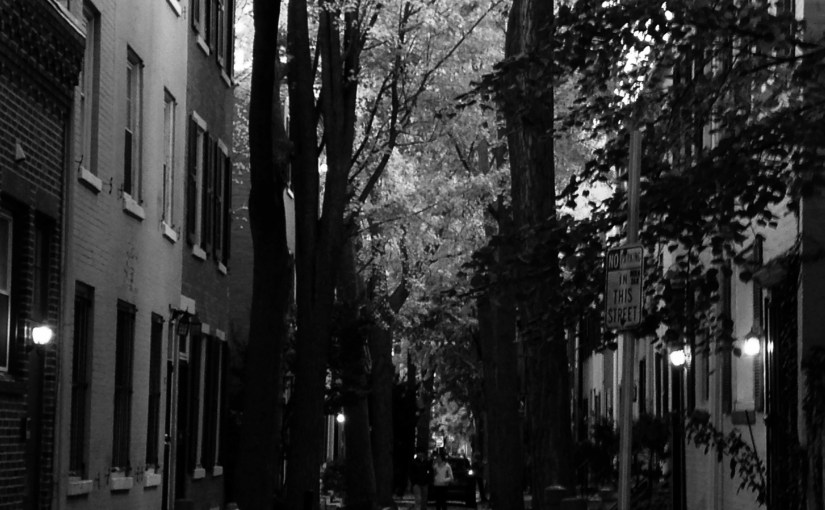
Editor’s Post: “Philadelphia, 11/20/2015”

Philadelaphia 1

Philadelphia 2

Philadelphia 3

Philadelphia 4

Philadelphia 5

Philadelphia 6

Philadelphia 7

Philadelphia 8

Philadelphia 9

Philadelphia 10

Philadelphia 12

Philadelphia 13
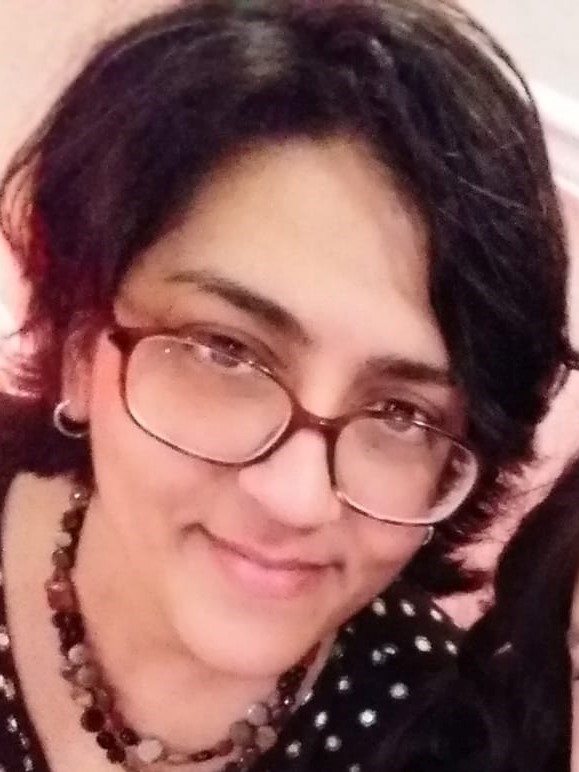
Ayesha F. Hamid is a poet and creative nonfiction writer published in Blue Bonnet Review, Philly Flash Inferno, Sheepshead Review, and Rathalla Review. Her full-length memoir The Borderland Between Worlds is available through Auctus Publishers at Barnes and Nobles and Amazon. Ayesha also has a full-length poetry collection called Waiting for Resurrection. She is a Poetry Editor at Ran Off With the Star Bassoon and an Assistant Poetry Editor for The Night Heron Barks. She is the Editor-in-Chief at The City Key.
Ayesha holds a Bachelor of Arts in French and A Bachelors of Science in Sociology from Chestnut Hill College, M.F.A. in Creative Writing and an M.A. in Publishing from Rosemont College. She also holds an M.A. in Sociology from Brooklyn College. Aside from writing, Ayesha also loves film, travel, and photography. You can find Ayesha on twitter @ahamidwriter
Ayesha is a love of cities, big and small.
 THE CITY KEY