Tag: poet
Three Poems by Ed Meek
Soundtrack of the City
The soundtrack of the city
can keep you up nights
or hum in the background
a discordant tune of wheels turning
and gears interlocking, trucks
unloading, planes taking off
and coming down.
The bass thumping in a passing
smoke-filled car. A Harley roaring
down the street. Sirens wailing
of rescues and D.O.A.
daytimes the volume
jumps to life with the birds
who serenade leaf blowers, lawn mowers,
horns, the ebb and flow
of traffic, the heavy breathing buses
the scraping skateboards,
barking dogs. The disembodied voices
of neighbors you’ll never know.
The Reserved Section
I’d wandered into the reserved section by mistake
but the performance had begun
and it was too late to escape
to the seats for the general public
my inexpensive ticket already paid for.
It was as if I had pulled back the curtain
and entered the first-class cabin–
been admitted to the club
and seated at the head table.
The champagne was vintage.
The caviar Russian.
The lights dimmed.
I was just behind
a Guggenheim and a Rockefeller.
They didn’t seem to see me.
I was invisible as I often am.
For once it was an advantage.
I glanced down the row at two
black women who smiled and nodded.
Hostages to Heat
In Brooklyn when the temp hits 90
the heat invades our claustrophobic co-op.
Outside, the cement sends the heat
up through our bodies in waves.
We float in our sweat like seals in the shallows.
I used to love the feel of sweat
blanketing my body
running in the mid-day sun
and playing pick-up basketball on black tar.
Now we dread summer days when
an orange disk occupies a hazy sky,
Particles of ash coat our lungs
and the sunlight sears our eyes.
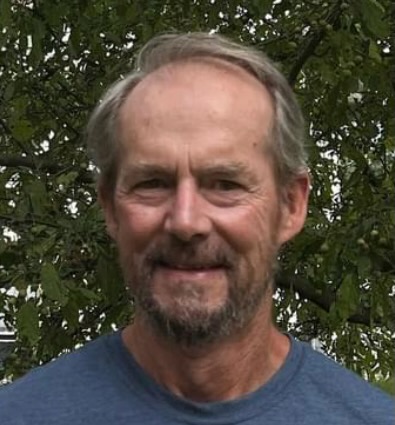
Ed Meek is the author of four books of poetry and a collection of short stories. He has had work in The Sun, The Paris Review, Plume, The North American Review, The Boston Globe. He writes book reviews for The Arts Fuse. He is a contributing editor for The Rivanna Review. He teaches creative writing at the Osher Lifelong Learning Institute. He lives in Great Barrington with his wife Elizabeth and their labradoodle Mookie. His most recent book is High Tide.
“Temp Job” by James B. Nicola
Walk down Fifth Avenue for lunch hour when
you have a temp job in the Forties or
the Fifties; next day, do the walk again
and I’ll bet you a hundred to one you’re
not going to see any of the same
faces. I did this for about a year
when suddenly I thought I heard my name,
or something similar (I’m still not sure).
I turned and shook a total stranger’s hand.
He squeezed, I think, my upper elbow too
as if some mutual past permitted such
a thing. The passing gesture, so unplanned,
impressed me. I could not say where he knew
me from, but I shall not forget that touch.
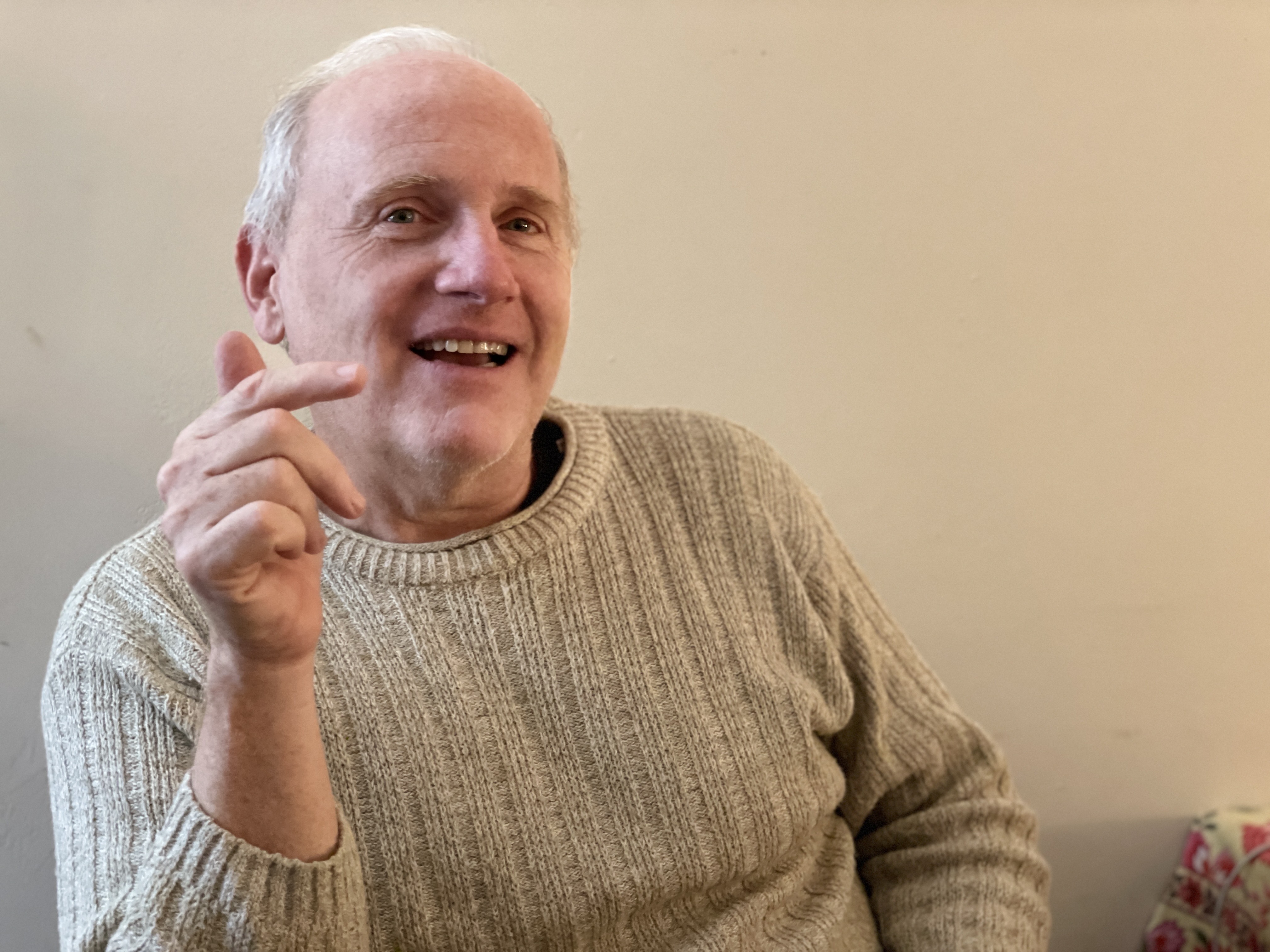
James B. Nicola, a returning contributor, is the author of eight collections of poetry, the latest three being Fires of Heaven: Poems of Faith and Sense, Turns & Twists, and Natural Tendencies. His nonfiction book Playing the Audience: The Practical Actor’s Guide to Live Performance won a Choice magazine award.
“To Khulood al-Zaidi, Women’s Rights Activist” by Suzanne Morris
“Just to have the freedom to go wherever I wanted,
and to not think something bad might happen to me.”
I try to step outside
freedom’s airy shelter
and look in through
the open windows of my day:
how I stroll from house
to road, unafraid,
and, heart unflinching,
open the box to withdraw
the mail, then
wave at a friendly honk
from a passing car.
Nothing worthy of note
along the way.
Or so it seems,
until I think of her:
how, alone that time in Amman
she heeded a warning
and boarded a plane
for San Francisco
then rode the bus for hours
just because she could,
rode and rode
all over San Francisco,
just because she could
maybe her thoughts
drifting to Fern, who
might be there too,
had she survived
the short ride from Baghdad.
Imagine how,
by habit of mind,
she might have
lowered her eyes
from a stranger’s gaze
then, stepping out,
surveyed
the sloping street
for any suspicious sign;
how she might have
smiled to herself then, that
being free and being safe would
take some getting used to
at least for as long
as she was here
how she might already
have known that
Duty would call her home.
I think of her as I sit down
on my porch of an evening,
to read a book
how heedlessly I surrender
to a world of make-believe,
how easy it is to take
this small freedom
for granted.
The breeze picks up
and I look around,
suddenly alert.
I bring my fingers
to my cheeks,
trying to imagine myself
inside her skin:
the breeze upon her face
as she waits for the bus
in San Francisco.

Suzanne Morris is a novelist with eight published works, and a poet. Her poems have appeared in several recent anthologies, and in online poetry journals including The New Verse News, The Texas Poetry Assignment, Stone Poetry Quarterly and The Courtship of Winds. She resides in Cherokee County, Texas.
Two Poems by Shontay Luna
Chicago (in the early ‘90s)
I. North Side – A Yuppie and Generation X
potluck constantly battling each other as they
sit between streeted throngs of decapitating
movie theaters, army surplus and fetish shops.
A full day’s shopping on Belmont from the Red
Line; two blocks from west to east you can get
a burger, tattoo, condoms, and a doughnut in all
in one swing. Baseball’s most disillusioned fans
in their red and blue regalia, herd themselves
bleary eyed with Pabst in hand four blocks
north of the urban jungle.
II. South Side – Baseball’s flip side, slightly more
civilized but still hungry~ Chinatown a world by itself
within another windy one. Walking down it’s on avenue
encompassing; like passing through an avenue of
time. Bronzeville used to be a glistening as it sounded;
the ensuing decades dulling it’s former polish. Former
middle class turned buppieville Chatham reigns further
south while Hyde Park gives off Greenwich Village
vibes while providing a landscape for a generation x
stomping ground to the east.
III. West Side – Mexico’s a Little Village and a modernized
time travel trip upon the twenty and the 6. Helplessly dotted with
year – round molasses ass traffic before disappearing into
the realms of Cicero and Berwyn. Beyond that, the Spindle
and the mall. Commercialism a beer belly in a too-tight shirt.
Northeast of that, urban poverty simmers and reeks while
suburban spectators cheer for the Bulls.
IV. East Side – Waltzes with Indiana’s frontier, hugging the
farthest curve of Lake Michigan. Beaches of rocky shores
and outlines of warehouses that billow smoke in the not too
far distance. Ten miles south of downtown, it once was an
area of factories: its hardworking streets lined with rows of
homeowners who worked at any of the five steel mills in
the area. Offering anything along Commercial Avenue
so as not be bothered with making the lengthy trip downtown.
For a taste of aged cornucopia, come to my home, Chicago.
Typical Chicago Weather
The gentle
branches
flutter in
the early
Autumn
breezes
traveling
in July.
Weaving
through
pavé glass
vases
embellished
in color
crepe squares,
jumbled into
pixelated
rainbows.
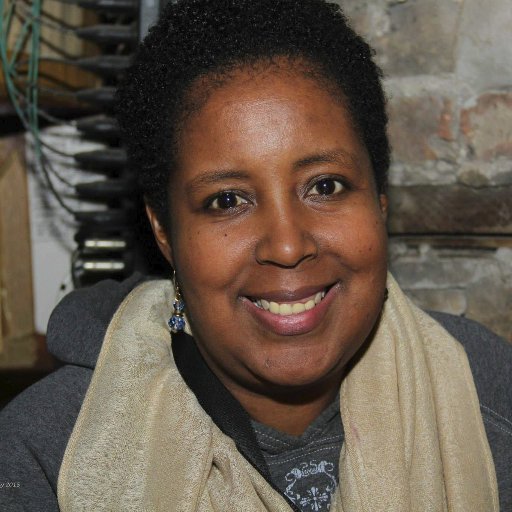
Chicagoan Shontay Luna is a poet, blogger and fanfiction author. Her work first appeared in Anthology and Capper’s and her most recent appearances include The Crucible, Press II Press and Blue Lake Review. Her newest book is ‘The Goddess Journal – a tool for unlocking the Goddess within every Woman.’
Three Roman Poems by Carlo Rey Lacsamana
Please note: Poetry is compressed to fit smart phone screens. If you are reading this poem on a phone screen, please turn your screen sideways to make sure that you are seeing correct line breaks for the poem.
I
Morning is laid out like a tablecloth
over the gardens of Villa Borghese
the whole of existence sparkles like the trumpet
moaning in full blast at the piazza overlooking Piazza
del Popolo
how the winter clothes bite the warm crust of sunlight like bread
how the ears drink the never-ending songs of fountains like wine
-songs of return songs of leaving-
and as I step into the shadows of trees
I remember what brought us here
to feast on this mystery like sheep that feed on grass
stuff our mouths with marvel and green air fill
our bellies with gratitude and poems
we stay close to each other listen to the wind
play with our hair our good intent for the world
reunites with our sorrow in the freshly cut grass
to love what is left to love in this loveless world
we lean back our heads in the light with eyes closed
as though we carry the answers
II
Temporarily on display
at the Galleria Borghese
is Rubens’ Risen Christ from 1615
to rise like the Christ in Rubens’ painting
waking up from death with a face washed by forgetfulness
not of indifference but of surrender
a face that says “it could not have been otherwise”
the dignity of the wounded
his body looks healthy and fresh
as though it has forgotten the wounds and the injury
it has suffered
even the stab hole on his lower right chest does not speak of pain
but like a tiny mouth that wants to sing
his feet longing to touch the warm earth again to walk all over again
pass through fatigue and thirst and hunger all over again
the angel lifting the shroud from his head with a surprised look
to see in Christ’s eyes the love of life as great as the suffering endured
dying indeed is the beginning for this is what Resurrection is
we are summoned to live again to love again to be hurt again
to die again
III
As old as Rome is my love for you
as chaotic as the tourists in Fontana di Trevi
is my desire for you
the way Bernini grasped chisel and hammer
I grasp you in my heat to shape this desire
to make a body of this wanting give it head arms and legs
miraculous as marble
maybe along Trastevere our glance will meet
when everyone is on his way to work when every fucking tourist
returns to his hotel when the sun grants refuge to the cold
and brokenhearted or in some corner in Piazza Spagna
where people show off their clothes or in some bar at
Piazza Navona where the fountains say your name all the time
over a cup of coffee our glance will meet
because your eyes are the city
that I feel enclosed engulfed enveloped like a gladiator
in the Colosseum but I do not fight there are no cheers
no rewards no condemnation
I am only a poet whose weapon is a flock of sparrows in his throat
whose appetite for loneliness runs further that the Tiber River
whose longing is as steadfast as your seven hills
I would rather be punished if punishment means
to be devoured by your touch
who can I make friends with here but the wind passing by like myself
sighing through neighborhoods razing the palaces and squares
with its cold breath of nostalgia
she keeps me company like a mother leading me by the hand
taking my heart to all the places where metaphors
lead to another existence where every line of a poem leads eventually
to you
yes, the wind whipping against my face exposes my heart
the heart which has too many secrets intrigues dark passages
like the Vatican but its walls crumble when it hears your footsteps
when the fragrance of your hair invades my body with tremors
and my voice is silenced like the paintings I survey for hours
at the museum searching for your face sometimes I dream of entering
the paintings of me becoming Christ crucified and you embracing me
like the Madonna weeping or me becoming Saint Sebastian
tied to a pole and you the arrows entering me without mercy
I loving the pain or I want you to be the nude like those of Rubens’
so loved by the painter you can tell by the folds and softness of their flesh
outside of these art galleries the moon wells up brighter and wiser
the lampposts flicker the river flares up the burning waters
carrying your reflection the rumble of cars over the road
the dying civilization words pile up in me like the dreams of immigrants
along the roadsides
the ghost of Anna Magnani appears in Piazza del Popolo dancing like
a madwoman
I dance with your shadow while the Neros of this world
set the temple on fire
maybe civilization is a bad idea who can tell
all these noise and madness tearing us apart
what about this dancing beneath the winter stars
the smoke-signs above the railways there is another road
we can turn into and the secret you impart in my ear
there is still a reason to live

Carlo Rey Lacsamana is a Filipino writer, poet, and artist born and raised in Manila, Philippines. Since 2005, he has been living and working in the Tuscan town of Lucca, Italy. He regularly contributes to journals in the Philippines, writing politics, culture, and art. His works have appeared in Esquire Magazine, The Citron Review, Mediterranean Poetry (Stockholm), Amsterdam Quarterly, Lumpen Journal (London), The Berlin Literary Review, Literary Shanghai and in other numerous magazines. His short story Toulouse has been recorded as a podcast story in the narrative podcast Pillow Talking (Australia). Follow him on Instagram@carlo_rey_lacsamana
“The Same Songs” by Frank Modica
Please note: Poetry is compressed to fit smart phone screens. If you are reading this poem on a phone screen, please turn your screen sideways to make sure that you are seeing correct line breaks for the poem.
A Crosby, Stills, Nash and Young
song blares from my car speakers
while I drive to my mother’s
west suburban bungalow
after a short trip to Aldi’s.
The lyrics about lost
loves ring out
unexpected, streaky
tears on my cold,
wrinkled cheekbones.
“Life is so unfair,”
I shout at the radio,
“Too many wasted days and nights.”
I don’t stop to consider
whether this same
soundtrack disturbs
the quiet daydreams
of other restless drivers
who drive around Chicago
trying to forget the loves
they lost in all
the same places.
Frank C. Modica is a cancer survivor and retired teacher who taught over 34 years. Frank’s first chapbook, “What We Harvest,” nominated for an Eric Hoffer book award, was published in 2021 by Kelsay Books. His second chapbook, “Old Friends,” was published in 2022 by Cyberwit Press.
Three Poems by Jeffery Allen Tobin
Please note: Poetry is compressed to fit smart phone screens. If you are reading this poem on a phone screen, please turn your screen sideways to make sure that you are seeing correct line breaks for the poem.
Life Through a Transom
From the transom above my grandparents’ door,
the city stretched like a secret,
half-glimpsed, half-dreamed,
a mosaic of rooftops and smokestacks,
where stories rose and vanished
in the smog-filled air.
I watched it from a distance,
my childhood framed in glass,
the world a silent play
performed on dusty streets.
Every afternoon, I climbed the stairs,
stood on tiptoe to peer through the pane,
my eyes tracing the lines of buildings
that seemed to touch the sky,
each window a portal to lives
I could never enter,
each alley a whisper
of adventures just out of reach.
The city sang a muffled symphony,
horns and shouts a muted hum
beneath my grandparents’ gentle voices,
their stories blending with the distant din,
an undercurrent of life
I could never quite hold.
I saw children playing in the park,
their laughter a faint ripple
across my glass-bound view,
their games a choreography
of innocence and escape.
I imagined myself among them,
running through the maze of streets,
feeling the pulse of the city beneath my feet,
but always, I remained
behind the transom, a spectator
to a world that moved on without me,
each day a reflection
of what I could not touch.
The city was both near and far,
a heartbeat away and a lifetime apart,
its secrets tantalizingly close,
yet always slipping through my grasp.
I grew older, my visits less frequent,
the view through the transom unchanged,
yet somehow different,
a reminder of dreams
that faded with time.
Now, I see the city in my mind,
a distant memory etched in glass,
its streets a labyrinth of longing,
its lights a constellation of loss.
The transom remains, a silent witness
to my yearning, my small rebellion
against the confines of home.
I wonder if the city remembers
the boy who watched from above,
if it holds his dreams in its concrete heart,
or if they are scattered, like leaves in the wind,
carried away by the currents of time,
lost in the endless rhythm of life.
King of the Trestle
He reigned over the trestle,
a monarch of forgotten dreams,
his kingdom stretching beneath the steel arches
where trains thundered above,
their rumble a lullaby
to the man who made the rails his throne.
Every morning, I walked to school,
passing his domain with a mixture
of curiosity and fear,
wondering about the stories etched
in the lines of his weathered face,
each wrinkle a sign
to battles fought and lost.
His eyes, clear and piercing,
held a depth that spoke of places
far beyond the bridge,
yet he chose this spot,
this concrete refuge
from a world that turned its back.
I never knew his name,
but to me, he was royalty,
a king without a crown,
whose court was the pigeons
that fluttered and cooed
like restless courtiers.
Some days, I’d see him muttering
to the ghosts of his past,
his hands gesturing to the air
as if shaping the memories
that kept him company
when the nights grew long
and the cold seeped in.
I wondered what brought him here,
what dreams derailed on the tracks
that led him to this place.
Did he once have a family,
a home filled with laughter?
Or was the trestle always his destiny,
a final stop on the journey
through a life less kind?
I never spoke to him,
fearful of crossing the invisible line
between our worlds,
but his presence left an imprint
on my young mind,
a lesson in the fragility
of human existence,
the thin veil that separates
those who have from those who don’t.
Years passed, and I left the neighborhood,
the trestle a distant memory,
its king a shadow in my thoughts.
I often wonder if he’s still there,
if the trains still sing him to sleep,
if the pigeons still gather
to hear his silent proclamations.
Sometimes, in the quiet of the night,
I imagine him sitting on his makeshift throne,
looking out over his kingdom
with a dignity that defies his plight,
a king of the trestle,
lost in the symphony of the rails,
his legacy etched in the rhythm
of wheels on steel,
a life lived on the edge,
a story untold yet profoundly known.
Milk Bottles
Grandmother’s stories poured like milk
from bottles left on doorsteps,
each tale a glass of yesterday,
frosted with the mist of memory.
I listened, enthralled by the clink
of the delivery man’s cart,
the early morning ritual
of fresh starts on silent streets.
She spoke of mornings when the city
still slumbered, when fog clung
to the corners of buildings
and the world felt softer,
as if wrapped in wool.
The bottles stood like sentinels,
gleaming in the first light,
promising nourishment
in their fragile embrace.
I imagined the sound,
the gentle thud of glass against wood,
a symphony of routine and care,
each bottle a message
from a simpler time,
a time when life was measured
by the rhythm of deliveries,
the certainty of small gestures.
Uncle Jim’s voice added a different hue,
recollections tinged with the scent of coal
and the hum of streetcars,
each memory a brushstroke
on the canvas of our family lore.
He spoke of neighbors chatting
over fences, of the milkman’s smile,
a fleeting moment of connection
in a city that never stood still.
I longed for that world,
the tangible comfort of glass and cream,
the predictable cadence of daily life,
unbroken by the chaos
that seemed to seep
into every crack of the present.
The stories were my refuge,
a window to a past
where people knew each other’s names
and the milk always arrived on time.
The tales have since faded,
their edges blurred by the march of years,
but the image of those bottles remained,
a symbol of something I could never grasp,
a time I could never touch.
I find myself yearning for that simplicity,
for the solidity of glass
and the certainty it contained,
even as I navigate a world
where everything feels transient,
where nothing seems to last.
Now, I hold these stories
like those old milk bottles,
delicate and clear,
filled with a substance
that nourishes my soul,
yet always just out of reach.
I wonder if the past ever truly leaves us,
if we are all custodians of memories
delivered from house to house,
each story a bottle waiting
to be opened, to be savored,
to remind us of the ties
that bind us to a time
when life seemed simpler,
and the milkman’s visit
was the highlight of the day.

Jeffery Allen Tobin is a political scientist and researcher based in South Florida. His poetry, short stories, and essays have been published in many journals, magazines, and websites. He has been writing for more than 30 years.
Two Poems by Matt Thomas
The Art Thief
She chased me down, caught me at an intersection, ran behind the car and recorded my plate on a white shopping bag which I thought was maybe from Baked & Wired, or a card shop, card shops I thought, also use those sturdy white bags, but the image of her gray head bent over the squashed bag, paling Eisenhower Building in the background, Potomac sky, 102 in August, etc.; what is called an indelible image, fled with from the scene after she strode around the car to rap the window convinced I had wronged her and I mumbled a denial unconvinced I had not, failing our interaction the same way that I failed my SATs, turning questions of fact into philosophy and so sped away when the light turned green while she shrunk in the rearview blocking E Street looking for the damage she was certain she’d accrued, thinking I’d escaped, which I had, but not with the thing she suspected me of stealing.
Metro Dancer
Requiring an audience to be alone,
flat metal strap like a barrette
between old school sun faded orange foam
headphones, cassette player humming,
an arm stretched like a cable
to the pole with a cupped hand sliding
up, down, bending knees in time
jeans hemmed by the carpet
worn black as if multitude others
had also abandoned convention
for slick chrome, every rider vibrating
above the groaning clattering,
speeding to uncertain landing pretending
to read or sleep maintaining proper frowns eyeing
the dancer, dreaming lost recalling
hand over hand that bottled fizz of youth
scratching from tinny headphones rebuking
the speeding commute, the functions and titles
shuttling up, down, a pump jack drawing
the question from where it has settled
into seams and every rider watching
also reaching, yearning, asking
where am I going, and why?

Matt Thomas is a smallholder farmer, engineer, and poet. His recent work can be read in Pinhole Poetry, Susurrus Magazine, and elsewhere. Disappearing by the Math, a full-length collection, was published by Silver Boy in 2024. He lives with his family in the Blue Ridge Mountains of Virginia.
“Moon Over Salt Lake City” by Jennifer Blackledge
Please note: Poetry is compressed to fit smart phone screens. If you are reading this poem on a phone screen, please turn your screen sideways to make sure that you are seeing correct line breaks for the poem.
over the temple encrusted in
an exoskeleton of scaffolding and cranes,
over the lake bed’s lunar flats
where I mistook pickled, half-buried ducks
for driftwood and dry grass,
over my glass hotel where I scrub
white brine dust off my black suede shoes.
I walked and walked across an endless
sand and salt plain, between the lot of
parked cars and the salt-broth water,
tiny scattered people moving as
slow and distant from each other
as stars in a constellation.
I still hadn’t reached water by the time
the sun dipped to the first mountain but
I turned around anyway, anxious
to outwalk the absolute dark.
Tidal forces pull me into the car and
back toward the city,
moon over its motherboard of lights,
mountains like teeth behind it.
Weak sun, bold moon,
salt as purifier, salt as punisher.
My shoes wear a ring of white,
my hair a dry rime of silver down the middle.
The moon rises over glittering towers and salt crystals
as a low sun slides into unswimmable water.
I might be driftwood. I whisper like dry grass.
All week people have been distant as stars
and shifting like sand.
I haven’t seen the same face twice.

Jennifer Blackledge works in the automotive industry and lives just south of Detroit. She has an MFA from Brown University and her work has appeared or is forthcoming in JAMA, I-70 Review, Scientific American, The Lake, Verdad, Kestrel, Twelve Mile Review, SWWIM and elsewhere. Read more at http://www.jenniferblackledge.com.
 THE CITY KEY